
Top Goliath Cranes Supplier India 2025

India’s industrial growth in 2025 is defined by scale, speed, and the relentless pursuit of efficiency. At the heart of this transformation are Goliath cranes—engineering marvels that make the impossible, possible. For businesses seeking the ultimate in heavy-duty material handling, Heben Cranes stands out as the top Goliath crane supplier in India, delivering innovation, reliability, and unmatched support to industries nationwide. What Are Goliath Cranes? Goliath cranes, also known as gantry cranes, are freestanding structures designed to move massive loads across open spaces. Unlike traditional overhead cranes that require building support, Goliath cranes travel on rails or wheels at ground level, making them ideal for outdoor yards, shipyards, construction sites, and large manufacturing facilities. Their robust design, high load capacity, and flexibility make them indispensable for India’s infrastructure and industrial sectors. Key Features Freestanding Structure: No need for building support, perfect for outdoor and open environments. High Load Capacity: Capable of lifting from 5 tons to over 250 tons, depending on the model and configuration. Wide Span and Coverage: Can cover large operational areas, with spans up to 116 meters and heights exceeding 50 meters. Mobility: Move smoothly along ground-level rails or, in some models, on rubber tires for added flexibility. Customizable: Tailored to specific operational needs, including single or double girder designs, cantilever options, and advanced control systems. The Indian Market for Goliath Cranes in 2025 India’s demand for Goliath cranes is surging, driven by rapid expansion in shipbuilding, steel fabrication, construction, and logistics. The market is characterized by a shift toward automation, digitalization, and sustainability. Major infrastructure projects, smart city initiatives, and the growth of manufacturing hubs are fueling the need for advanced, high-capacity cranes that can operate efficiently in challenging environments. Industry Applications Shipbuilding: Lifting and positioning massive ship components with precision. Steel and Metal Fabrication: Handling heavy plates, coils, and structural elements. Construction: Moving prefabricated components, machinery, and building materials. Logistics and Container Yards: Loading and unloading shipping containers and oversized cargo. Railway and Metro Projects: Transporting precast concrete sections and station materials. Why Heben Cranes Leads the Market? Engineering Excellence Heben Cranes is renowned for its commitment to quality, innovation, and engineering precision. Every Goliath crane is designed with high-grade materials and advanced manufacturing techniques, ensuring durability and long service life even in the harshest industrial environments. Robust Construction: Built to withstand heavy loads and tough conditions. Precision Engineering: Ensures smooth operation, minimal maintenance, and maximum uptime. Advanced Drive Systems: Variable frequency drives (VFDs) for smooth acceleration, deceleration, and precise positioning. Customization and Flexibility No two projects are the same, and Heben Cranes understands the importance of tailored solutions. Their Goliath cranes are available in a wide range of capacities (up to 250 tons), spans (up to 116 meters), and lift heights (over 50 meters). Whether you need a compact crane for a fabrication yard or a colossal system for a shipyard, Heben offers configurations to match your exact requirements. Advanced Features Anti-Collision Systems: Integrated technology to prevent accidents and ensure safe operation, even in multi-crane environments. Smart Controls: Centralized control panels, remote operation, and intelligent diagnostics for real-time monitoring and maintenance. Energy Efficiency: Modern electrical components and power management systems reduce energy consumption and operational costs. Safety Systems: Overload protection, emergency braking, and limit switches are standard, ensuring compliance with international safety standards. Space and Workflow Optimization Heben’s Goliath cranes are designed to maximize operational efficiency. Their freestanding design frees up valuable floor space, while their wide span and high lift capabilities enable seamless movement of heavy loads across large areas. This is especially valuable in shipyards, steel plants, and construction sites where space and time are at a premium. Types of Goliath Cranes Offered by Heben Type Capacity Range Key Applications Notable Features Single Girder Goliath Up to 10 tons Warehousing, small fabrication Lightweight, easy installation Double Girder Goliath Up to 250 tons Shipbuilding, steel, construction High load, long span, robust design Semi Goliath Up to 40 tons Manufacturing, assembly lines Operates beneath overhead systems Mobile Goliath (RTG) Up to 50 tons Container yards, logistics Rubber-tired, highly mobile Customized Solutions As required Specialized projects Tailored to unique operational needs Safety and Compliance: Non-Negotiable Priorities Safety is at the core of Heben’s engineering philosophy. Their Goliath cranes are equipped with: Overload Protection: Prevents lifting beyond rated capacity. Emergency Braking: Ensures immediate stopping in case of anomalies. Limit Switches: Prevents over-travel and collisions. Operator Training: Comprehensive programs to ensure safe and efficient crane operation. Routine Maintenance and Inspections: Regular checks and advanced diagnostics to ensure long-term reliability and compliance with global standards. Customer-Centric Approach Heben Cranes is more than a supplier—it’s a partner in your success. Their customer-centric philosophy is reflected in: 48-Hour Resolution Commitment: Rapid response to service requests and technical issues, minimizing downtime. 24/7 Support: Around-the-clock assistance from a team of specialists, ensuring your operations run smoothly. Comprehensive After-Sales Service: From installation and commissioning to maintenance and spare parts, Heben provides end-to-end support throughout the crane’s lifecycle. Innovation and Future-Readiness Heben Cranes is at the forefront of technological advancement, continually investing in research and development to deliver future-ready solutions. Their Goliath cranes incorporate the latest in automation, IoT integration, and energy-efficient design, ensuring your investment remains competitive as industry standards evolve. Smart Diagnostics: Real-time monitoring and predictive maintenance to prevent breakdowns. Remote Operation: Wireless controls for enhanced safety and flexibility. Sustainable Design: Energy-saving drives and eco-friendly materials to reduce environmental impact. Proven Track Record Heben Cranes has earned the trust of clients across India, supplying Goliath cranes to major projects in shipbuilding, steel, construction, and logistics. Their reputation for reliability, quality, and customer service is unmatched, making them the preferred choice for businesses seeking to elevate their material handling capabilities. Why Choose Heben Cranes in 2025? Unmatched Engineering Quality: Precision design, robust construction, and rigorous testing. Tailored Solutions: Customization for every industry and application. Advanced Safety and Efficiency: Cutting-edge features for safe, reliable, and cost-effective operation. Exceptional Support: 48-hour resolution, 24/7 assistance, and comprehensive after-sales service. Future-Ready Technology: Automation, IoT, and energy-efficient
Top Wall Traveling Cranes Supplier India 2025

India’s industrial landscape is evolving at a rapid pace, with manufacturing, infrastructure, and logistics sectors demanding smarter, more space-efficient material handling solutions. Wall traveling cranes have emerged as a game-changer for facilities seeking to maximize productivity without sacrificing valuable floor space. In 2025, Heben Cranes stands out as the top wall traveling crane supplier in India, delivering innovation, reliability, and unmatched customer support to businesses nationwide. What Are Wall Traveling Cranes? Wall traveling cranes are specialized overhead cranes mounted on rails fixed to the walls of a building. Unlike traditional overhead cranes that require extensive support structures, wall traveling cranes operate beneath existing systems, making them ideal for multi-level material handling and for facilities with limited headroom or congested layouts. Their unique design allows for independent operation at multiple levels, reducing workflow bottlenecks and enhancing overall efficiency. Key Features Space Optimization: Mounted on walls, these cranes free up floor space for other operations. Versatile Operation: Suitable for use beneath larger overhead cranes, enabling simultaneous material handling at different heights. Precision Handling: Tandem operation and advanced controls allow for the accurate positioning of long or awkward loads. Customizable Capacity: Available in a range of capacities, typically up to 40 tons, with spans and lifts tailored to specific facility requirements. The Indian Market for Wall Traveling Cranes in 2025 India’s crane market is experiencing robust growth, driven by government infrastructure initiatives, rapid urbanization, and the expansion of manufacturing and logistics hubs. The market is projected to grow at a CAGR of over 5% through 2031, with wall traveling cranes gaining traction for their ability to address space and efficiency challenges in modern facilities. Key growth drivers include: Smart Cities Mission and Make in India: Large-scale infrastructure projects and industrial corridors are fueling demand for advanced material handling solutions. Automation and Digitalization: The integration of IoT, automation, and safety systems is transforming crane operations, making wall traveling cranes more intelligent and user-friendly. Diverse Applications: From automotive plants and steel mills to warehouses and assembly lines, wall traveling cranes are being adopted across sectors for their flexibility and performance. Why Heben Cranes Leads the Market? Engineering Excellence Heben Cranes is renowned for its commitment to quality, innovation, and engineering precision. Every wall traveling crane is designed with a welded box girder for enhanced stability, ensuring safe and reliable operation even under heavy loads. The use of high-grade materials and advanced manufacturing techniques guarantees durability and long service life, even in demanding industrial environments. Customization and Flexibility No two facilities are the same, and Heben Cranes understands the importance of tailored solutions. Their wall traveling cranes are available in a wide range of capacities (up to 40 tons), spans (2 to 12 meters), and lift heights (5 meters onwards). Whether you need a compact crane for a small workshop or a heavy-duty system for a large manufacturing plant, Heben offers configurations to match your exact requirements. Advanced Features Tandem Operation: Two hoists can be operated in tandem for precise handling of long or bulky loads. Smooth and Precise Movement: State-of-the-art drive systems and controls ensure smooth acceleration, deceleration, and positioning. Safety Systems: Overload protection, emergency braking, and anti-collision devices are standard, minimizing risks and ensuring compliance with international safety standards. Energy Efficiency: Modern electrical components and intelligent controls reduce energy consumption and operational costs. Space and Workflow Optimization Heben’s wall traveling cranes are designed to operate beneath existing overhead systems, unlocking new dimensions of material handling. This multi-level approach allows for independent workflows, reduces congestion, and maximizes the use of vertical space—a critical advantage in high-density industrial environments. Applications Across Industries Wall traveling cranes from Heben are trusted by leading companies in sectors such as: Automotive: Efficient movement of components along assembly lines and between workstations. Steel and Metal Fabrication: Handling heavy plates, coils, and structural elements with precision. Warehousing and Logistics: Streamlining storage and retrieval operations, especially in facilities with limited floor space. Construction: Supporting the movement of prefabricated components and heavy machinery. Manufacturing: Enhancing productivity in multi-level production environments. Customer-Centric Approach Heben Cranes is not just a supplier—it’s a partner in your success. Their customer-centric philosophy is reflected in: 48-Hour Resolution Commitment: Rapid response to service requests and technical issues, minimizing downtime and maximizing productivity. 24/7 Support: Around-the-clock assistance from a team of over 200 specialists, ensuring your operations run smoothly. Comprehensive After-Sales Service: From installation and commissioning to maintenance and spare parts, Heben provides end-to-end support throughout the crane’s lifecycle. Innovation and Future-Readiness Heben Cranes is at the forefront of technological advancement, continually investing in research and development to deliver future-ready solutions. Their wall traveling cranes incorporate the latest in automation, IoT integration, and energy-efficient design, ensuring your investment remains competitive as industry standards evolve. Safety and Compliance Safety is non-negotiable in material handling. Heben’s wall traveling cranes are equipped with: Overload Protection: Prevents lifting beyond rated capacity. Emergency Braking: Ensures immediate stopping in case of anomalies. Anti-Collision Systems: Reduces the risk of accidents in busy or multi-crane environments. Operator Training: Comprehensive training programs to ensure safe and efficient crane operation. Proven Track Record Heben Cranes has earned the trust of clients across India, supplying wall traveling cranes to major projects in manufacturing, infrastructure, and logistics. Their reputation for reliability, quality, and customer service is unmatched, making them the preferred choice for businesses seeking to elevate their material handling capabilities. Why Choose Heben Cranes in 2025? Unmatched Engineering Quality: Precision design, robust construction, and rigorous testing. Tailored Solutions: Customization for every industry and application. Advanced Safety and Efficiency: Cutting-edge features for safe, reliable, and cost-effective operation. Exceptional Support: 48-hour resolution, 24/7 assistance, and comprehensive after-sales service. Future-Ready Technology: Automation, IoT, and energy-efficient systems for tomorrow’s challenges. Conclusion: Elevate Your Operations with Heben Cranes As India’s industries continue to grow and modernize, the need for efficient, space-saving, and reliable material handling solutions has never been greater. Heben Cranes leads the way as the top wall traveling crane supplier in India for 2025, offering engineering excellence, customization, and unwavering support. Whether you’re upgrading
Top Goliath Crane Design Types for Heavy Lifting

In the world of heavy lifting and material handling, Goliath cranes stand tall as indispensable solutions for industries that demand robust, flexible, and efficient lifting systems. Whether you operate in shipbuilding, steel fabrication, construction, or logistics, understanding the different Goliath crane design types is essential for optimizing your operations. Heben Technovation Pvt. Ltd., a leader in advanced lifting solutions, offers a comprehensive range of Goliath cranes tailored to meet the most demanding industrial requirements. This guide explores the top Goliath crane design types, their unique features, applications, and why Heben Technovation is the partner of choice for heavy lifting in India. What Is a Goliath Crane? Goliath cranes—also known as gantry cranes—are freestanding, bridge-type cranes supported by sturdy legs that move along ground-level rails or tracks. Unlike traditional overhead cranes that require building support, Goliath cranes are self-supporting, making them ideal for outdoor yards, open spaces, and facilities where overhead support is impractical or unavailable. Their design allows for extensive coverage, high lifting capacities, and exceptional mobility—features that have made them a cornerstone in heavy industry. Key Features and Advantages of Goliath Cranes Goliath cranes are engineered for heavy-duty applications and offer several standout features: Freestanding Structure: Goliath cranes do not rely on building support, making them perfect for outdoor environments such as steel yards, shipyards, and construction sites. High Load Capacity: These cranes can handle extremely heavy loads, often ranging from several tons to over a thousand tons, depending on the specific model and configuration. Wide Operational Range: With expansive spans and long runways, Goliath cranes can cover large work areas and handle oversized loads with ease. Mobility and Maneuverability: Ground-level rails or tracks allow for smooth movement along the length of the gantry, while some models feature telescopic or rotating booms for enhanced flexibility. Customization: Goliath cranes can be tailored to specific operational needs, including different lifting capacities, spans, and control systems. Heben Technovation Pvt. Ltd. leverages these features to deliver solutions that maximize efficiency, safety, and productivity for clients across diverse industries. Top Goliath Crane Design Types 1. Single Girder Goliath Crane Single girder Goliath cranes are engineered for lighter to moderate lifting tasks. They feature a single main girder supported by two robust legs, offering a compact and cost-effective solution for workshops, warehouses, and smaller industrial settings. Key Features: Lightweight, easy to install, and low maintenance. They are ideal for applications where space and budget are considerations. Applications: Warehousing, small-scale manufacturing, maintenance workshops, and assembly lines. Heben Technovation Advantage: Heben’s single girder Goliath cranes are designed for quick setup, smooth operation, and reliable performance, even in challenging environments. 2. Double Girder Goliath Crane Double girder Goliath cranes are the heavyweights of the crane world. With two parallel girders spanning the width of the crane, these models provide superior load capacity, stability, and durability. Key Features: High load capacity (up to several hundred tons), enhanced stability, and the ability to cover longer spans. Applications: Shipbuilding, steel fabrication, large-scale construction, and heavy machinery assembly. Heben Technovation Advantage: Heben’s double girder Goliath cranes are built for demanding industrial environments, offering robust construction, advanced safety features, and customizable options to meet specific operational needs. 3. Semi Goliath Crane Semi Goliath cranes combine the benefits of traditional Goliath and overhead cranes. They are designed to operate beneath existing overhead crane systems, providing additional flexibility and coverage in complex material handling environments. Key Features: Torsion-resistant box girder construction, no floor-level guide rail required, and advanced safety features such as lift-off prevention and obstacle detection. Applications: Manufacturing plants, assembly lines, and facilities with multiple workstations. Heben Technovation Advantage: Heben’s semi Goliath cranes integrate seamlessly with existing overhead systems, enhancing workflow efficiency and fortifying productivity. 4. Mobile Goliath Crane (Rubber-Tired Gantry Crane) Mobile Goliath cranes, also known as rubber-tired gantry cranes, offer unmatched mobility and flexibility. Unlike rail-mounted Goliath cranes, these models move on rubber tires, eliminating the need for fixed tracks. Key Features: No rail installation required, easy relocation, and multiple steering modes for enhanced maneuverability. Applications: Container yards, logistics hubs, and construction sites where mobility is crucial. Heben Technovation Advantage: Heben’s mobile Goliath cranes are designed for quick deployment, easy operation, and reliable performance in dynamic environments. 5. Rail-Mounted Goliath Crane Rail-mounted Goliath cranes are designed for controlled and repetitive lifting tasks. They operate on fixed ground-level rails, providing smooth and stable transportation of heavy loads. Key Features: Smooth movement along a fixed path, high stability, and suitability for repetitive lifting operations. Applications: Steel plants, shipyards, and large warehouses. Heben Technovation Advantage: Heben’s rail-mounted Goliath cranes are engineered for precision, safety, and long-term reliability in demanding industrial settings. 6. Customized Goliath Cranes Every industry has unique requirements, and sometimes off-the-shelf solutions are not enough. Customized Goliath cranes are designed to meet specific operational needs, including special lifting capacities, precise dimensions, and novel features. Key Features: Tailored design, specific lifting requirements, and integration with existing systems. Applications: Specialized manufacturing, maintenance, and construction projects. Heben Technovation Advantage: Heben Technovation works closely with clients to develop customized Goliath crane solutions that enhance productivity and efficiency. Applications of Goliath Cranes in Heavy Industry Goliath cranes are indispensable in a wide range of industrial sectors. Here are some of the most common applications: Shipbuilding: For lifting and positioning large ship components and assemblies. Steel Fabrication: Handling heavy steel plates, coils, and structural elements. Construction: Moving prefabricated components, machinery, and materials on large project sites. Logistics and Container Yards: Loading and unloading shipping containers and oversized cargo. Manufacturing: Supporting assembly lines, maintenance, and material transfer in large factories. Heben Technovation’s Goliath cranes are trusted by leading companies in these sectors, delivering reliable performance and exceptional value. Safety and Innovation: The Heben Technovation Difference Heben Technovation Pvt. Ltd. is committed to safety, innovation, and customer satisfaction. Their Goliath cranes are equipped with advanced safety features, including overload protection, emergency braking, and obstacle detection systems. The company’s 48-hour resolution commitment and 24/7 support ensure that clients receive prompt assistance and minimal downtime. Heben’s focus on innovation means that every
Top Electric Double Girder Cranes Supplier India

In the dynamic landscape of industrial material handling, electric double girder cranes are a cornerstone for businesses demanding robust, reliable, and high-capacity lifting solutions. As India’s industrial sector continues to expand, the need for advanced cranes that combine power, precision, and safety is greater than ever. Heben Technovation Pvt. Ltd. stands at the forefront of this revolution, recognized as a leading supplier of electric double girder cranes in India. This comprehensive guide explores why Heben Technovation is the preferred partner for industries seeking cutting-edge lifting technology. Why Choose Double Girder EOT Cranes? Electric double girder overhead traveling (EOT) cranes are engineered for heavy-duty applications where lifting capacity, stability, and durability are non-negotiable. Unlike single girder cranes, double girder models feature two parallel girders that provide superior structural integrity and load-bearing capacity. This design enables them to handle heavier loads—often exceeding 40 tons—and cover longer spans, making them ideal for large factories, steel plants, shipyards, and construction sites. Double girder EOT cranes offer several key advantages: Higher Load Capacity: With two girders distributing the weight, these cranes can lift loads that single girder models simply cannot handle. This makes them indispensable in industries like steel manufacturing, heavy machinery assembly, and shipbuilding. Enhanced Stability and Safety: The double girder configuration reduces deflection and twisting, ensuring safer and more stable lifting operations. This is crucial when handling bulky or sensitive materials. Longer Span Coverage: Double girder cranes can span wider distances, enabling efficient material handling across expansive industrial spaces. Durability and Ease of Maintenance: Built with robust materials and modular components, these cranes are designed to withstand harsh environments and minimize downtime. Versatility: Customizable with various hoists, trolleys, and attachments, double girder cranes adapt to a wide range of lifting tasks and operational requirements. Heben Technovation Pvt. Ltd.: Setting Industry Benchmarks Heben Technovation Pvt. Ltd. has earned a reputation as a visionary force in the Indian crane industry. With a team of over 200 specialists, Heben is committed to delivering innovative, reliable, and customized lifting solutions that empower industries to achieve maximum efficiency, safety, and productivity. Their journey began as a European-type crane services company, quickly evolving into a full-fledged manufacturer with a focus on quality, innovation, and customer satisfaction. Heben’s mission is to be a global leader in material handling, setting benchmarks for excellence, sustainability, and technological advancement. Their operations are aligned with an effective Quality Management System, ensuring that every crane meets the highest standards of engineering and performance. Heben’s cranes are not just machines—they are transformative tools that help businesses redefine productivity and push the boundaries of what’s possible. Engineering Excellence: The Heben Difference Heben Technovation’s electric double girder cranes are engineered for performance, durability, and ease of use. Key features include: Robust Construction: Built with high-grade steel and advanced welding techniques, Heben’s cranes are designed to withstand the rigors of heavy industrial use. Precision Engineering: Every component is meticulously crafted and rigorously tested to ensure reliability and longevity. Customization: Heben offers a wide range of options for load capacity, span, lifting height, and control systems, allowing businesses to tailor each crane to their specific needs. Advanced Safety Features: Equipped with overload protection, emergency braking, and fail-safe mechanisms, Heben’s cranes prioritize operator safety and asset protection. Energy Efficiency: Modern electrical systems and regenerative braking technology help reduce energy consumption and operational costs. Heben’s double girder EOT cranes are suitable for a variety of industries, including steel and metal, automotive, construction, power generation, and logistics. Their cranes can be customized for operation in challenging environments, such as high-temperature zones, corrosive atmospheres, or explosive areas. Applications and Industries Electric double girder cranes are the backbone of many industrial operations. Here’s how Heben Technovation’s solutions make a difference across key sectors: Steel and Metal Industry: Handling heavy steel coils, plates, and profiles with precision and safety. Automotive Manufacturing: Supporting assembly lines, maintenance, and logistics in large-scale production facilities. Construction: Lifting and positioning heavy building materials, prefabricated components, and machinery. Power Generation: Assisting in the installation, maintenance, and repair of turbines, generators, and other critical equipment. Logistics and Warehousing: Efficiently moving large, bulky items within warehouses and distribution centers. Heben’s cranes are also widely used in shipyards, foundries, and other heavy industries where robust and reliable lifting solutions are essential. Safety and Reliability: Non-Negotiable Priorities Safety is at the heart of Heben Technovation’s engineering philosophy. Their double girder EOT cranes are equipped with multiple safety features, including: Overload Protection: Prevents the crane from lifting loads beyond its rated capacity, reducing the risk of accidents and equipment damage. Emergency Braking: Ensures immediate stopping in case of power failure or operational anomalies. Fail-Safe Mechanisms: Redundant systems and interlocks provide additional layers of protection for operators and assets. Robust Electrical Systems: Schneider or equivalent electrical components, IP54/IP65 protection, and advanced control panels ensure reliable performance in demanding environments. Heben’s commitment to safety extends to their after-sales support, with a 48-hour resolution commitment and 24/7 technical assistance to keep your equipment running at peak performance. Customer-Centric Approach Heben Technovation Pvt. Ltd. is more than a supplier—it’s a partner. Their customer-centric approach is reflected in every aspect of their business, from initial consultation and design to installation, training, and ongoing support. Heben’s team works closely with clients to understand their unique requirements and deliver solutions that exceed expectations. Their transparent pricing, value-driven solutions, and long-term partnership approach make Heben the preferred choice for businesses across India. With a proven track record and partnerships with leading companies like Adani, JNK India, Kutch Copper, and OnShore Construction, Heben has solidified its reputation as a trusted provider of high-quality crane solutions. Innovation and Future-Ready Solutions Heben Technovation is at the forefront of crane technology, continually investing in research and development to stay ahead of industry trends. Their double girder EOT cranes incorporate the latest advancements in automation, IoT, and energy efficiency. Features like variable speed control, remote monitoring, and smart diagnostics ensure that Heben’s cranes are ready for the challenges of Industry 4.0. Heben’s commitment to innovation means you’ll always have
Top Single Girder Overhead Crane Supplier India

When it comes to material handling and industrial lifting solutions, choosing the right single girder overhead crane supplier can make or break your operational efficiency. In India, Heben Technovation Pvt. Ltd. has emerged as a frontrunner, setting new standards for quality, innovation, and customer satisfaction. This comprehensive guide explores why Heben Technovation stands out as the top single girder overhead crane supplier in India, highlighting their engineering excellence, customization capabilities, and commitment to safety. Why Choose a Single Girder Overhead Crane? Single girder overhead cranes are the backbone of countless manufacturing, warehousing, and logistics operations. Their compact design and robust performance make them ideal for facilities with limited space and demanding lifting requirements. Unlike double girder cranes, single girder models are more cost-effective, easier to install, and require less maintenance—making them a preferred choice for small to medium enterprises and large industrial setups alike. Single girder cranes are engineered to handle loads up to 25 tons, with spans custom-tailored to suit your facility. Whether you’re moving heavy steel coils, machinery, or finished products, these cranes deliver precision, reliability, and safety—essential traits for any modern industrial operation. Heben Technovation Pvt. Ltd.: Redefining Material Handling in India Heben Technovation Pvt. Ltd. is not just a manufacturer; it’s a visionary force in the material handling industry. With a team of over 200 specialists, Heben is dedicated to delivering innovative, reliable, and customized lifting solutions that maximize efficiency, safety, and productivity. Their mission is clear: to empower industries with cutting-edge cranes that redefine productivity and set new benchmarks for quality. Heben’s vision is to be a global leader in material handling, driving excellence, sustainability, and innovation while fostering long-term partnerships with clients. This commitment is reflected in every crane they design, build, and support. Engineering Excellence: The Heben Advantage Heben’s single girder overhead cranes are engineered for maximum performance and durability. Their cranes feature: High-Quality Materials: Every component is crafted from premium-grade steel and alloy, ensuring longevity and resistance to wear and tear. Precision Engineering: Advanced manufacturing techniques and rigorous quality control ensure each crane meets international safety and performance standards. Customization: Heben offers a range of main girder connection configurations, allowing you to optimize your crane for your specific factory layout and operational needs. Space-Saving Design: With compact profiles and flexible installation options, Heben cranes maximize your workspace, even in the tightest environments. Underslung and Wall-Traveling Models: For facilities with unique requirements, Heben provides underslung and wall-traveling crane solutions, further enhancing versatility. Heben’s cranes are available in various capacities and spans, ensuring you get the perfect fit for your lifting requirements. Their single girder models are ideal for applications in manufacturing, warehousing, construction, automotive, steel and metal, paper and printing, waste management, and power generation. Unmatched Safety and Reliability Safety is non-negotiable in industrial lifting. Heben Technovation Pvt. Ltd. integrates advanced safety features into every crane, including: Robust Braking Systems: Ensures smooth, controlled lifting and lowering operations. Overload Protection: Prevents damage and accidents by limiting the crane’s load capacity. High-Quality Electrical Components: Schneider electricals and IP54 or IP65-rated designs provide reliable performance in harsh environments. Rigorous Testing: Every crane undergoes extensive testing and quality checks before delivery. Heben’s commitment to safety extends to their after-sales support, with a 48-hour resolution commitment and 24/7 technical assistance to keep your equipment running at peak performance. Custom Solutions for Every Industry No two industries are the same, and Heben Technovation Pvt. Ltd. understands the importance of tailored solutions. Their single girder overhead cranes can be customized for a wide range of applications, including: Manufacturing: Smooth material flow in production lines, optimizing assembly processes and machine utilization. Warehousing & Logistics: Efficient goods storage and retrieval, maximizing warehouse space and streamlining order fulfillment. Construction: Safe and precise handling of building materials, supporting large-scale projects. Automotive: Adaptable cranes for assembly lines and maintenance workshops. Steel & Metal: Handling heavy steel coils, plates, and profiles with ease. Paper & Printing: Precise handling of paper rolls and printing equipment. Waste Management: Improving efficiency and safety in sorting and recycling processes. Power Generation: Supporting maintenance and repair operations with reliable lifting solutions. Heben’s cranes can also be adapted for operation in hazardous environments, ensuring safe material handling in potentially explosive atmospheres. Innovation and Future-Ready Solutions Heben Technovation Pvt. Ltd. is at the forefront of crane innovation. Their single girder overhead cranes incorporate the latest advancements in automation, IoT, and energy efficiency. Features like variable speed control, remote monitoring, and smart diagnostics ensure your crane is ready for the challenges of Industry 4.0. Heben’s commitment to research and development means you’ll always have access to the latest technologies and best practices in material handling. Their cranes are designed for easy integration with existing systems, ensuring seamless operation and minimal downtime. Customer-Centric Approach What truly sets Heben Technovation Pvt. Ltd. apart is their unwavering focus on customer satisfaction. From initial consultation to installation, training, and after-sales support, Heben’s team is dedicated to delivering exceptional service at every stage. Their 48-hour resolution commitment and 24/7 support ensure that any issues are addressed promptly, minimizing disruption to your operations. Heben’s transparent pricing, value-driven solutions, and long-term partnership approach make them the preferred choice for businesses across India. Proven Track Record and Industry Recognition Heben Technovation Pvt. Ltd. has earned a reputation for excellence, supplying cranes to leading companies in sectors such as railways, power plants, and space industries. Their partnerships with major players like Adani, JNK India, Kutch Copper, and OnShore Construction are a testament to their reliability and expertise. Heben’s journey from a European-type crane services company to a leading manufacturer is marked by continuous improvement, innovation, and a commitment to exceeding customer expectations. Their operations are aligned with an effective Quality Management System, ensuring excellence at every step. Why Heben Technovation Pvt. Ltd. Is the Top Choice? Choosing the right single girder overhead crane supplier is critical for your business’s success. Heben Technovation Pvt. Ltd. offers: Unmatched Engineering Quality: Premium materials, precision engineering, and rigorous testing. Customization and Flexibility: Tailored solutions for every
Standard Lifting Capacities for Modern EOT Cranes

Here’s what the crane industry won’t tell you: safety factors ranging from 1.5 to 3 times the maximum intended load aren’t suggestions—they’re the difference between operational excellence and catastrophic failure. Yet most facility managers are still selecting EOT cranes based on marketing brochures rather than the brutal engineering realities that separate professional-grade equipment from industrial accidents waiting to happen. The numbers don’t lie. Double girder cranes lift up to 250 tons while single girder cranes max out at 20 tons—but capacity alone tells you nothing about what matters: duty classification, load spectrum analysis, and operational lifespan under real-world stress. The Classification Wars: FEM vs. ISO vs. CMAA Modern EOT crane selection isn’t about tonnage—it’s about understanding duty cycles that most engineers completely misinterpret. FEM classification systems range from 1Cm (occasional maintenance use) to heavy-duty classifications for continuous industrial operations, while ASME classifications define hoist requirements based on load spectrum and operating time. The disconnect is staggering. Facilities routinely spec Class B cranes for Class D applications, then wonder why maintenance costs spiral and downtime destroys productivity. Both FEM and ISO ratings establish equipment lifespan around 10 years under defined operating conditions—but only when you match classification to actual usage patterns. The Real Classification Breakdown: FEM 1Cm/H1: Light workshop duty, single shift, occasional max loads FEM 2m/M5: Medium operations with regular lifting cycles FEM 3m/M6: Heavy-duty continuous operations, multiple shifts Beyond M6: Industrial applications where failure isn’t an option Here’s the kicker: duty rating increases require much bigger and heavier components, including over-rated motors to prevent output reaching thermal limits. You’re not just buying capacity—you’re buying engineered resilience. Capacity Reality Check: Beyond the Marketing Numbers The industry’s dirty secret? Published lifting capacities assume perfect conditions that don’t exist in real facilities. Environmental factors, load positioning, operational frequency, and maintenance quality all impact actual working load limits in ways that standard specifications ignore. When lifting objects near rated capacity, loads must be lifted 150-200mm from ground level first to verify brake performance and system stability—a safety protocol that reveals how close standard operations run to equipment limits. Smart facility managers focus on three capacity considerations most overlook: Load Spectrum Analysis: Not all lifts are created equal. A crane rated for 10 tons that lifts 8-ton loads twice daily will fail faster than one lifting 3-ton loads twenty times daily—if you ignore duty classification mathematics. Dynamic Load Factors: Static capacity ratings don’t account for acceleration forces, swing loads, or multi-axis movements that multiply effective loading beyond nameplate specifications. Safety Factor Reality: Industry standards recommend safety factors from 1.5 to 3 times maximum intended load, but these margins exist because real-world operations rarely match controlled testing conditions. The Engineering Truth About Modern EOT Performance The global EOT crane market expects 6.30% CAGR through 2031, driven not by capacity increases but by smarter engineering that maximizes operational efficiency within existing facility constraints. Advanced EOT systems now integrate predictive maintenance sensors, variable frequency drives for precise load control, and automated safety systems that prevent operator error. These aren’t luxury features—they’re operational necessities that separate equipment that performs reliably from systems that fail when you need them most. The smartest facility managers understand that EOT crane selection isn’t about finding the cheapest option that meets minimum specifications. It’s about identifying systems engineered for your specific operational reality, backed by manufacturers who understand the difference between marketing capacity claims and engineering performance guarantees. Why Heben Cranes Delivers What Others Promise? When production stops because your EOT crane failed, explanations don’t restart manufacturing lines. Heben Cranes builds systems engineered for real-world performance, not marketing specifications. Our EOT cranes integrate advanced duty classification analysis with proven European manufacturing standards, delivering reliable lifting solutions that eliminate the capacity guessing games that plague most industrial operations. Every Heben EOT system includes comprehensive load analysis, proper duty classification matching, and engineering support that ensures your crane performs reliably under actual operating conditions—not just laboratory testing scenarios. Because when your facility depends on material handling precision, “good enough” isn’t good enough. The difference between adequate crane capacity and optimized lifting performance isn’t subtle—it’s measurable in uptime, maintenance costs, and operational confidence. Choose equipment engineered for excellence, not just compliance.
10 Must-Have Qualities in EOT Crane Suppliers in 2025 – Find Yours!
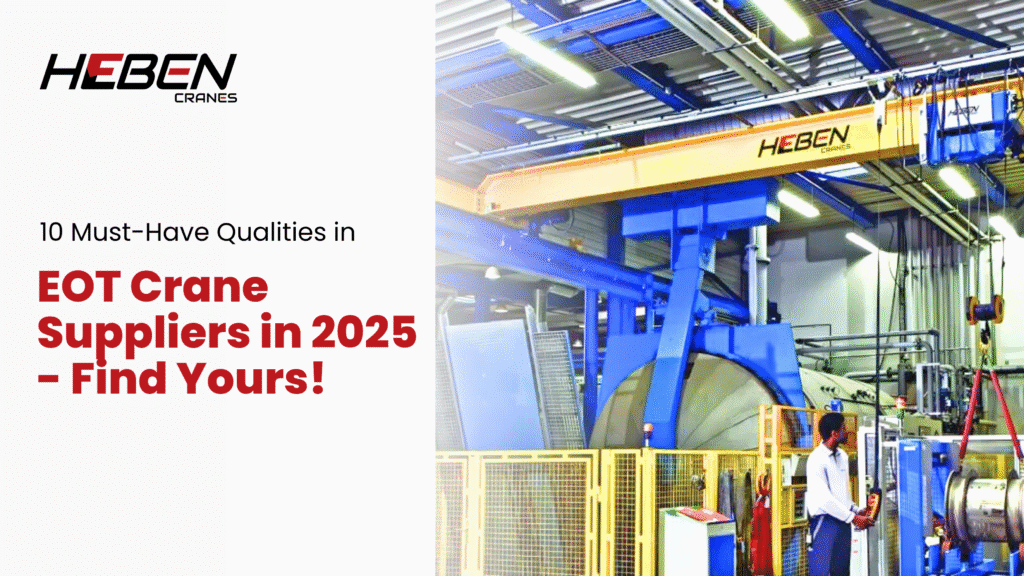
Selecting an EOT crane supplier is not just about buying a piece of equipment—it’s about forging a partnership that will shape your business’s productivity, safety, and long-term success. The EOT crane market is expected to grow at a significant pace, with global giants and specialized local players vying for attention, but not all suppliers are created equal. As a starter entrepreneur, your choice can mean the difference between a crane that boosts your operations and one that becomes a costly liability. Consider this: “Their reliability and performance are directly tied to the reputation and expertise of the manufacturer and supplier.” This isn’t just marketing—it’s a fact backed by countless real-world examples and industry reports2. The right supplier doesn’t just deliver a crane; they deliver peace of mind, operational excellence, and a competitive edge. What Makes an EOT Crane Supplier Stand Out in 2025? In an era where automation, IoT, and sustainability are reshaping industrial landscapes, EOT crane suppliers must be more than just equipment vendors—they must be innovation partners. The best suppliers combine deep technical expertise with a customer-first mindset, offering solutions that are customized, future-proof, and supported by robust after-sales services. “A supplier dedicated to providing complete after-sales services for the piece of equipment they supplied is what you should look for in a supplier,” notes a leading industry expert. But what specific qualities set the best apart? Let’s dive into the ten must-haves for any EOT crane supplier in 2025. Quality 1: Uncompromising Commitment to Quality and Durability Quality is not negotiable when it comes to EOT cranes. These machines handle heavy loads in demanding environments, often 24/7. A top-tier supplier ensures that every component—from the hoist to the trolley—is built with precision engineering and high-quality materials. “A reputable manufacturer ensures that all components are built with high-quality materials and precision engineering. This results in more efficient operation, fewer breakdowns, and greater safety for your workers,” observes a trusted crane manufacturer. Look for suppliers who subject their cranes to rigorous testing and quality control at every stage of production. The payoff? Cranes that last longer, perform better, and keep your operations running smoothly. Quality 2: Extensive Industry Experience and Proven Track Record Experience matters. A supplier with years in the industry has faced—and overcome—countless technical and logistical challenges. “A company with years of experience has likely faced and overcome various technical and logistical challenges, honing their skills and expertise over time,” explains a recent industry guide. Review their portfolio: have they delivered successful projects in your sector? Do they have a reputation for reliability and excellence? Don’t just take their word for it—seek out customer testimonials and case studies. The right supplier will have a proven track record you can trust. Quality 3: Robust Compliance with International Safety and Quality Standards Safety is non-negotiable. The best EOT crane suppliers adhere to international standards such as ISO 9001 for quality management and ISO 14001 for environmental management. Certifications like CE marking and OSHA compliance are also strong indicators of a supplier’s commitment to safety and quality. These certifications aren’t just paperwork—they’re a guarantee that your crane will meet rigorous safety requirements, reducing the risk of accidents and ensuring regulatory compliance. “Compliance with standards like ISO 9001 for quality management or ISO 14001 for environmental management indicates a commitment to maintaining high production standards,” notes an industry expert. Quality 4: Customization and Flexibility to Meet Your Unique Needs No two businesses are the same, and neither are their lifting requirements. The best suppliers offer customization options, tailoring the crane’s design, capacity, and features to your specific needs. “Every industrial operation has its own set of unique challenges and requirements. A one-size-fits-all approach doesn’t work when it comes to EOT cranes,” states a leading manufacturer. Whether you need a specific span length, lifting height, or specialized components, your supplier should be able to engineer a solution that fits your operational demands. This flexibility ensures optimal performance, safety, and productivity. Quality 5: Cutting-Edge Technological Innovation and Modern Equipment The EOT crane industry is evolving rapidly, with new technologies like automation, IoT, and remote control transforming how cranes operate. “The integration of IoT technology enables real-time monitoring and data analysis, transforming traditional EOT cranes into smart cranes,” observes a recent innovation report. Look for suppliers who invest in research and development, offering cranes equipped with modern features like automation, anti-sway mechanisms, and energy-efficient systems. These innovations not only improve performance and safety but also future-proof your investment. Quality 6: Comprehensive After-Sales Support and Maintenance Services An EOT crane is a long-term investment, and its lifespan depends heavily on the quality of after-sales support. “A manufacturer’s after-sales service quality can significantly impact the crane’s lifespan and operational efficiency,” notes an industry guide. The best suppliers offer installation assistance, regular maintenance, quick access to genuine spare parts, and 24/7 technical support. This commitment to after-sales service demonstrates confidence in their product and a customer-centric approach. Quality 7: Strong Project Management and On-Time Delivery Large-scale EOT crane projects involve complex logistics, strict timelines, and coordination with multiple stakeholders. “A manufacturer with strong project management skills ensures smooth execution from design and manufacturing to delivery and installation,” explains an industry expert. Evaluate their ability to manage projects efficiently by reviewing past projects, client feedback, and their approach to handling challenges. Effective project management minimizes delays, controls costs, and ensures your crane is delivered and installed on schedule. Quality 8: Availability of Genuine Spare Parts and Local Support Downtime is costly. The best suppliers ensure that genuine spare parts are readily available and that local support is just a phone call away. “Local support ensures faster response times for maintenance, repairs, and technical assistance,” notes an industry guide. This combination of global expertise and local presence gives you the best of both worlds: access to advanced technologies and the reassurance of quick, reliable support. Quality 9: Transparent Pricing and Value-Driven Solutions Price is important, but it shouldn’t be the only factor. The best suppliers offer transparent pricing
Top 5 Future Trends in Wall Traveling Cranes for 2026
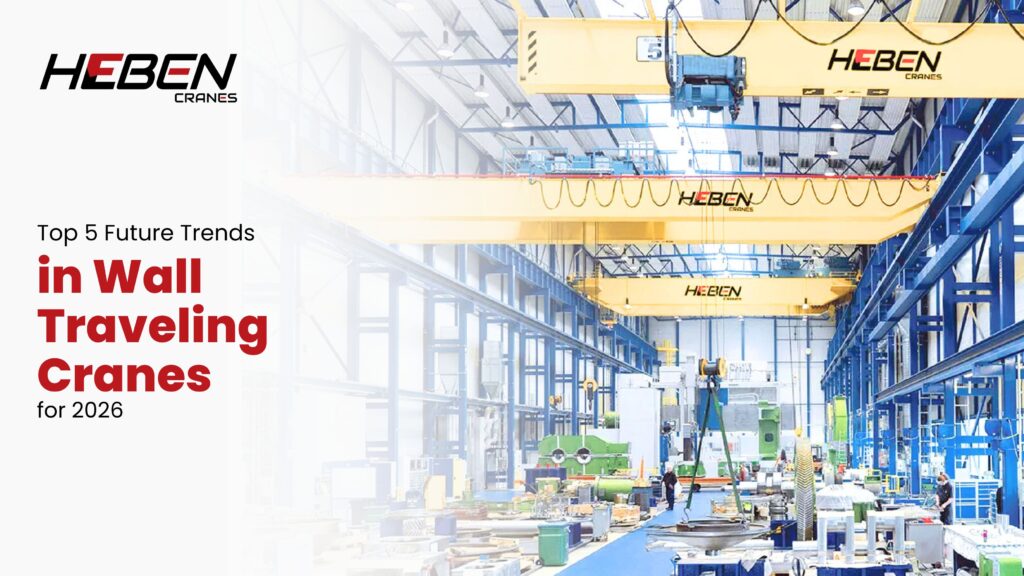
Wall traveling cranes—those silent, steadfast giants gliding along the lengths of factory walls—are poised for a transformation as profound as the industrial revolutions that birthed them. These cranes, often overlooked in favor of their more flamboyant cousins like overhead and underslung cranes, are the backbone of efficient material handling in tight, vertical spaces. In 2026, as the cranes market is projected to reach $43.63 billion globally, driven by a surge in automation, urbanization, and infrastructure investment, wall traveling cranes are stepping into the spotlight with a suite of innovations that promise to redefine productivity, safety, and sustainability. Imagine a world where every lift is smarter, safer, and greener—where cranes not only move goods but anticipate needs, prevent accidents, and even learn from their own performance. That future is closer than you think. What Are Wall Traveling Cranes? Defining the Technology and Its Advantages Wall traveling cranes are specialized lifting devices mounted to a wall or vertical structure, enabling horizontal movement of heavy loads within a confined footprint. Unlike traditional overhead cranes, which require substantial headroom and robust support structures, wall traveling cranes maximize floor space and minimize structural requirements—ideal for workshops, warehouses, and assembly lines where every square meter counts. Their advantages are manifold: they reduce clutter, improve workflow, and allow for precise positioning of materials—often in environments where other cranes simply can’t fit. As one industry analyst puts it, “Wall traveling cranes are the Swiss Army knives of material handling—compact, versatile, and indispensable in the right setting.” Historically, these cranes evolved from early jib cranes and monorail systems, which themselves were born from the need to move heavy components in shipyards and foundries. Today, they are a staple in industries ranging from automotive to aerospace, where space optimization and operational efficiency are non-negotiable. Current Industry Landscape: How Wall Traveling Cranes Are Used Today Walk the factory floors of leading manufacturers, and you’ll find wall traveling cranes lifting everything from delicate electronics to multi-tonne machinery. Their adaptability makes them ideal for repetitive, high-precision tasks—think assembling wind turbine blades, positioning automotive chassis, or installing modular building components. Recent data from the Asia-Pacific crane market highlights a compound annual growth rate (CAGR) of 7.03% between 2018 and 2026, driven by infrastructure and housing booms. This growth is mirrored in India, where rapid industrialization and smart factory initiatives are fueling demand for compact, efficient lifting solutions. “Cranes are no longer just about brute force—they’re about smart integration into the workflow,” notes a leading industry report. As modular construction and just-in-time manufacturing gain traction, wall traveling cranes are becoming the linchpin of lean, agile operations. Their ability to operate in tight spaces—often alongside underslung EOT cranes or other specialized lifting systems—makes them indispensable for modern production lines[see “Advantages of Modern Underslung EOT Cranes”]. Trend 1: Integration of Smart Automation and IoT The crane industry is undergoing a digital revolution, and wall traveling cranes are at the forefront. In 2026, expect to see a surge in smart automation, with cranes equipped with sensors, IoT connectivity, and even rudimentary AI to optimize performance. “Automation is taking place in the cranes market to gain work efficiency, with the incorporation of anti-collision, zoning, and internet-based setup,” observes a recent market analysis. Real-time data collection allows for predictive maintenance, reducing downtime and extending equipment life. Imagine a crane that alerts you to impending wear on a bearing or automatically adjusts its speed based on load and ambient conditions. These innovations are not just futuristic—they’re here, and they’re transforming how materials are handled. For starter entrepreneurs, this means investing in smart cranes is not just about keeping up—it’s about staying ahead. The data-driven insights from IoT-enabled cranes can help optimize workflows, reduce waste, and even improve worker safety. Trend 2: Lightweight and Compact Design Innovations The quest for efficiency is driving a wave of design innovation in wall traveling cranes. Engineers are leveraging advanced materials—high-strength aluminum alloys, carbon fiber composites, and ultra-light steel—to create cranes that are lighter, stronger, and more compact than ever before. These innovations are not just about saving space; they’re about enabling new applications. Lightweight cranes can be installed in older buildings with lower load-bearing capacities, opening up opportunities for retrofitting and modernization. They also reduce energy consumption and operational costs, making them a smart choice for cost-conscious businesses. A zinger to remember: “A crane that weighs less isn’t just easier to install—it’s a crane that pays for itself faster.” Trend 3: Enhanced Safety Features Through Digital Monitoring Safety is the cornerstone of any lifting operation, and wall traveling cranes are no exception. In 2026, digital monitoring systems will become standard, offering real-time tracking of load weight, crane position, and even operator behavior. Anti-collision systems, zoning technologies, and automatic load limiters are already making waves in the broader crane market. These features are being adapted for wall traveling cranes, ensuring that even in the tightest spaces, accidents are minimized. “The companies operating in the cranes market are utilizing advanced technologies such as artificial intelligence, machine learning, and computer vision for the development of autonomous cranes,” notes a recent industry overview. For businesses operating in seismic zones, these safety enhancements are particularly critical—digital monitoring can detect structural anomalies and trigger shutdowns before disaster strikes[see “Are Your Structures Safe? Understanding Seismic Loads in Earthquake Zones”]. Trend 4: Wireless Control Systems and Remote Operation The days of craning your neck to watch a load are numbered. Wireless control systems and remote operation are set to become the norm for wall traveling cranes in 2026. Operators can now control cranes from a safe distance, using handheld devices or even virtual reality interfaces. This shift is not just about convenience—it’s about safety and efficiency. Remote operation reduces the risk of accidents, allows for more precise control, and enables one operator to manage multiple cranes. “These crane’s movements are monitored by operators in a control room using onboard cameras and a remote-control station,” explains a recent report. For starter entrepreneurs, this means lower labor costs, reduced training requirements, and the ability
Understanding Manual Chain Hoists: The Complete Guide to Safe and Effective Lifting

Walk into any busy warehouse, construction site, or fabrication shop, and you’ll likely spot a manual chain hoist quietly shouldering the heavy lifting. These compact, robust devices are the unsung heroes of material handling, empowering teams to move tons of steel, machinery, or goods with little more than the pull of a chain. In India’s rapidly industrializing landscape, manual chain hoists are not just tools—they’re the backbone of safe, efficient, and cost-effective operations. What makes them so indispensable? It’s their blend of simplicity, reliability, and versatility. From the bustling docks of Mumbai to remote wind farms where electricity is a luxury, manual chain hoists enable productivity where it matters most. As one industry leader put it, “A manual chain hoist is the difference between a day’s work and an impossible task.” The Fundamentals: What Is a Manual Chain Hoist and How Does It Work? A manual chain hoist—sometimes called a chain block or chain pulley block—is a mechanical device designed to lift, lower, and precisely position heavy loads by hand. Unlike electric or pneumatic hoists, it requires no external power source, making it ideal for environments where reliability and portability are paramount. The operation is elegantly simple: a hand chain is pulled, turning a wheel that engages a series of gears and friction plates. This multiplies the user’s force, allowing a single person to lift weights that would otherwise require a team. The load chain, made of high-strength alloy steel, passes over a sprocket, raising or lowering the load attached to a robust safety hook. A built-in brake system ensures the load stays securely in place when not being moved. Manual chain hoists come in a range of capacities, typically from 0.5 to 20 tonnes, and can be mounted to a fixed point or attached to a trolley for horizontal movement. Their design prioritizes safety, with features like double pawl systems, asbestos-free friction discs, and hooks that bend gradually under overload rather than snapping—a crucial safeguard in high-risk environments. Anatomy of a Manual Chain Hoist: Key Components and Their Functions Dissecting the Chain Hoist Load Chain: Forged from Grade 8 or higher alloy steel, the load chain is the workhorse—resistant to wear, corrosion, and deformation. Hand Chain: Operated by the user, this looped chain drives the internal gears. Stainless steel variants are available for food or cleanroom applications. Gear Mechanism: Precision-engineered gears multiply input force, making it possible to lift several tonnes with minimal effort. Brake System: Typically a single-action friction brake, it automatically engages to hold the load securely when the hand chain is released. Hooks: Both top and bottom hooks feature safety latches and are designed to deform under excessive load, providing a visual warning before failure. Housing: Steel or powder-coated housings protect internal components from dust, moisture, and impact. Why These Details Matter? A robust brake system and high-grade chains are not just technical details—they’re the difference between a safe lift and a catastrophic failure. As one manufacturer notes, “In case of overload, the hooks will gradually bend and do not abruptly break off.” This design philosophy is echoed in global safety standards like EN13157 and ASME B30.21C, ensuring that even in the toughest conditions, safety is never compromised. Selecting the Right Manual Chain Hoist for Your Application Choosing the right hoist isn’t just about picking a weight rating off the shelf. It’s a nuanced decision that weighs factors like: Load Capacity: Always select a hoist with a rated capacity exceeding your heaviest expected load. Most chain pulley blocks have a safety factor of 4:1, meaning they can handle loads four times their rated capacity in controlled conditions—a testament to their engineering margin. Lift Height: Standard lifts are typically 3 meters, but custom lengths are available. Measure the vertical distance required and add a margin for safe operation. Operating Environment: For corrosive, food-grade, or cleanroom environments, opt for stainless steel or nickel-plated chains and components. Mounting Options: Will the hoist be stationary, or does your workflow require a trolley-mounted system for horizontal movement? Compatibility with monorail cranes, jib cranes, or underslung EOT cranes (see “Advantages of Modern Underslung EOT Cranes”) can dramatically boost productivity. Frequency of Use: For intensive, daily operations, invest in models with ergonomic features and enhanced safety systems. Safe Lifting Principles: Core Safety Standards and Best Practices Skimmable Safety Essentials Never exceed the hoist’s rated capacity. Overloading is the leading cause of hoist failure and workplace accidents. Inspect before every use. Look for chain wear, hook deformation, and brake responsiveness. Lift vertically. Angled lifts introduce dangerous side loads that can cause catastrophic failure. Keep hands and body clear of the load path. Even the best hoist can’t defy gravity if something goes wrong. Follow manufacturer’s instructions. Each model has unique features—know them inside out. Recent studies show that up to 60% of lifting-related accidents in Indian industries are due to improper hoist use or neglected inspections. “The manual hoist must be properly operated and maintained at all times,” stresses one leading manufacturer’s manual. Pre-Use Inspection: Ensuring Readiness and Reliability Skimmable Inspection Checklist Visual Check: Examine the load and hand chains for cracks, elongation, or corrosion. Hook Inspection: Ensure safety latches are functional and hooks are free from distortion. Brake Test: Lift a light load and check that the brake engages instantly when the hand chain is released. Gear and Housing: Listen for unusual noises during operation—grinding or clicking could indicate internal wear. Labels and Markings: Confirm that capacity labels are legible and match your application. A zinger to remember: “A five-minute inspection can prevent a five-ton disaster.” Step-by-Step Operation: From Setup to Safe Lifting Operating a manual chain hoist is straightforward, but precision matters: Secure Mounting: Attach the hoist to a certified anchor point or trolley. Double-check all connections. Attach Load: Hook the load securely, ensuring the center of gravity is directly beneath the hoist. Lift Smoothly: Pull the hand chain in a steady, controlled motion. The gears and friction plates will do the heavy lifting, but avoid jerky movements. Pause and Hold:
Advantages of Modern Underslung EOT Cranes
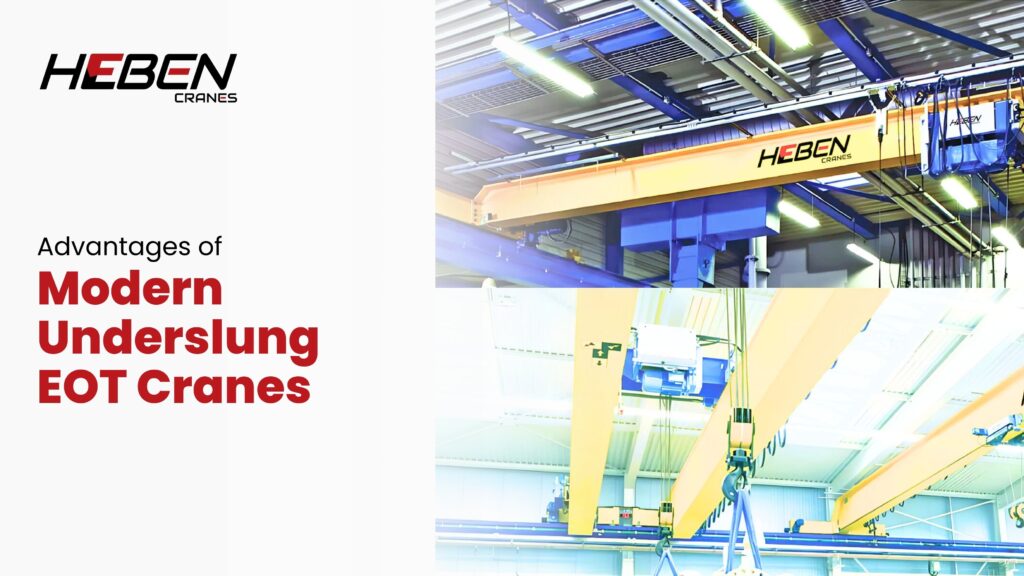
Introduction: The Evolving Role of Underslung EOT Cranes in Modern Industry In the fast-changing landscape of industrial material handling, the underslung EOT (Electric Overhead Travelling) crane stands out as a transformative solution. Modern factories and warehouses are under constant pressure to optimize space, improve safety, and maximize efficiency—all while keeping costs in check. Underslung EOT cranes, with their unique design and advanced features, are rapidly becoming the go-to choice for forward-thinking businesses. As Heben Technovation Pvt. Ltd. continues to innovate in this space, understanding the core advantages of these cranes is crucial for anyone looking to future-proof their operations. Space Optimization and Facility Design Advantages One of the most compelling reasons companies choose underslung EOT cranes is their ability to make the most of available space. Unlike traditional cranes that require heavy runway beams and significant vertical clearance, underslung cranes are suspended from the ceiling structure itself. This design frees up valuable floor and headroom, making them ideal for facilities with lower ceilings or irregular layouts. A 2022 industry analysis revealed that factories implementing underslung cranes saw a 25% improvement in material handling efficiency, directly linked to better space utilization. This advantage is especially pronounced in retrofit projects, where integrating new cranes into existing buildings can be a logistical challenge. For a deeper dive into how different crane configurations can impact your facility, check out our guide, Different Types of EOT Crane Configuration. Versatile Mounting and Seamless Integration with Existing Infrastructure Modern underslung EOT cranes are engineered for seamless integration with a wide variety of building structures. Their modular design allows for rapid installation, often without the need for extensive structural modifications. This flexibility not only reduces project timelines but also minimizes disruption to ongoing operations—a critical factor for busy manufacturing plants and warehouses. Because underslung cranes are supported by the roof structure, they can be installed in spaces where traditional floor-mounted cranes would be impractical or impossible. This makes them particularly suitable for older buildings or facilities with limited ground support. The ability to adapt to existing infrastructure is a hallmark of Heben Technovation Pvt. Ltd.’s approach, ensuring clients receive tailored solutions that fit their unique requirements. Enhanced Maneuverability and Adaptability in Confined Spaces Underslung EOT cranes excel in environments where space is at a premium. Their design allows for greater maneuverability, enabling operators to move loads with precision even in tight or congested areas. This is a significant advantage over conventional cranes, which often struggle in confined spaces due to their reliance on fixed rails and larger footprints. Recent research published in 2023 demonstrated that warehouses equipped with underslung cranes experienced a 10% reduction in loading and unloading times compared to those using traditional lifting solutions. This increased agility translates directly into faster processing, smoother workflows, and improved responsiveness throughout the supply chain. Advanced Load Control and Precision Handling Modern underslung EOT cranes are equipped with state-of-the-art load control systems, including variable speed drives, anti-sway technology, and advanced positioning sensors. These features enable operators to handle materials with exceptional accuracy, reducing the risk of damage to both the load and the facility. As highlighted in a leading industry report, “Underslung cranes ensure optimal load handling and positioning accuracy, minimizing the risk of accidents and damage to valuable assets.” For those interested in mastering safe lifting practices and maximizing efficiency, our blog Understanding SWL in EOT Cranes: Ensure Safe Lifting & Maximize Efficiency offers expert insights on the topic. Safety Innovations and Operator Protection Safety is a non-negotiable priority in any industrial setting, and modern underslung EOT cranes are designed with this in mind. Features such as overload protection, collision avoidance sensors, and ergonomic controls are now standard. Remote operation capabilities further enhance safety by allowing operators to control the crane from a safe distance, significantly reducing exposure to potential hazards. A comprehensive safety report from 2021 noted a 20% decrease in workplace accidents in facilities utilizing underslung cranes, attributing this improvement to better visibility, fewer ground-level obstructions, and advanced safety mechanisms. Enhanced operator interfaces and intuitive controls also contribute to a safer and more productive environment. Streamlined Maintenance and Reduced Downtime Maintenance is often the Achilles’ heel of heavy equipment, but underslung EOT cranes are engineered for accessibility and simplicity. Key components are within easy reach, allowing for quick inspections, repairs, and adjustments. This design philosophy minimizes downtime, ensuring that operations remain continuous and reliable. Unlike traditional overhead cranes, which may require scaffolding or special equipment for maintenance, underslung cranes offer ground-level access to most service points. This not only reduces maintenance costs but also shortens the time required for routine servicing—a win-win for productivity and operational budgets. Cost Efficiency and Long-Term Value Despite their advanced features, underslung EOT cranes offer a compelling return on investment. Lower installation costs, reduced maintenance requirements, and enhanced operational efficiency all contribute to significant long-term savings. The modular nature of these cranes allows for incremental upgrades and expansions, ensuring that your investment continues to deliver value as your business grows. Industry data shows that companies adopting underslung cranes often realize a 15-20% reduction in total cost of ownership compared to traditional crane systems. This cost-effectiveness, combined with superior performance, makes them an attractive option for businesses of all sizes. Application Versatility Across Diverse Industrial Sectors Underslung EOT cranes are not limited to a single industry; their versatility makes them indispensable across manufacturing, warehousing, automotive, aerospace, construction, and more. Whether it’s precision assembly, heavy material handling, or logistical operations, these cranes adapt to a wide range of applications. For instance, in the construction sector, choosing the right crane can make or break a project’s efficiency. If you’re exploring other lifting solutions, our article Find the Right Jib Crane for Your Needs: Accelerate Heavy Construction Assembly! provides a comprehensive guide to selecting the best crane for your specific requirements. Digitalization, Automation, and Future-Ready Features The integration of digital technologies and automation is redefining what’s possible with underslung EOT cranes. Features like real-time monitoring, predictive maintenance, and IoT connectivity are becoming standard, allowing for