
Best Double Girder Crane Supplier in Maharashtra
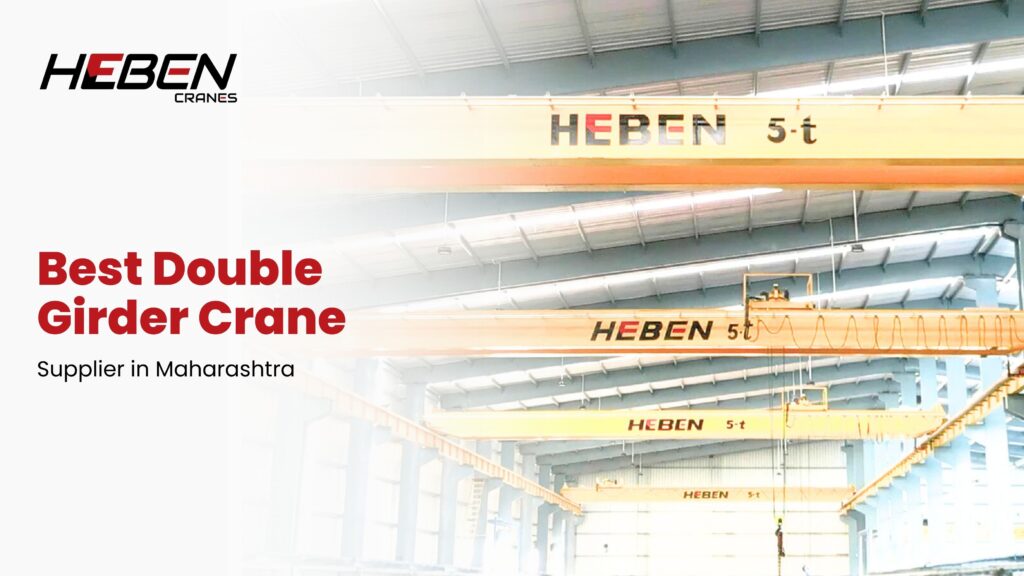
Introduction Your plant in Maharashtra needs a double girder crane, and ten suppliers quote within 15% of each other. Price looks similar, capacity matches, and everyone claims quality. The real problem is this: most buyers optimize for upfront cost and ignore the factors that determine whether a crane delivers value over 20 years or becomes a maintenance burden within five. This guide covers technical specifications, Maharashtra-specific industrial requirements, evaluation criteria for engineering depth and service reach, and a step-by-step process to identify suppliers who match your actual operational needs—not just your purchase order specifications. Understanding Double Girder Crane Requirements A double girder EOT crane uses two parallel main beams to support loads from 10 tons up to 500 tons across long spans. The hoist trolley travels on rails mounted atop these girders, maximizing lifting height and structural stability. Maharashtra industrial clusters—Mumbai, Pune, Aurangabad, Nashik, Nagpur—run steel fabrication, automotive assembly, power equipment manufacturing, and logistics operations that demand heavy-duty lifting. These applications need continuous or near-continuous duty ratings (M5-M7 class), not the light intermittent service that single girder systems handle. Capacity ranges break into practical segments: 10-40 tons for general heavy manufacturing, 40-100 tons for steel mills and power plants, and 100+ tons for specialized process industries. Each bracket implies different structural engineering, hoisting equipment, and runway beam specifications. What Maharashtra Industries Actually Need Steel plants, cement facilities, transformer manufacturers, and cable producers require cranes that operate multiple shifts with minimal downtime. The bay cranes handle heavy components, ladle transfers, and process-critical lifts where failures stop production lines. Auto assembly plants and engineering shops need precise positioning and synchronized dual-hoist operations for large assemblies. Warehousing and logistics hubs demand speed and reliability for high-throughput container and material handling. Here’s the pattern most facilities miss: they over-specify capacity but under-specify duty class. A 50-ton crane rated for intermittent use (M4) fails prematurely when run continuously at 35-40 tons. The structural design, motor sizing, and brake systems aren’t built for that load frequency. Proper duty class specification matters more than raw tonnage. Technical Specifications That Determine Performance Load capacity defines the crane, but span and lifting height determine if it fits your bay. Measure clear span between building columns and required hook height from floor to lowest obstruction. Account for hoist height when fully retracted. Duty class indicates how many operating hours per day the crane handles under what percentage of rated load. M5 suits moderate-frequency use, M6 handles frequent cycles, and M7 serves continuous heavy-duty operations. Travel speeds matter for productivity. Hoist speeds of 3-15 m/min, trolley speeds of 20-40 m/min, and bridge speeds of 30-80 m/min affect cycle times. Variable frequency drives provide smooth acceleration and precise positioning. Control systems range from pendant to radio remote to cabin operation. Maharashtra’s high-temperature environments and dusty conditions require IP-rated electrical enclosures and appropriate environmental protection for outdoor installations. What “Best Supplier” Actually Means Engineering capability separates suppliers who copy standard designs from those who engineer solutions for your application. In-house design teams can customize hoisting arrangements, calculate wheel loads for your specific runway, and optimize crane geometry for your bay constraints. Manufacturing depth includes fabrication quality, welding procedures, and load testing infrastructure. Modular designs allow phased installation and future upgrades without complete replacement. Service footprint determines response time when your crane stops. A supplier based in Pune with no service presence in Aurangabad or Nagpur leaves you waiting days for breakdown support. Check how quickly they reach your plant, not where their factory sits. Track record shows industry experience and repeat customers. Suppliers with multiple installations in your specific sector understand application requirements that generic manufacturers miss. Maharashtra-Specific Buying Factors Proximity matters less than service network density. A Mumbai manufacturer with strong Pune and Nashik service teams serves you better than a local company without skilled technicians or stocked spares. Industry specialization predicts performance. Power plant experience differs from steel mill expertise. Ask for references in your exact sector within Maharashtra, not just general crane installations. Lead times vary significantly across suppliers. Standard configurations ship faster than custom designs. Clarify commissioning timelines and whether the supplier handles installation or subcontracts it. AMC and spares availability determine long-term costs. Verify spare parts stocking in Maharashtra and breakdown response commitments. 24/7 support means nothing without technicians who actually show up. Common Mistakes That Cost Money Most buyers choose based on lowest delivered price. They compare tonnage and span but ignore girder section sizes, motor brands, hoist quality, and structural design differences. A cheaper crane built to lighter duty specifications fails earlier and costs more over its lifetime. Runway beam planning happens too late. The crane supplier provides wheel loads, but your civil engineer must verify building structure capacity. Inadequate runway support causes alignment problems and premature wear. Future expansion gets ignored. Plants that need more capacity within five years should specify heavier duty class initially or design bays to accommodate crane upgrades without complete replacement. Service evaluation happens after purchase instead of during supplier selection. Maintenance capability should carry equal weight with technical specifications and price. Step-by-Step Supplier Evaluation Step 1: Map Your Duty Requirements Document load spectrum across all lifts, not just maximum capacity. Count lifts per shift and percentage of time at various load levels. Specify indoor or outdoor operation and environmental factors. Step 2: Shortlist Maharashtra-Active Suppliers Filter by capacity range and proven installations in your industry segment. Prioritize suppliers with service infrastructure in your region, not just sales presence. Step 3: Compare Technical Proposals Request detailed GA drawings showing girder sections, wheel loads, and component specifications. Compare duty class ratings and verify motor and brake sizing matches your cycle requirements. Step 4: Audit Service Capabilities Ask for documented response times, technician count in Maharashtra, and spare parts inventory locations. Check warranty terms and AMC pricing structure. Step 5: Inspect Live Installations Visit operating cranes of similar capacity at existing customer sites in Maharashtra. Watch the crane work and ask plant managers about supplier responsiveness and equipment reliability. Frequently Asked Questions
Top Single Girder Crane Supplier in Maharashtra

Introduction Choosing the wrong crane supplier costs you twice—once in money, once in downtime. Maharashtra’s industrial belt runs on material handling efficiency, yet many facilities settle for suppliers who deliver late, skimp on quality, or vanish after installation. The right supplier provides engineered solutions, reliable delivery, and long-term support that keeps operations moving. This matters because a single girder crane represents a 15-20 year commitment, not a transaction. This guide examines what separates capable suppliers from excellent ones, covering experience indicators, service quality, customization depth, and the questions that reveal whether a supplier can deliver what your facility actually needs. Why Single Girder Cranes Dominate Maharashtra Industry? Maharashtra hosts concentrated manufacturing in automotive, pharmaceuticals, textiles, food processing, and general engineering. These sectors share common requirements: moderate lifting capacity, frequent load movements, and space-efficient designs. Single girder cranes address these needs directly. They handle 1-20 ton capacities across spans of 7.5-25 meters, fitting standard factory bay widths without requiring heavy structural modifications. Installation costs run 30-40% lower than double girder alternatives. For facilities operating 8-12 hour shifts with intermittent lifting patterns, single girder systems deliver optimal economics. Key Supplier Selection Criteria Manufacturing Capability and Experience Look for suppliers with in-house fabrication facilities, not just trading operations. Manufacturers control quality, delivery timelines, and customization options that brokers cannot. Years in operation matter less than project portfolio. A supplier with 50+ installations across diverse industries demonstrates adaptability and technical depth. Compliance and Certification Indian Standard IS 3177 and IS 807 govern crane design and manufacturing. Suppliers must provide test certificates, material traceability documents, and compliance records. ISO 9001 certification indicates systematic quality management. Third-party inspection reports from agencies like Lloyd’s or Bureau Veritas add credibility. Customization Depth Standard catalogue products rarely match facility requirements perfectly. The best suppliers engineer solutions for specific span lengths, lifting heights, duty cycles, and environmental conditions. Regional Supplier Landscape in Maharashtra Mumbai and MMR Mumbai suppliers serve port operations, logistics warehouses, and light manufacturing. The region emphasizes quick delivery and compact designs suited to space-constrained facilities. Thane and Navi Mumbai host numerous fabrication units providing both standard and custom configurations. Pune Industrial Belt Pune dominates automotive component manufacturing and engineering operations. Suppliers here specialize in precision handling, higher duty cycles, and integration with automated production lines. The concentration of automotive plants drives demand for cranes with variable frequency drives, soft start systems, and advanced control interfaces. Aurangabad and Nashik These cities focus on pharmaceutical, food processing, and textile industries. Clean-room compatible designs, corrosion-resistant coatings, and explosion-proof configurations see regular demand. What Distinguishes Top Suppliers Quality fabrication starts with material selection. Grade IS 2062 structural steel, properly stress-relieved after welding, ensures longevity. Inferior materials fail prematurely under cyclic loading. Electrical components determine reliability. European-standard hoists, Schneider or Siemens controls, and proper cable management systems reduce failure rates significantly. Load testing before delivery confirms rated capacity. Suppliers who skip this step deliver cranes that may not meet specification under actual operating conditions. Supplier Services Beyond Installation Comprehensive Support Structure Installation teams must include structural engineers who verify building support adequacy, not just riggers who bolt equipment in place. Commissioning should involve operator training, safety protocol development, and documentation handover. Suppliers who treat these as optional extras create operational gaps. Maintenance and Lifecycle Management Annual maintenance contracts prevent the slow degradation that leads to sudden failures. Top suppliers offer scheduled inspections, predictive maintenance using vibration analysis, and emergency response within 24-48 hours. Spare parts availability determines how quickly you recover from breakdowns. Local inventory for critical components—brake pads, limit switches, wire ropes—matters more than initial price. Evaluating Supplier Proposals Request detailed technical specifications, not just capacity and span. Ask for girder dimensions, hoist specifications, control systems, duty classification, and material grades. Compare apples to apples. One supplier’s “10-ton crane” may use light-duty M3 classification while another offers heavy-duty M5. The price difference reflects this, but unclear quotes obscure it. Check these elements in every proposal: Manufacturing timeline with stage-wise milestones Installation scope and exclusions Warranty terms for structural, mechanical, and electrical components Maintenance requirements and recommended service intervals Spare parts pricing and availability commitments Red Flags That Indicate Problems Suspiciously low quotes usually mean substituted materials, undersized components, or hidden installation exclusions. The savings vanish during installation or within the first operating year. Vague delivery commitments without manufacturing schedules suggest capacity constraints or outsourced production that the supplier cannot control. Reluctance to provide client references or facility visit opportunities indicates quality concerns or dissatisfied customers. FAQs Q: How do I verify a supplier’s manufacturing capability? A: Request a facility visit to observe fabrication processes, welding quality, and testing equipment. Genuine manufacturers welcome this. Trading companies make excuses. Q: What’s a reasonable delivery timeline for custom single girder cranes? A: Standard designs: 4-6 weeks. Custom configurations: 6-10 weeks. Shorter timelines often indicate pre-fabricated components that may not match your specifications exactly. Q: Should I prioritize local suppliers over those from other states? A: Local presence matters primarily for after-sales service and emergency support. A distant supplier with strong regional service infrastructure often outperforms a nearby supplier with limited technical resources. Q: What warranty terms should I expect? A: Structural components: 12-24 months. Mechanical parts: 12 months. Electrical systems: 6-12 months. Shorter warranties suggest quality concerns. Q: Can suppliers retrofit cranes to existing buildings? A: Yes, but this requires structural assessment first. Competent suppliers conduct load analysis and propose modifications if needed. Those who skip this step risk installation failures. Conclusion Supplier selection determines whether your single girder crane operates reliably for 15-20 years or becomes a maintenance burden within 3-5 years. Manufacturing capability, compliance records, service infrastructure, and transparent proposal terms separate qualified suppliers from problematic ones. Contact us for a facility assessment and detailed proposal that addresses your specific requirements. Heben Cranes manufactures single girder overhead cranes from 1 to 20 tons with complete in-house fabrication, testing, and quality control at our Maharashtra facility. We serve Pune, Mumbai, Aurangabad, Nashik, and surrounding industrial areas with engineered solutions customized to your
Single Girder Overhead Crane Guide: Key Specs & Benefits

Introduction Your facility needs overhead lifting but doesn’t want to spend on heavy-duty infrastructure. That’s the challenge workshops, warehouses, and light manufacturing plants face when budgets are tight but material handling demands are real. Single girder overhead cranes solve this by using one main beam instead of two, cutting costs by 30-50% while handling loads up to 20 tons. This guide walks through components, technical specifications, operational benefits, real-world applications, selection criteria, installation steps, and maintenance practices that keep your crane running reliably for decades. What Single Girder Overhead Cranes Actually Are A single girder overhead crane uses one horizontal beam supported at both ends by end carriages. These end carriages contain wheels that travel along runway beams mounted to your building columns. The electric hoist hangs from a trolley that runs along the bottom flange of the main girder. This design handles vertical lifting through the hoist, horizontal cross-travel via the trolley, and longitudinal movement through bridge travel. The system delivers three-dimensional load positioning without the material weight and cost of double girder configurations. Most applications fall in the 1-20 ton capacity range with spans under 30 meters. If you need more capacity or longer spans, you’re looking at double girder territory. Core Components That Do the Work The main girder is typically an I-beam or box section that spans your facility width and bears the load. End carriages attach to both girder ends and house the motors, wheels, and braking systems for bridge travel. The hoist and trolley assembly handles actual lifting. Wire rope hoists work for heavier loads while chain hoists suit lighter applications. The trolley provides lateral movement across the girder width. Control systems range from simple pendant push buttons to wireless radio remotes or cabin operation. Your choice depends on operator visibility needs and operational complexity. Safety devices include: Limit switches preventing over-travel in all directions Overload sensors that stop operation above rated capacity Emergency stop buttons for immediate shutdown Rail sweeps clearing debris from runway paths Electrical panels distribute power and house motor controls, contactors, and circuit protection. Technical Specifications You Need to Know Load capacity typically ranges from 1 to 20 tons, with 5-10 ton models dominating workshop installations. Standard span lengths run from 3 meters up to 35 meters, though most facilities work within 7.5-22.5 meter spans. Lifting height varies from 3 to 50 meters based on your headroom constraints and operational requirements. Standard operating speeds include 8/0.8 m/min for hoisting, 20 m/min for trolley travel, and 30 m/min for bridge travel. Duty class ratings (A3-A4) indicate how many operating hours per day the crane handles. A3 suits intermittent use while A4 handles more frequent cycles. Power supply uses three-phase 415V AC in most regions. Headroom requirements measure just 700-1600mm depending on capacity, maximizing your usable vertical space. Why Single Girder Beats Double for Most Operations Here’s what many facilities discover too late: they overspend on double girder cranes they don’t actually need. Single girder systems cost 30-50% less upfront due to reduced steel usage and simpler construction. The lighter deadweight means less stress on building structure. You’ll save on runway beam reinforcement and potentially avoid expensive structural upgrades. Installation happens faster with fewer components to assemble. Compact design maximizes hook height in facilities with tight ceiling clearances. You get more usable lifting range in the same vertical space compared to double girder alternatives. Maintenance proves simpler with fewer moving parts and easier access points. This translates to less downtime and lower long-term operating costs. Facilities using structured daily checklists report finding 60% of potential issues before they cause production stoppages. Where These Cranes Deliver Real Value Manufacturing workshops use single girder cranes for machine tool loading, assembly line support, and part transfer between workstations. The precision control suits operations requiring exact positioning within tight tolerances. Warehouses rely on them for pallet handling, loading dock operations, and high-bay storage access up to 15 tons. Distribution centers value the speed and reliability for maintaining throughput. Light engineering facilities, automotive assembly plants, and metal fabrication shops benefit from the flexible coverage area. These environments typically operate indoors with controlled conditions and moderate duty cycles. The pattern that emerges across installations: single girder cranes work best when your operation needs reliable overhead coverage without extreme capacity demands or continuous heavy-duty cycles. Selecting the Right Configuration Start by calculating your maximum load including rigging equipment, spreader beams, and safety margins. Add 20-25% buffer capacity—don’t spec right to the edge of your actual needs. Measure the clear span between your building columns that will support runway beams. Factor in the required lifting height from floor to hook in lowest position. Consider headroom available and how crane height affects usable lift range. Evaluate your duty class needs. A3 works for general intermittent use with 2-4 hours of operation daily. A4 suits more frequent lifting with 4-8 hours of daily operation. Choose control systems based on operator workflow. Pendant controls cost less but tether the operator. Radio remotes allow movement with the load for better positioning. Reserve cabin controls for complex environments or when operator comfort matters for extended shifts. Installation Process Overview Install and align runway beams to building columns, maintaining level within 2mm per meter Assemble end carriages to both girder ends, ensuring precise wheel alignment Mount the hoist trolley to the girder bottom flange and connect electrical festoon systems Perform no-load travel testing in all directions, then conduct load testing to 125% of rated capacity Typical installation takes 2-5 days for spans under 20 meters with straightforward site conditions. Complex installations or larger systems need more time. Maintenance That Prevents Expensive Failures Daily operator checks should cover hoist brake function, wire rope condition for fraying or kinks, and all control operations. Visual inspection catches most developing problems before they cause downtime. Monthly maintenance includes lubrication of trolley wheels, gear reducers, and end carriage bearings. Check electrical connections for signs of heat damage or loosening. Test limit switches and verify safety devices
When to Choose a Single Girder EOT Crane for Your Project

Most project teams pick cranes based on capacity alone—then discover the crane doesn’t fit the building, costs twice the budget in runway modifications, or requires expensive low-headroom options they didn’t plan for. Here’s the uncomfortable reality: roughly 35% of crane installations end up over-specified (wasting capital on unused capacity) or under-specified (forcing operational compromises within two years). Single girder EOT cranes work brilliantly for light-to-medium industrial lifting when properly matched to capacity, span, duty cycle, and facility constraints. This guide covers when a single girder becomes the smart choice, the capacity and span sweet spots, duty class boundaries, headroom considerations, and the clear signals telling you to choose something else instead. Understanding Single Girder EOT Cranes Single girder cranes use one main beam supporting a hoist and trolley system. The hoist typically hangs beneath the girder in top-running configurations, or the entire bridge suspends from building structure in underhung designs. This simpler construction reduces weight, material costs, and installation complexity compared to double girder alternatives. The design works efficiently for capacities up to 15-20 tons and spans under 60-65 feet. Beyond these limits, structural deflection, material availability, and safety factors make double girder configurations more practical and cost-effective. Top-running single girders ride on rails mounted atop runway beams, while underhung versions suspend from bottom beam flanges. The choice depends on building structure, headroom requirements, and whether you’re retrofitting existing facilities or designing new construction. When Single Girder Makes Perfect Sense Single girder cranes excel in workshops, fabrication shops, light manufacturing, and assembly operations handling predictable loads in the 1-15 ton range. If your heaviest regular lift stays under 10 tons and you’re not running intensive multi-shift operations, single girder delivers the capacity you need without paying for capability you’ll never use. Budget-conscious projects benefit from 30-40% lower equipment costs and 25-35% reduced installation expenses compared to double girder equivalents. The lighter weight requires less robust runway support, simplifying structural requirements and cutting building modification costs. Facilities with existing building structure often accommodate underhung single girder installations without expensive column additions or foundation work. This retrofit advantage makes single girder the practical choice when overhead cranes get added to buildings designed without them. Ideal Single Girder Applications General manufacturing with consistent moderate loads Maintenance shops requiring occasional precise positioning Warehouses handling palletized goods and light containers Assembly lines moving components between workstations Machine shops serving CNC equipment and tooling Capacity Range Reality Check Single girder cranes handle 1-20 ton capacities effectively, with most installations falling between 3-15 tons. If your regular loads consistently exceed 12-15 tons, you’re approaching the practical limit where double girder becomes the smarter long-term choice. Here’s what most buyers miscalculate: they spec for maximum load without accounting for rigging equipment weight, dynamic lifting forces, or future capacity needs. A 10-ton fabricated assembly plus 1.5 tons of lifting beams and rigging creates 12-13 tons actual crane stress when you factor in acceleration forces. Build 20-25% capacity buffer into specifications. This margin accommodates growth, specialty tooling, and dynamic loading without forcing premature crane replacement when operations expand. The cost difference between a 12-ton and 15-ton crane is modest—replacing an undersized 12-ton unit after three years costs vastly more. Span and Building Constraints Single girder cranes economically cover spans up to 60-65 feet before deflection concerns and material limitations favor double girder designs. Measure your facility bay width between columns, subtract clearances for end trucks and safety margins (typically 18-24 inches total), and that’s your practical span requirement. Existing runway beams sometimes support underhung single girder installations without reinforcement, but verify capacity through professional structural analysis. Many facilities discover their ceiling structure can’t handle even “lightweight” crane loads without expensive upgrades. Column spacing dictates maximum span. Irregular bay layouts or spans exceeding 65 feet automatically push you toward double girder configurations regardless of capacity needs. Duty Classification Boundaries Duty class determines structural design, component quality, and service life expectations. Single girder cranes typically operate in Class A3-A5 ranges covering light to moderate service. Class A3 handles 2-5 lifts per hour in intermittent service totaling under 2,000 hours annually—perfect for maintenance shops and occasional material handling. Class A4 manages 5-8 lifts hourly across 2,000-4,000 annual operating hours in light production environments. Class A5 accommodates 8-12 hourly lifts and 4,000-8,000 annual hours in moderate manufacturing operations. The contrarian insight: if you’re running 15+ lifts per hour across multi-shift operations, single girder construction faces accelerated wear requiring major overhauls at 8-10 years instead of designed 15-20 year lifespans. Save money long-term by specifying double girder heavy-duty classifications (A6-A8) matching actual operational intensity. Headroom and Lift Height Optimization Standard single girder cranes consume vertical space from the hoist hanging beneath the main girder. Low-headroom designs position the hoist mechanism alongside the girder, recovering 12-24 inches of additional hook height but adding 10-15% equipment cost. Calculate required lift height by measuring from floor to highest pickup point, adding load height plus rigging allowance (typically 3-5 feet total). Facilities with 20-25 foot ceiling heights often struggle with standard single girder configurations where low-headroom becomes necessary. Double girder cranes provide 3-6 feet additional hook height because the hoist runs atop the bridge girders. If maximizing vertical reach determines whether your operation functions effectively, that advantage alone can justify double girder specification even for moderate capacities. Cost Considerations Beyond Purchase Price Initial equipment costs represent 45-55% of total ownership expenses over 20-year crane lifespans. Runway installation, structural modifications, electrical systems, and ongoing maintenance constitute the remaining costs that specifications significantly influence. Single girder advantages include lighter runway beam requirements, simpler installation procedures, and reduced maintenance complexity. These factors typically deliver 25-35% lower total installed cost compared to equivalent double girder systems. Energy efficiency depends more on control systems than structural design. Variable frequency drives cut consumption 30-40% versus resistance controls, recovering the 15% equipment premium within 3-4 years of regular operation. When to Choose Double Girder Instead Capacity requirements regularly exceeding 15 tons signal the transition point where double girder becomes practical and economical. The dual beam
Double Girder Cranes: Essential for Logistics & Heavy Lifting

Facilities handling loads exceeding 15-20 tons face a critical decision point where single girder cranes reach practical limitations. Operations that push undersized equipment beyond design capacity experience 2-3 times normal wear rates, frequent breakdowns, and replacement within 8-10 years instead of designed 20-25 year lifespans. Double girder cranes eliminate these compromises through superior structural capacity, maximum hook height, and heavy-duty construction designed for intensive operations. This guide examines why double girder configurations become essential, their structural advantages, capacity ranges, applications in logistics and heavy industry, key features, and selection criteria ensuring optimal long-term value. Structural Design and Core Advantages Double girder cranes use two parallel main girders supporting the trolley and hoist system riding atop the bridge. This fundamental design difference from single girder cranes—where the hoist hangs beneath a single beam—creates multiple performance advantages that justify premium investment. Load distribution across dual girders provides superior stability handling heavy capacities and wide spans without excessive deflection. The parallel beam structure creates a rigid platform supporting intensive duty cycles that would overstress single girder designs. Maximum hook height results from hoist positioning atop bridge girders rather than hanging beneath. This design gains 3-6 feet additional lifting height compared to equivalent single girder installations—critical advantage in facilities with limited vertical clearance. Maintenance walkways integrate directly into the bridge structure, providing safe technician access to wheels, drives, electrical components, and hoist mechanisms. Single girder designs require suspended scaffolding or lift equipment for service access, extending downtime and increasing labor costs. Capacity and Span Capabilities Double girder cranes start at 10-15 ton capacities where single girder designs reach practical limits and scale to 500+ tons for specialized heavy industrial applications. The dual beam structure enables this scalability without geometric constraints limiting single girder configurations. Span lengths exceeding 65-70 feet become economical with double girder construction. Single girder cranes struggle with spans beyond 60 feet due to deflection and material availability limitations, while double girder designs routinely cover 100-150 foot spans effectively. Duty classifications A6 through A8 suit double girder structural capacity for heavy to severe service conditions. These ratings handle 20-40+ lifting cycles hourly across multi-shift operations—operational intensity that degrades lighter-duty equipment prematurely. Typical Capacity Ranges by Application 10-25 tons: General manufacturing, fabrication shops upgrading from single girder limitations 25-75 tons: Steel processing, heavy equipment assembly, logistics centers 75-200 tons: Steel mills, shipyards, power plants, infrastructure construction 200-500+ tons: Specialized applications including ship assembly, offshore platforms, heavy forging Logistics and Warehouse Applications Modern distribution centers use double girder cranes for high-volume material handling where capacity, precision, and cycle speed determine throughput. Container handling, bulk pallet movement, and heavy equipment positioning benefit from superior stability and control. Automated storage and retrieval systems integrate double girder cranes with inventory management software, enabling lights-out operations in 24/7 facilities. The robust construction withstands continuous operation that would quickly fatigue lighter equipment. Cross-docking operations require rapid load transfers between incoming and outgoing transport. Double girder crane speed capabilities—often 10-20% faster than single girder equivalents—directly impact facility throughput and operational efficiency. The contrarian insight most logistics managers miss: two 15-ton single girder cranes cost less initially than one 30-ton double girder unit but require twice the runway infrastructure, electrical systems, and maintenance labor. Total ownership costs often favor single higher-capacity installations over multiple smaller units. Heavy Industrial Applications Steel mills rely on double girder cranes handling molten metal ladles, coil processing, and structural component movement. Specialized designs accommodate extreme temperatures, corrosive environments, and loads exceeding 200 tons routinely. Shipbuilding yards use double girder gantry configurations positioning hull sections, engine assemblies, and outfitting components with millimeter precision. Tandem hoist systems combine multiple units for ultra-heavy lifts exceeding single-hoist capacity limits. Automotive manufacturing depends on double girder precision moving body panels, engine blocks, and assembly components through production sequences. Integration with factory automation systems enables synchronized material flow supporting just-in-time manufacturing principles. Power plant construction and maintenance requires heavy lifting capability for turbine installation, generator positioning, and component replacement during scheduled outages. Double girder crane reliability during critical maintenance windows prevents expensive delays extending plant downtime. Essential Features and Technology Variable frequency drives provide precise speed control, smooth acceleration reducing structural stress, and energy savings offsetting 15-20% higher equipment costs within 3-5 years of intensive operation. Modern VFD systems enable soft starts, controlled stops, and multiple preset speed ranges. Anti-sway technology improves load positioning accuracy and cycle speed by damping oscillation during travel. Facilities handling tall loads or requiring precise placement benefit significantly from electronic sway control systems. Remote monitoring capabilities track operating hours, cycle counts, load weights, and component condition enabling predictive maintenance. Data-driven intervention scheduling reduces unplanned downtime 40-60% compared to reactive maintenance approaches. Safety Systems Integration Overload protection preventing dangerous lifts exceeding rated capacity Redundant braking systems ensuring controlled stops if primary system fails Collision avoidance for multiple crane installations sharing runways Emergency stop systems with redundant controls accessible from multiple locations Why Double Girder Becomes Essential? Single girder cranes reach practical limits around 15-20 tons capacity and 60-65 foot spans. Operations regularly approaching these thresholds should specify double girder configurations avoiding performance compromises and premature equipment replacement. Headroom optimization matters when facilities maximize vertical space utilization. The 3-6 feet additional hook height from double girder design often determines whether operations can function effectively in existing structures versus requiring expensive building modifications. Heavy-duty cycle operations demanding A6-A8 classifications need double girder structural capacity. Forcing single girder equipment into intensive duty applications accelerates fatigue damage, component wear, and structural deterioration requiring major overhauls at 50-60% of designed service life. Long-term value favors double girder investments despite 30-40% higher initial costs when total ownership analysis includes maintenance frequency, component longevity, energy efficiency, and operational capability over 20-25 year equipment lifespans. Frequently Asked Questions Q: At what capacity should buyers choose double girder over single girder cranes? A: Double girder becomes the practical choice when capacity requirements regularly exceed 15 tons, spans exceed 65 feet, or operations demand A6+ duty classifications. Facilities approaching these thresholds should specify double girder configurations avoiding
Bridge Crane Comparison: Single vs Double Girder Cost

Introduction Most buyers focus on sticker price and miss the real cost equation. A single girder crane that costs $15,000 upfront might run $80,000 over 20 years, while a $35,000 double girder system totals $75,000 across the same period. The difference comes from installation expenses, energy consumption, maintenance patterns, and duty cycle alignment. Here’s the uncomfortable truth: choosing the cheaper option often costs more. This guide breaks down purchase price, installation costs, operating expenses, maintenance requirements, and lifecycle economics to show you exactly when each configuration delivers better value for your specific application and budget constraints. Basic Design Differences Single girder cranes use one main beam supporting the hoist and trolley system. The hoist typically runs on the bottom flange of the girder, creating a compact, lightweight design. Double girder cranes employ two parallel beams with the hoist traveling on rails mounted on top of the girders. This configuration distributes weight more evenly and supports heavier capacities. The structural difference directly impacts cost. Single girder systems weigh 30-40% less than comparable double girder designs, affecting everything from transportation to installation to building support requirements. Initial Purchase Price Comparison Single girder cranes range from $8,000-$25,000 for 1-10 ton capacities. A 10-ton single girder with 15-meter span typically costs $18,000-$22,000. Double girder systems start around $25,000 for 5-ton capacity and reach $80,000+ for 20-ton configurations. A comparable 10-ton double girder with 15-meter span runs $35,000-$45,000. The price gap narrows as capacity increases. At 20 tons, a single girder costs 40-50% less. Beyond 20 tons, single girder options become impractical regardless of price. Installation and Structural Costs Single girder systems demand less structural support because they weigh significantly less. Runway beams can be lighter gauge, and existing building structures often accommodate them without reinforcement. Double girder cranes require robust runway support. The heavier weight necessitates reinforced columns, stronger runway beams, and sometimes foundation upgrades. Installation adds $5,000-$15,000 depending on existing structure adequacy. Transportation and rigging costs favor single girders too. Lighter components ship cheaper and require less heavy equipment for positioning during installation. Operating and Maintenance Costs Energy consumption differs by 15-25% between configurations. Single girder systems use less power because they move lighter total mass, though the difference matters most in high-frequency operations. Maintenance access tells a different story. Double girder cranes include walkways along the bridge structure, allowing technicians to service components without stopping operations or renting lift equipment. Single girder maintenance requires more downtime and specialized access equipment. Component durability favors double girder in heavy-duty applications. The distributed load and robust construction extend service intervals and reduce wear-related failures. Lifecycle Cost Analysis Total Ownership Over 20 Years A 10-ton single girder crane costs roughly $18,000 purchase + $8,000 installation + $35,000 energy/maintenance = $61,000 total for light-duty use. The same capacity double girder runs $35,000 purchase + $15,000 installation + $45,000 energy/maintenance = $95,000 for similar usage. But the duty cycle changes everything. Heavy-duty operations reverse the equation. Single girder systems fail prematurely under continuous use, requiring replacement or major rebuilds at 8-12 years instead of 20-25 years. Capacity and Application Cost Factors Light manufacturing, assembly lines, and warehousing with intermittent lifting patterns favor single girder economics. Lifting frequency under 10 cycles per hour with loads under 15 tons makes single girder the cost-optimal choice. Steel production, foundries, and heavy manufacturing running continuous operations justify double girder investment. When lifting happens 30+ times per hour or loads exceed 20 tons, double girder delivers lower lifecycle costs despite higher upfront expense. Span length affects the equation too. Single girder spans max out around 25 meters. Wider facilities need double girder regardless of capacity, and the cost premium becomes unavoidable. Cost-Saving Features and Options Modern single girder cranes use European-style design principles that reduce weight while maintaining strength. These modular systems cut initial costs by 20-30% compared to traditional designs. Double girder efficiency features offset higher purchase prices. Variable frequency drives, regenerative braking, and LED lighting reduce operating costs by $2,000-$4,000 annually on active systems. Smart monitoring systems catch maintenance issues early, preventing expensive failures. These add $3,000-$8,000 upfront but save 2-3 times that amount by extending component life and preventing unplanned downtime. When to Choose Each Based on Budget Choose Single Girder When: Loads stay under 15-20 tons consistently Operation runs 8 hours or less daily Budget constraints prioritize low initial cost Existing building structure suits lighter cranes Lifting frequency remains intermittent Choose Double Girder When: Capacity needs exceed 20 tons or may grow Operations run continuous or near-continuous cycles Maintenance access matters for uptime Harsh environments demand robust construction Long-term value outweighs upfront savings Break-even analysis typically shows double girder paying back its premium after 12-15 years in moderate-duty applications, dropping to 6-8 years for heavy-duty use. FAQs Q: At what capacity does double girder become more economical? A: The crossover point sits around 20 tons for most applications. Below 15 tons, single girder almost always costs less across the full lifecycle. Between 15-20 tons, duty cycle determines which delivers better value. Q: Can I upgrade from single to double girder later? A: Not cost-effectively. Upgrading means replacing the entire crane system plus potentially reinforcing building structure. Total cost exceeds buying double girder initially by 40-60%. Q: How does span length affect the cost comparison? A: Single girder becomes impractical beyond 25-meter spans regardless of capacity. The girder deflection and weight limitations force double girder selection, eliminating the cost comparison entirely. Q: What’s the typical price difference for the same capacity? A: Double girder costs 60-80% more initially at 10 tons, dropping to 40-50% premium at 20 tons. The percentage gap narrows as capacity increases because single girder approaches its practical limits. Q: Do maintenance costs really differ that much? A: Yes. Single girder maintenance runs 30-40% higher annually because accessing components requires more downtime and specialized equipment. Double girder walkways allow service during off-shifts without production impact. Conclusion Single girder cranes cost less upfront but suit specific duty cycles and capacities. Double girder systems demand higher investment yet
Installing & Operating Goliath Gantry Cranes: Expert Guide
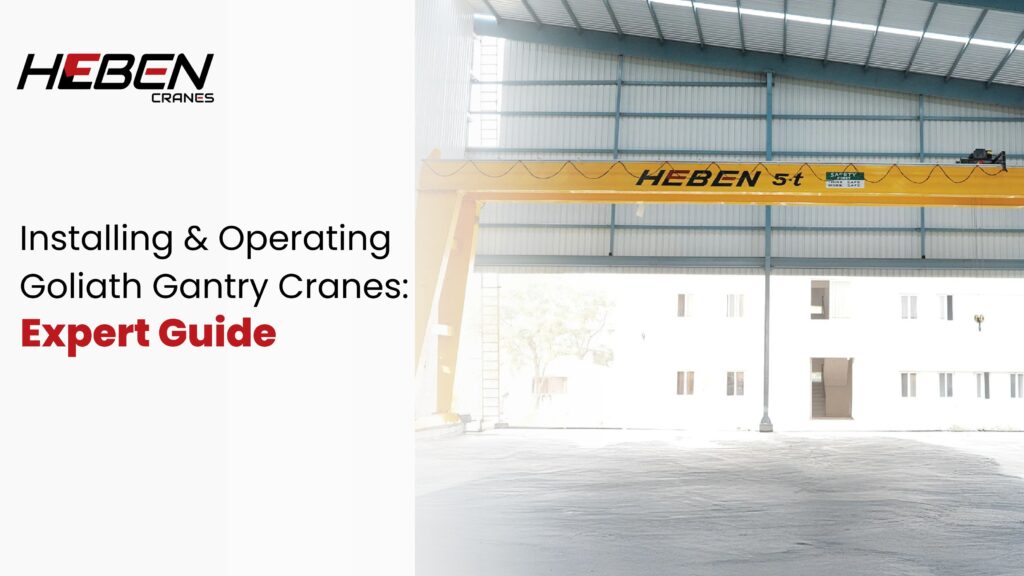
Most industrial operations lose hours and money during crane installation because they skip the groundwork. A misaligned track or poorly tested hoist can turn a productivity tool into a liability. Goliath gantry cranes handle heavy loads across outdoor yards, but they demand precise setup and disciplined operation. This guide walks you through site prep, installation steps, commissioning tests, daily operation protocols, and maintenance routines that keep your crane running for decades. Follow these practices and you’ll cut downtime, extend equipment life, and protect your crew. Pre-Installation Planning Start with a site evaluation before the crane arrives. Check ground stability and load-bearing capacity where the rails will sit. Soft or uneven soil leads to track misalignment and premature wear. Map out the delivery route. Goliath cranes arrive in large components that need clear access paths. Remove obstacles, measure gate widths, and confirm turning radii for transport vehicles. Review local regulations and safety codes. Many regions require permits for crane installation and operation. Secure approvals early to avoid project delays. Foundation and Track Installation Lay the foundation using reinforced concrete pads designed to support the crane’s weight plus maximum load capacity. The foundation must cure fully before you install rails. Install the tracks with attention to three critical factors: Straightness: Use laser alignment tools to keep rails perfectly straight over the entire run length Parallelism: Measure rail-to-rail distance at multiple points; variation causes wheel binding and uneven wear Leveling: Check elevation differences with precision instruments; even small deviations create stress on the structure Secure rails with anchor bolts and verify torque specifications. Loose fasteners lead to track movement under load. Main Structure Assembly Assemble the base frame and outriggers first. These support legs anchor the entire structure and must be square and plumb before you proceed. Lift the main beams into position using mobile cranes or mast lifting equipment. Double girder models require synchronized lifts to prevent torsional stress during placement. Connect cross beams and brace points according to the manufacturer’s bolt patterns. Tighten all connections progressively in a cross pattern to distribute stress evenly. Conduct alignment checks after each major assembly step. Misalignment at this stage compounds into bigger problems later. Hoisting Mechanism and Electrical Installation Mount the trolley and hoist assembly on the main beam. Confirm that trolley wheels run smoothly along the beam without binding or excessive play. Install wire rope according to proper reeving diagrams. Inspect each rope for kinks, broken strands, or manufacturing defects before threading. A single damaged rope compromises the entire lifting system. Wire the electrical system starting from the power supply connection. Run cables through designated pathways and secure them away from moving parts. Install control panels in weather-protected locations with clear operator sightlines. Ground all electrical components properly. Poor grounding creates shock hazards and damages sensitive control electronics. Test insulation resistance before energizing the system. Testing and Commissioning Run functional tests on all movements: trolley travel, bridge travel, and hoisting. Listen for unusual noises that indicate misalignment or loose components. Perform load testing at 125% of the rated capacity. This reveals structural weaknesses before the crane enters regular service. Check all safety switches, limit switches, and emergency stop functions during this test. Inspect transmission mechanisms under load. Gears should mesh smoothly without excessive heat or vibration. Document all test results. This baseline data helps you spot deterioration during future inspections. Daily Operation Protocols Complete a pre-operation inspection every shift. Walk the track length and look for obstructions, check wire rope condition, test all controls at no-load, and verify that safety devices respond correctly. Position loads carefully over the center of gravity. Off-center picks create side loads that stress the structure and reduce stability. Use tag lines to control load swing during movement. Move loads smoothly without sudden starts or stops. Abrupt movements amplify dynamic forces beyond the crane’s design limits. Never exceed the rated capacity. Even short-duration overloads cause permanent damage to structural members and hoisting components. Routine Maintenance Schedule Lubricate all moving parts weekly using manufacturer-specified greases and oils. Pay special attention to wheel bearings, gears, and wire rope connections. Inspect wire ropes monthly for wear, corrosion, and broken wires. Replace ropes when they show 10% wire breakage in one lay length or visible diameter reduction. Check electrical connections quarterly. Look for loose terminals, worn insulation, and signs of overheating. Clean contact surfaces and retighten connections as needed. Schedule annual mechanical inspections by qualified technicians. They catch problems that daily operators might miss. Troubleshooting Common Issues Uneven trolley movement usually stems from misaligned rails or worn wheels. Check track straightness and measure wheel diameter at multiple points around the circumference. Excessive rope wear indicates incorrect reeving, misaligned sheaves, or contamination. Inspect the entire rope path and correct any contact points where the rope rubs against structures. Control system glitches often trace back to loose connections or moisture infiltration. Seal all electrical enclosures and use dielectric grease on exposed terminals. FAQs Q: How long does Goliath crane installation typically take? A: Most installations require 5 to 10 days depending on crane size and site conditions. Foundation curing adds another 7 to 14 days before you can begin assembly. Complex sites with difficult access or custom features may extend the timeline. Q: What’s the difference between Goliath and semi-Goliath cranes? A: Goliath cranes run on two ground-level rails with legs on both sides. Semi-Goliath models have one elevated rail and one ground rail, useful when you need to conserve floor space on one side. Operating principles remain similar but the asymmetric design changes load distribution. Q: How often should I replace wire ropes? A: Replace wire ropes based on inspection findings, not time intervals. Look for broken wires, kinking, corrosion, or diameter reduction. Heavy-duty operations may need replacement every 6 to 18 months, while lighter use can extend rope life beyond two years. Q: Can I operate a Goliath crane in high winds? A: Most Goliath cranes have wind speed limits between 20 and 30 mph. Operating beyond these limits creates dangerous load
Best Goliath Crane Types for Heavy Lifting & Industrial Use
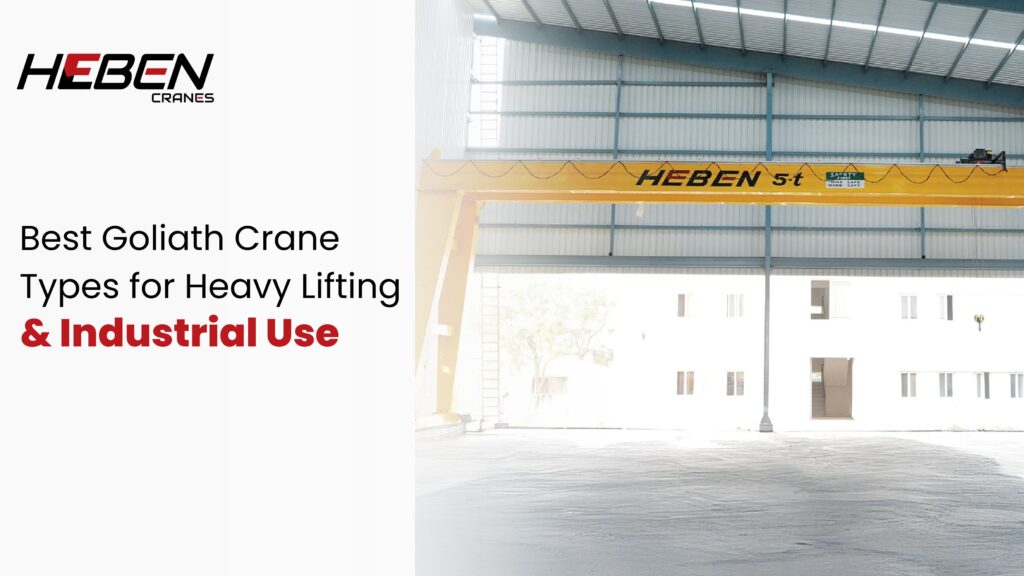
Goliath cranes handle some of the heaviest industrial loads on earth—yet over 40% of facilities choose the wrong type based on capacity alone, ignoring factors like span requirements, duty classification, and site conditions. The result: operational limitations, excessive maintenance costs, or expensive modifications within five years. Heavy industrial operations need gantry solutions that match load demands, environmental challenges, and workflow patterns precisely. This guide examines the best Goliath crane types for different applications, their structural advantages, capacity ranges, selection criteria, and the technical factors determining which configuration delivers optimal performance and long-term value for shipyards, steel mills, container terminals, and heavy fabrication facilities. What Are Goliath Cranes? Goliath cranes—also called gantry cranes—feature a bridge supported by two or more legs running on ground-level rails rather than elevated runway beams. This ground-based design eliminates building structure requirements, making them ideal for outdoor yards, construction sites, and facilities where overhead installation proves impractical. The legs ride on rails installed at ground level, with the bridge spanning between them carrying hoist and trolley systems. Capacities range from 5 tons for light-duty models to over 1,000 tons for specialized heavy-lifting applications in shipbuilding and offshore construction. Unlike overhead cranes requiring building columns and runway beams, Goliath cranes provide self-supporting structures movable along rail tracks. This mobility and independence from building constraints make them essential for operations handling oversized loads, outdoor material storage, or facilities lacking adequate ceiling structure. Single Girder Goliath Cranes Single girder designs handle 5-50 ton capacities economically for medium-duty applications. The simplified structure reduces material costs, installation complexity, and maintenance requirements compared to heavier configurations. Construction sites, assembly lines, and workshops benefit from single girder flexibility and lower initial investment. The lightweight design suits facilities needing reliable lifting without extreme capacity demands or intensive duty cycles. Typical applications include material handling in fabrication shops, construction equipment positioning, and moderate-capacity outdoor storage yards. Duty classifications A3-A5 handle light to moderate operational intensities effectively. Double Girder Goliath Cranes Double girder configurations dominate heavy industrial applications requiring 50-500+ ton capacities with superior structural stability. Two main girders support the trolley system, distributing loads more effectively and enabling wider spans exceeding 100 feet. Steel plants, shipyards, and heavy equipment manufacturing rely on double girder strength for intensive operations. The robust construction accommodates duty classes A6-A8 designed for continuous multi-shift operations with high cycle rates. Maximum lifting heights and precise positioning capabilities make double girder designs essential when handling massive components like ship sections, turbine assemblies, or large structural steel elements. The premium construction cost delivers decades of reliable service under demanding conditions. Key Advantages Load capacity scaling to 500+ tons for specialized applications Wider spans without excessive deflection or structural concerns Higher lifting heights from hoist positioning atop bridge girders Accommodation of tandem hoist systems for ultra-heavy loads Truss Type Goliath Cranes Truss structures use triangulated framework reducing weight while maintaining strength across long spans. This design cuts material costs 20-30% compared to solid girder construction and improves wind resistance for outdoor installations. Precast concrete operations, stone processing yards, and large outdoor material handling areas benefit from truss advantages. The open structure allows wind to pass through rather than creating solid surface resistance that destabilizes conventional designs. Long spans exceeding 100 feet become economically viable with truss construction. The reduced deadweight minimizes foundation requirements and rail system costs while delivering adequate capacity for most industrial applications under 100 tons. Container Handling Goliath Cranes Rail Mounted Gantry (RMG) cranes specialize in container terminal operations, featuring automated positioning systems, spreader attachments, and high stacking capabilities. These cranes stack containers 6-8 high with precision positioning enabling maximum storage density. Container terminals and intermodal yards require RMG efficiency handling 40-65 moves per hour in intensive operations. Modern designs integrate automation, collision avoidance, and inventory management systems streamlining terminal operations. Capacities typically range 40-65 tons accommodating multiple stacked containers, with spans matching container storage block widths. The specialized design optimizes container handling efficiency rather than general-purpose lifting flexibility. Shipbuilding Goliath Cranes Shipyards demand extreme capacities, precise positioning, and lifting heights exceeding 150 feet for large vessel construction. Specialized Goliath cranes handle ship sections weighing hundreds of tons, positioning them with millimeter accuracy during assembly. Tandem hoist systems combine multiple hoists for ultra-heavy lifts exceeding single-hoist capacity limits. This redundancy provides safety margins and enables 800-1,000+ ton lifting capability essential for modern shipbuilding and offshore platform construction. Custom hook blocks, specialized rigging systems, and coordinated multi-crane operations distinguish shipbuilding gantries from standard industrial models. The engineering complexity and capacity requirements make these among the most expensive and sophisticated crane installations globally. Selection Criteria and Key Features Load capacity matching actual requirements with 20-30% buffer accommodates dynamic forces, growth needs, and specialized rigging without premature replacement. Span length must cover the working area width plus clearances for leg structures and safety margins. Duty classification determines structural design, component quality, and service life expectations. A5-A6 classifications suit moderate industrial use, while A7-A8 heavy-duty ratings handle intensive continuous operations in steel mills and shipyards. Critical Specifications Capacity: Current maximum load plus 20-30% buffer for dynamics and growth Span: Coverage area width plus structural clearances and safety margins Lifting Height: Highest pickup point plus rigging allowance and load dimensions Duty Class: A5-A8 based on operational intensity and cycle frequency Control Systems: Pendant, wireless remote, or cabin based on operational needs Environmental considerations include wind exposure for outdoor installations, temperature extremes affecting components and lubrication, and corrosive atmospheres requiring protective coatings and sealed electrical systems. Applications Across Industries Steel mills use heavy-duty double girder Goliath cranes moving raw materials, handling work-in-progress, and positioning finished products. Capacities reach 300-500 tons for large structural components and coil handling. Power plants rely on Goliath cranes for turbine installation, maintenance access, and heavy component handling during construction and major overhauls. Lifting heights exceeding 100 feet accommodate tall equipment assemblies. Construction sites benefit from portable Goliath crane flexibility positioning precast concrete, structural steel, and heavy equipment without permanent installations. Adjustable height and span configurations adapt to changing project requirements. Container
Gantry & Goliath Cranes Explained: Selection Guide
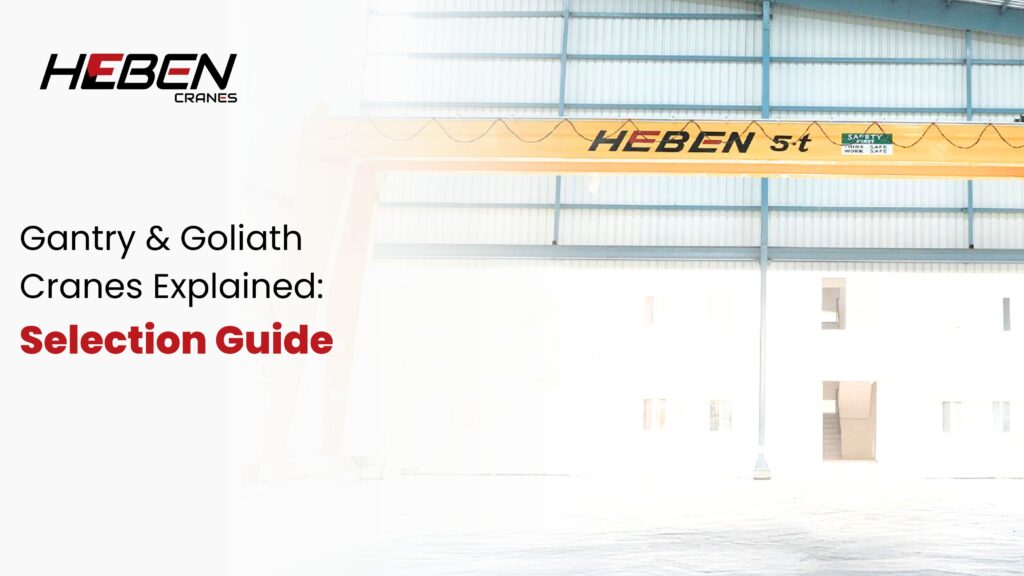
Introduction You need to move heavy loads without overhead runway beams or building support. That’s the core challenge when existing facilities lack the structure for bridge cranes or you’re working in open yards. Gantry and Goliath cranes solve this by running on ground-level rails with their own support legs. This guide breaks down the differences between gantry and Goliath configurations, walks through selection criteria, and explains maintenance requirements that prevent costly downtime. You’ll learn when each type makes sense and how to match specifications to your material handling patterns. What Makes Gantry and Goliath Cranes Different? A gantry crane is any overhead crane supported by legs that travel on ground rails instead of building-mounted runways. The hoist and trolley move along the bridge beam just like bridge cranes, but the entire structure stands independently. Goliath cranes are simply large-capacity gantry cranes, typically double girder designs used outdoors for heavy industrial work. The terms overlap significantly—what one facility calls a Goliath crane, another might call a heavy-duty gantry crane. The key distinction is scale and application context. Smaller portable units under 5 tons are called gantry cranes. Large rail-mounted systems handling 50-500 tons in shipyards or steel mills earn the Goliath label. Types You’ll Encounter Full gantry cranes have legs on both sides that travel on parallel ground rails. They work best in outdoor yards or facilities where floor-level operation makes sense. Semi-gantry cranes have one leg running on ground rail while the other side travels on an elevated runway mounted to building columns. This hybrid design saves space and cost when you have partial building support. Portable gantry cranes are lightweight aluminum or steel frames on wheels or casters. Capacities range from 500kg to 5 tons with adjustable heights and spans. Single girder Goliath cranes use one main beam for lighter loads up to 20 tons. Double girder Goliath cranes provide the strength for 20-500+ ton capacities and longer spans. Core Components and Design The gantry structure consists of vertical legs, horizontal cross beams, and the main girder(s) spanning between them. Legs contain drive motors, wheels, and brakes for travel along ground rails. The trolley and hoist mount to the girder and provide cross-travel motion. Power delivery uses cable reels, festoon systems, or conductor bars depending on travel distance and duty cycle. Control options range from simple pendant push buttons to radio remotes or full operator cabins mounted on the bridge. Safety systems include travel limit switches, overload protection, emergency stops, and anti-collision devices for multi-crane environments. Technical Specifications That Drive Selection Load capacity determines structural requirements and cost. Light-duty gantry cranes handle 1-10 tons, medium-duty covers 10-50 tons, and heavy-duty Goliath systems range from 50-500+ tons. Span affects girder size and deflection characteristics. Gantry cranes typically span 5-35 meters while large Goliath cranes reach 50+ meters. Lifting height includes the distance from ground to hook in highest position. Don’t forget to account for load height and rigging clearances. Indoor versus outdoor ratings matter significantly. Outdoor cranes need weatherproofing, corrosion-resistant coatings, and wind-rated stability. Ground conditions determine wheel loads and whether you need concrete runways or can work with compacted surfaces. When Gantry and Goliath Cranes Make Sense? Here’s what suppliers rarely lead with: gantry cranes cost 20-35% more than equivalent bridge cranes when you already have suitable building structure. The legs, wheels, and ground rail system add expense. But gantry systems win when building columns can’t support overhead loads or don’t exist at all. Outdoor yards, storage areas, and temporary facilities favor gantry configurations. Goliath cranes dominate in ports, shipyards, steel mills, and precast concrete plants where massive outdoor spans are required. These environments need weather-resistant designs and don’t have building structures to support bridge cranes. Manufacturing facilities use gantry cranes for assembly areas, machine shops, and loading docks where building modifications aren’t feasible. Storage yards handling steel, granite slabs, pipes, or lumber rely on outdoor Goliath cranes that operate in all weather. The ground-based design works perfectly for inventory that sits outdoors. Ports and container yards use massive Goliath gantry cranes for ship-to-shore operations and yard stacking. Shipbuilding facilities need the enormous spans and lifting heights that only Goliath configurations provide. Rail maintenance depots, mining operations, and heavy equipment manufacturers choose gantry systems when building-mounted cranes aren’t practical or cost-effective. Step-by-Step Selection Process Step 1: Calculate Load Requirements Determine maximum load weight including rigging, spreader beams, and safety margins. Add 20-25% buffer capacity for unusual lifts and future needs. Step 2: Map Your Work Area Measure required span between crane legs. Calculate lifting height from ground to hook in lowest position. Account for load height and overhead clearances. Step 3: Choose Gantry vs Goliath Configuration Pick full gantry when both sides have ground clearance. Select semi-gantry when one side has existing building support. Choose Goliath designation for heavy outdoor applications. Step 4: Select Design Features Decide on single versus double girder based on capacity and span. Choose control method based on operator visibility needs. Specify indoor or outdoor rating and environmental protection level. Step 5: Plan Infrastructure and Costs Design runway foundations and ground rails. Calculate wheel loads and soil bearing capacity. Factor in installation timeline, operator training, and maintenance access. Installation Fundamentals Ground rail installation demands precision alignment within 3-5mm tolerances across the entire travel path. Poor rail alignment causes premature wheel wear and structural stress. Foundation design depends on soil conditions and wheel loads. Large Goliath cranes need engineered concrete runways while smaller portable units work on level floors. Commissioning includes load testing to 125% of rated capacity and verification of all safety systems before production use. Maintenance That Prevents Problems Daily operator checks should cover rail condition, wheel wear, brake function, and hoist operation. Outdoor cranes need daily inspection for corrosion and weather damage. Monthly servicing includes lubrication of all moving parts, electrical connection checks, and structural inspection for cracks or deformation. Annual certifications require load testing, non-destructive examination of structural members, and complete safety system verification. Keep detailed records for compliance and insurance.
Choosing the Best Overhead Crane System: A Guide
Introduction Most facilities buy overhead cranes based on capacity alone and regret it for 20 years. They ignore duty cycle, misjudge environmental factors, skip structural assessments, and end up with equipment that either breaks down early or sits underutilized while costing too much to operate. Industry data shows that lifecycle costs exceed purchase price by 3-5 times over a crane’s service life. The right selection process considers application workflows, technical parameters, facility constraints, safety requirements, and total cost of ownership. This guide walks through the systematic approach that prevents costly mismatches and ensures your crane system delivers reliable performance across its full operational lifespan. Understanding Overhead Crane Basics Overhead crane systems consist of bridge structures, hoists, trolleys, runway beams, and controls that work together to lift and move loads through three-dimensional space. The main families include bridge cranes (single and double girder), gantry cranes, jib cranes, workstation cranes, and monorail systems. Top running cranes mount on rails positioned on top of runway beams, while underhung cranes suspend from the bottom flange of beams. Each configuration affects headroom requirements, structural loads, and operational capabilities differently. Understanding these fundamental distinctions prevents the common mistake of requesting quotes before defining which crane family actually fits your application. Define Your Application and Loads Map your complete workflow before specifying any technical parameters. Document where loads originate, their destination points, and any intermediate handling stations. Load characteristics matter beyond simple weight. Consider size, shape, center of gravity location, and handling frequency. A facility lifting 10 tons once per shift needs different equipment than one lifting 2 tons 50 times per shift. Special materials require specialized features: Hot materials need heat-resistant components and thermal shielding Corrosive environments demand protective coatings and sealed electrical systems Fragile items require precise speed control and soft-start capabilities Hazardous locations need explosion-proof certification Key Technical Parameters to Specify Duty cycle classification determines component robustness and expected service life. FEM standards rate cranes from M1 (light use) to M8 (continuous heavy duty), while ASME uses Class A through F. Here’s the uncomfortable truth: most buyers underestimate duty requirements. A crane rated for 8-hour daily use that runs 16 hours fails prematurely, creating safety risks and unplanned downtime. Specify these parameters accurately: Maximum load capacity with safety factor Span between runway rails Lifting height from floor to maximum hook position Travel speeds for cross-travel, long-travel, and hoisting Control modes (pendant, radio remote, cabin, or automation-ready) Match Crane Type to Your Facility Single Girder vs Double Girder Single girder cranes cost 30-40% less initially and suit loads up to 20 tons with moderate duty cycles. Double girder designs handle 5-320+ tons with heavy-duty capabilities and longer service lives. The crossover point isn’t just capacity—it’s operational intensity. Continuous heavy use justifies double girder investment even at moderate tonnages. Configuration Selection Top running configurations maximize hook height and handle heavier capacities. Underhung designs work in facilities with limited headroom or when integrating into existing structures without runway support modifications. Gantry cranes suit outdoor applications or facilities lacking adequate building structure. Semi-gantry configurations work when one side has building support while the other needs independent legs. Space, Structure, and Environment Headroom determines whether top running or underhung configurations are feasible. Building geometry—column spacing, bay layout, obstacles—constrains span and runway positioning. Structural assessment isn’t optional. Your building must support runway loads, crane weight, and maximum capacity without exceeding design limits. Retrofitting inadequate structures can cost as much as the crane itself. Environmental conditions directly impact component selection and service life. Temperature extremes, dust, chemicals, moisture, and explosion risks all require specific protective measures. Safety, Compliance, and Ergonomics Modern crane systems include overload protection, limit switches, anti-collision sensors, and emergency stop systems as standard safety features. These aren’t optional extras—they prevent the accidents that regulation and liability make increasingly costly. Compliance with applicable codes (OSHA, ASME B30 series, FEM standards) is the buyer’s responsibility, not just the manufacturer’s. Verify that your specification references the correct standards for your location and industry. Operator ergonomics affect productivity and safety. Controls should be intuitive, visibility unobstructed, and noise levels manageable for 8+ hour shifts. Lifecycle Cost and Future-Proofing Purchase price represents only 20-30% of total lifecycle cost. Energy consumption, maintenance labor, spare parts, and downtime constitute the remaining 70-80%. Duty cycle alignment prevents both overspec waste and premature failure. A light-duty crane costs less initially but fails quickly under heavy use. A heavy-duty crane handling light loads wastes capital on unused capacity. Plan for future needs now. Can the runway support higher capacity later? Will the control system integrate with facility automation? Can you add auxiliary hoists or extend the runway without rebuilding infrastructure? Evaluating Vendors and Project Delivery Engineering capability separates qualified suppliers from equipment brokers. Look for vendors who ask detailed questions about your application, challenge assumptions, and propose solutions you hadn’t considered. The project process should include site survey, engineering design, manufacturing oversight, installation management, load testing, and operator training. Anything less creates gaps where problems hide. Documentation matters for inspections, maintenance, and eventual parts replacement. Verify that complete manuals, electrical schematics, maintenance schedules, and spare parts lists come with delivery. FAQs Q: How do I know if I need a single girder or a double girder? A: If your loads exceed 20 tons or you operate more than 10 hours daily with frequent lifts, double girder delivers better lifecycle value despite higher initial cost. Single girder suits lighter, intermittent use where capital cost matters most. Q: What’s the most common mistake in crane selection? A: Underestimating duty cycle causes 40-50% of premature crane failures. Buyers focus on capacity but ignore operational intensity, leading to equipment that can lift the weight but can’t handle the frequency. Q: Can I add automation to a crane later? A: Only if you specify automation-ready controls initially. Retrofitting standard cranes with position feedback, variable frequency drives, and PLC integration costs 2-3 times more than including these features in the original design. Q: How long should an overhead crane last? A: Properly specified