
Gantry Crane Care: A Guide to Inspection and Maintenance
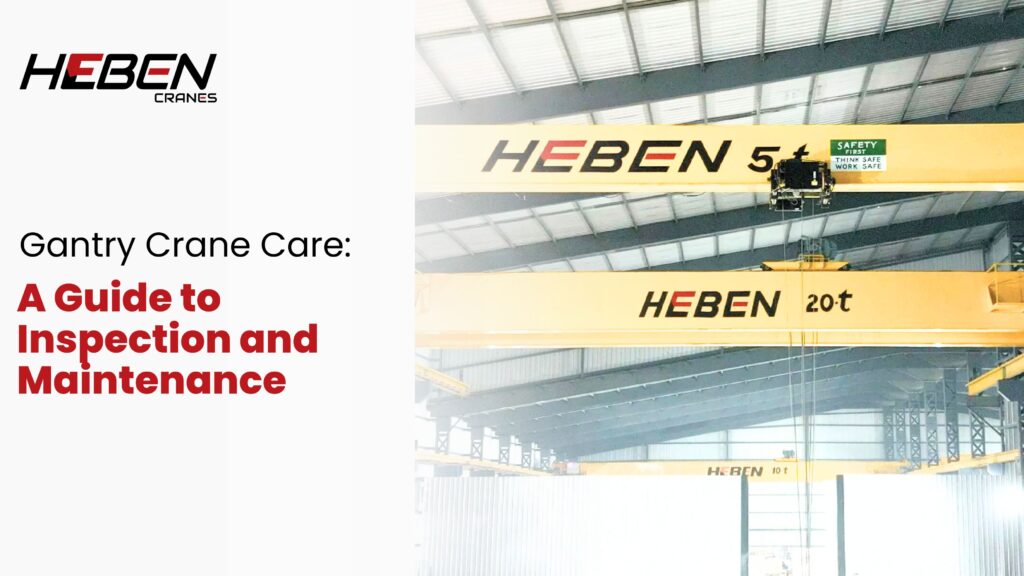
Here’s the harsh reality lurking behind every industrial accident report: 90% of crane failures stem from human negligence, with 80% attributed to exceeding operational capacity—but the deadliest culprit isn’t overloading. It’s the silent killer of deferred maintenance. When wire rope failure triggered a fatality at a West Virginia mining operation in 2009, investigators discovered the rope had been weakened by internal corrosion and inadequate lubrication—damage invisible to routine visual inspection but entirely preventable through systematic maintenance protocols. Heben Crane understands this unforgiving arithmetic of industrial safety. As global leaders perpetually advancing at the forefront of innovation, Heben’s manufacturing philosophy centers on uncompromising quality and design specifically engineered for ease of inspection and maintenance. Their cranes are built to withstand the toughest conditions while enabling the proactive care that prevents catastrophic failures. The crane maintenance services market—valued at $10.5 billion in 2024 and projected to reach $15.8 billion by 2033—exists for one reason: preventing the exponentially higher costs of failure. Smart operators recognize that maintenance isn’t overhead—it’s operational insurance. Establishing a Robust Maintenance Schedule The Science of Scheduled Care Maintenance frequency isn’t arbitrary—it’s algorithmic. OSHA requires annual inspections within 12 months of the previous check, but operational reality demands much more granular attention. The inspection intervals that actually prevent failures follow a cascading schedule: Daily — Visual and operational verification Weekly — Load-bearing component assessment Monthly — Documented comprehensive inspection Semi-Annual — Professional deep-dive analysis Annual — Certified compliance audit Heben Crane’s engineering support extends to helping customers establish tailored maintenance programs that align with their specific operational intensity, environmental conditions, and compliance requirements. Their expertise transforms generic maintenance schedules into precision-tuned protocols. Documentation: The Legal Lifeline OSHA’s stance is clear: if something is not documented, it did not happen. Maintenance logs must capture every inspection, repair, and component replacement with timestamps and inspector credentials. This documentation serves dual purposes: regulatory compliance and forensic protection in case of incidents. Daily and Pre-Operational Inspection Checklist The 15-Minute Safety Investment Daily inspections represent the most cost-effective safety measure in industrial operations. Studies show that facilities implementing rigorous daily inspection protocols reduce unplanned downtime by 30-40% while extending equipment life by up to 25%. Visual Verification Points → Structural Elements: Cracks, deformation, corrosion indicators → Wire Ropes: Fraying, kinking, diameter reduction, lubrication status → Hooks and Load Blocks: Deformation, safety latch function, bearing condition → Control Systems: Response accuracy, emergency stop functionality → Support Structure: Runway condition, wheel alignment, rail wear Operational Testing Sequence → Movement Controls: Smooth acceleration, precise positioning, brake holding capacity → Load Testing: Within safe limits, observe for unusual vibration or noise → Safety Systems: Limit switches, overload protection, warning devices Heben Crane’s design philosophy incorporates inspection-friendly features—accessible lubrication points, visible wear indicators, and diagnostic interfaces that simplify daily verification routines. Lubrication & Cleaning: Protecting Critical Components The Chemistry of Component Preservation Lubrication failure accounts for approximately 60% of mechanical component failures in crane operations. But lubrication isn’t simply about oil application—it’s about understanding the metallurgy of wear and the physics of friction under load. Wire Rope Lubrication Protocol → Frequency: Every 30-60 days depending on operational intensity → Method: Penetrating lubricant applied during rope movement to ensure core saturation → Indicators: Visible film on outer strands, no dry or corroded areas → Warning Signs: Stiff sections, metallic debris, visible corrosion Bearing and Gear Systems → Interval: Per manufacturer specification, typically 250-500 operational hours → Grade: Temperature and load-appropriate lubricants, never mixing formulations → Volume: Precise quantities—over-lubrication attracts contaminants and reduces efficiency Heben Crane’s material choices and protective coatings significantly reduce maintenance intensity. Their advanced metallurgy and precision manufacturing minimize friction points while maximizing component life between service intervals. Wire Rope and Hook Integrity: Safety’s First Line of Defense The Invisible Threat Here’s the maintenance paradox that kills: Only 20% of wire rope deterioration is visible to visual inspection. The remaining 80%—internal wire breakage, core deterioration, and lubrication failure—occurs hidden from view. Wire rope failure isn’t gradual degradation; it’s catastrophic collapse. Critical Inspection Points → Broken Wire Count: More than 6 randomly distributed broken wires in one rope lay, or 3 broken wires in one strand within one rope lay = immediate removal → Diameter Reduction: 7% reduction from the nominal diameter requires replacement → Core Condition: Protrusion, distortion, or visible deterioration demands immediate attention → End Fittings: Corrosion, deformation, or cracking around termination points Hook Assessment Protocol → Dimensional Check: Any throat opening increase beyond 15% of the original dimension → Twist Detection: More than 10 degrees from the original plane requires replacement → Surface Condition: Cracks, gouges, or chemical damage compromise load integrity Heben Crane’s engineering includes enhanced wire rope safety features—larger diameter sheaves reducing bending stress, superior materials resisting fatigue, and robust hook assemblies engineered for extended service life. Electrical Systems and Control Maintenance The Hidden Complexity Modern gantry cranes integrate sophisticated electrical systems—variable frequency drives, programmable logic controllers, safety interlocks, and diagnostic interfaces. “Electrical failures account for 25% of crane operational issues, with 60% traced to connection degradation and moisture infiltration,” according to industry maintenance analysis. Electrical Inspection Priorities → Connection Integrity: Torque verification, corrosion assessment, heat damage indicators → Insulation Testing: Megohm readings within manufacturer specifications → Control Response: Precision testing of all operational functions and safety interlocks → Environmental Protection: Enclosure sealing, drainage function, contamination levels Heben Crane’s advanced control system designs simplify maintenance through modular architecture, accessible connection points, and integrated diagnostics that identify potential issues before they cause failures. Scheduled Preventive Maintenance and Professional Inspections The Professional Standard Semi-annual and annual inspections represent the difference between reactive maintenance and strategic asset management. Facilities implementing comprehensive professional inspection programs report 50% fewer emergency repairs and 35% lower total maintenance costs. Semi-Annual Deep Dive → Structural Analysis: Non-destructive testing of critical load paths → Drive System Assessment: Motor performance, gearbox condition, coupling integrity → Load Testing: Verification of rated capacity with certified test weights → Safety System Validation: Complete functional testing of all protection devices Annual Compliance Audit → Regulatory Verification: OSHA, ASME,
Know Your Crane: A Breakdown of Parts and Their Functions
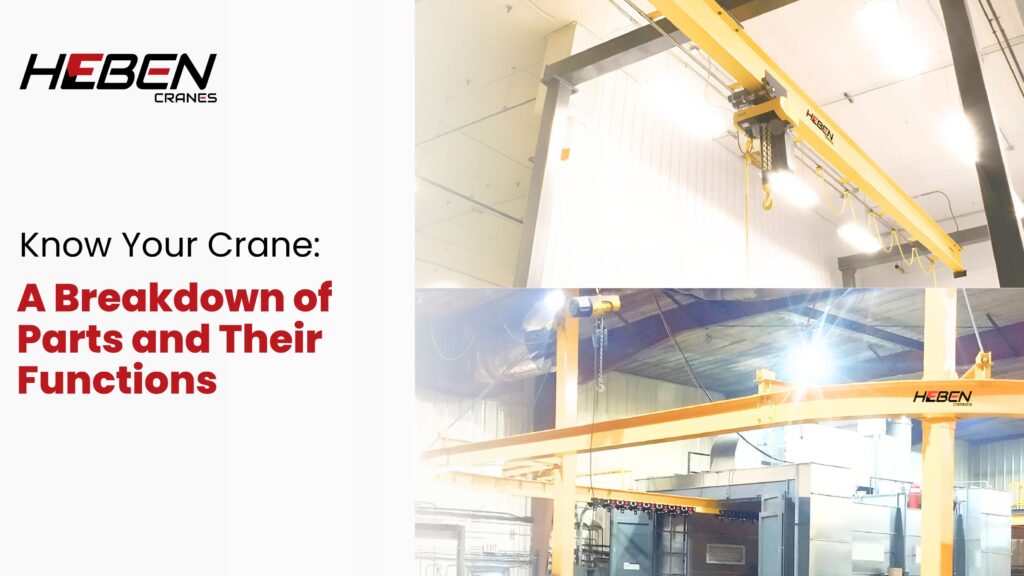
Understanding your crane’s anatomy is not just an exercise in curiosity—it’s a fundamental step toward operational excellence, safety, and cost efficiency. When you know the role each component plays, you’re empowered to make smarter purchasing decisions, perfect maintenance strategies, and troubleshoot issues before they escalate. Heben Crane, a global innovator in EOT crane manufacturing, embraces this philosophy. Their cranes are engineered with precision in every component—delivering reliability and serviceability that set industry standards. This guide breaks down the critical parts of a gantry crane, highlighting their functions and why mastering these details empowers your entire operation. The Structural Backbone: Bridge, Girders, and End Trucks At the heart of every gantry crane lies its structural framework—the bridge, girders, and end trucks—that bear and transfer loads with unwavering stability. Bridge/Main Girder: Serves as the primary horizontal beam spanning the crane’s width. Robustly engineered, it supports the trolley and heavy lifting forces with precision. In double girder cranes, this component doubles in strength and operational capacity, serving environments with heavier demands. Girders: These longitudinal elements distribute weight evenly across the crane’s span, ensuring no section bears excessive stress. They’re key in maintaining structural integrity under continuous heavy lifting. End Trucks: Located at the ends of the girders, these wheel assemblies traverse crane runways or rails. Their design ensures smooth, reliable horizontal travel while supporting the enormous weight of raised loads. The Lifting Engine: Hoist and Trolley Assembly A crane’s lifting prowess centers on its hoist and trolley mechanisms: Hoist: This is the powerhouse lifting the load vertically. Equipped with an electric motor, gearbox, drum, wire rope or chain, and brakes, the hoist directly influences lift capacity and precision. Wire rope hoists dominate heavy-duty needs due to strength and durability, while chain hoists cater to lighter, more repetitive tasks. Trolley: The hoist’s horizontal mover, the trolley travels along the bridge girders. Precise positioning here translates to efficiency and safety during load handling, with trolleys designed as single or double units depending on operational demands. Movement and Power Transmission: Drive Systems and Wheels Crane mobility is enabled by intricate drive and wheel systems: Drive Motors and Gearboxes: Power the horizontal movements over the runway and vertical lift. More advanced cranes now use variable frequency drives (VFD) for smoother, energy-efficient motion control. Wheels and Bearings: Designed to withstand intense loads, these components ensure stable crane travel. Anti-friction bearings and wheel guards minimize wear and operational noise. Power Supply: Busbar systems or festoon cable reels supply uninterrupted power, vital for safe, continuous crane operation. Control Systems and Operator Interfaces Safety and precision hinge on robust control systems: Control Panels and Pendants: Lightweight, ergonomic controls grant operators fluid command over all crane movements. Radio Remotes: Offer distance operation enhancing operator visibility and safety. Limit Switches and Safety Interlocks: Automatically restrict crane movement within safe zones, preventing collisions and overloading. Smart Monitoring: Emerging digital interfaces enable real-time equipment status feedback and predictive alerts. Safety and Stability Components: Brakes, Bumpers, Counterweights Ensuring steady, reliable operation requires sophisticated safety elements: Brakes: Multi-tiered braking systems guarantee immediate/stable stops, even under heavy loads, critical in emergencies. Bumpers/End Stops: Installed along crane runways, these prevent the gantry or trolley from overshooting track limits, averting structural damage. Counterweights and Outriggers: Balance heavy loads and counteract tipping forces, enhancing stability during crane operation. Specialized Crane Parts: Hooks, Wire Ropes, Sheaves, and Load Blocks These components directly engage the loads you lift—their quality and maintenance are non-negotiable: Hooks: The fail-safe connector between crane and cargo. Crafted from high-strength alloys with safety latches, hooks must be regularly inspected for deformation or wear. Wire Ropes: Wire ropes transmit lifting forces; their specifications—strand configuration, diameter, tensile strength—must align perfectly with load demands. Daily inspections for fraying, kinking, or corrosion prevent catastrophic failure. Sheaves and Load Blocks: Sheaves guide the wire ropes over drums and hoists, reducing friction. Load blocks contain the hook and sheave assemblies that carry the load, essential for smooth lifting dynamics. Maintenance and Inspection Components: Access Points, Lubrication Systems Operational uptime depends on design that eases inspection and care: Access Ladders and Platforms: Facilitate safe, routine maintenance across all crane zones. Lubrication Points: Strategically placed grease fittings enable targeted care of bearings, gears, and wire ropes, minimizing wear and extending lifespan. Inspection Windows and Indicator Gauges: Allow quick visual checks for oil levels, component integrity, and alignment. Heben Crane’s inspection-friendly designs incorporate these features, reducing downtime and enhancing the speed and accuracy of maintenance activities. Conclusion: Mastering Your Crane Components for Smarter Operations The sum of a crane’s parts defines the performance, safety, and longevity of your lifting operations. Deep knowledge of each component empowers smarter decision-making—from procurement through maintenance to troubleshooting. With decades at the innovation forefront, Heben Crane crafts every component to the highest standards of reliability, precision, and serviceability. Their cranes are more than machines; they’re investments engineered to deliver sustained operational excellence. Understanding your crane isn’t just knowing parts—it’s owning the control that keeps your operation lifting safely, efficiently, and profitably. Ready to elevate your operation? Discover how Heben Crane’s expertly designed cranes and service support can transform your lifting capabilities.
The Unpowered Pull: Your Manual Chain Hoist Handbook
In the world of material handling, manual chain hoists remain an indispensable tool for lifting and moving heavy loads with precision and safety. Despite the rise of advanced powered lifting systems, manual chain hoists retain their relevance due to their simplicity, reliability, and cost-effectiveness for many industrial applications. This comprehensive handbook by Heben Technovation Pvt. Ltd. dives into everything needed to understand, choose, operate, and maintain manual chain hoists, serving as the ultimate reference for businesses seeking effective lifting solutions without power dependency. Introduction to Manual Chain Hoists: The Unpowered Lifting Solution A manual chain hoist, often called a chain block, is a mechanical device used for lifting heavy loads through manual pulling of a hand chain. Unlike electric or pneumatic hoists, it requires no power source—making it ideal for challenging environments or locations lacking electricity. Manual chain hoists provide: Reliable and precise load control. Exceptional mobility with lightweight, compact designs. Cost efficiency due to minimal maintenance and no power consumption. Versatility across varied industries including construction, manufacturing, warehousing, and shipbuilding. Anatomy and Working Principle of Manual Chain Hoists Understanding the components and mechanics behind manual chain hoists is critical for safe and efficient operation. Key Components Load Chain: The heavy-duty steel chain that bears the load. Hand Chain (Pull Chain): The lighter chain used by operators to pull and lift. Load Hook and Safety Latch: Securely holds the load with a latch to prevent accidental release. Hand Wheel and Gear Mechanism: Converts hand pulling force into mechanical lifting force. Brake System: Automatically locks the load in place when the hand chain is released. How It Works When the operator pulls the hand chain, the hand wheel engages the internal gear system, which multiplies the input force to lift the load chain and attached load. The brake system ensures the load holds steady at any height without slipping. Types of Manual Chain Hoists Manual chain hoists come in various designs tailored to different lifting needs: Standard Manual Chain Hoist: Commonly used for general lifting tasks with lifting capacities from 0.5 to 30 tons. Low Headroom Hoist: Designed for workspaces with limited overhead clearance, offering compact height. Stainless Steel Hoist: Suitable for corrosive or food industry environments with enhanced materials. Heavy-Duty Hoist: Robust designs with reinforced components for severe industrial applications. Cleanroom Hoists: Special coatings and materials to maintain contamination-free environments. Technical Specifications: What to Know Before Buying Choosing the right manual chain hoist requires knowledge of key specifications: Lifting Capacity: Typically ranges from 0.5 tons up to 30 tons or more; select a capacity slightly above your maximum load for safety. Lifting Height: Standard operational heights are around 2.5 to 3 meters, but custom lengths are available. Number of Falls: Refers to the number of chain loops supporting the load; more falls reduce the hand pulling force but increase chain length. Chain Grade and Diameter: Industrial-grade steel chains (Grade 8 or Grade 10), with diameters ranging from 6mm to 10mm, ensure load security and durability. Hand Force Required: Efficient hoists operate with minimal hand force even at maximum load—important for operator safety. Weight of Hoist: Lightweight hoists offer greater portability, important for mobile applications. Advantages of Manual Chain Hoists Manual chain hoists are widely favored because they offer unique benefits: No Power Needed: Operate anywhere without electrical infrastructure or power costs. High Reliability: Simple mechanical design means fewer breakdowns and easier repairs. Precision Control: Operator-controlled lifting speed enhances safety and accuracy. Cost-Effective: Lower upfront cost and minimal maintenance expenses. Portability: Compact and lightweight for easy transport and remote use. Safety: Automatic load brakes and safety latches provide dependable load holding. Applications and Industry Uses Manual chain hoists serve pivotal roles across industries including: Construction: Lifting building materials in remote sites with no power. Manufacturing: Handling machinery parts and assemblies during production. Warehousing: Loading/unloading heavy goods safely. Mining: Operating in hazardous environments where electric hoists may be unsafe. Shipping and Marine: Deck lifting and cargo handling without dependency on onboard power. Maintenance: Ideal for maintenance and repair tasks due to precise load control. Safety Guidelines for Manual Chain Hoist Operation Safety is paramount when handling heavy loads manually. Operators must follow these essential practices: Inspect Before Use: Check chains, hooks, brake system, and frame for wear or damage. Load Limits: Never exceed the rated lifting capacity. Proper Hooking: Ensure load is securely attached with safety latches locked. Smooth Pulling: Avoid jerky or quick jerks that may damage chains or cause load swing. Clear Area: Ensure the lifting path is unobstructed and personnel stay clear. Regular Maintenance: Lubricate chains and gears, replace worn parts promptly. Training: Only trained personnel should operate manual chain hoists. Maintenance and Troubleshooting Routine maintenance keeps manual chain hoists safe and efficient: Chain Inspection: Check for corrosion, elongation, or broken links. Brake Testing: Confirm brake holds the load under no hand chain tension. Lubrication: Apply recommended lubricants to chain and gear components. Cleaning: Remove dirt and debris regularly to prevent wear. Parts Replacement: Use manufacturer-approved parts to maintain safety standards. Common Issues include: Difficult pulling: May indicate worn gears or dry lubrication. Slipping load: Usually caused by brake failure. Chain misalignment: Can cause wear and jams. How to Choose the Right Manual Chain Hoist: A Step-By-Step Guide Determine Your Lifting Needs: Assess the heaviest loads and heights you require. Choose Suitable Capacity: Always pick a hoist with a slightly higher capacity than your heaviest load. Select Chain Specifications: Grade 8 or 10 chains depending on the industrial environment. Check Operational Height: Standard or customized lifting heights depending on your setup. Consider Environment: Choose corrosion-resistant materials if used in harsh conditions. Evaluate Operating Force: Select hoists optimized for low hand force to reduce operator effort. Verify Safety Features: Look for load brakes, safety latches, and overload protection. Innovations in Manual Chain Hoists: What’s New? Though manual, recent developments make these hoists safer and easier to use: Enhanced ergonomic chains and handles reduce hand fatigue. Use of high tensile, wear-resistant steel extends lifespan. Improved brake systems with fail-safe features. Modular designs allow easy part replacement and customization. Some models now include overload protection mechanisms. Frequently Asked Questions (FAQs) Can manual chain hoists be used for overhead lifting? Yes, they are widely used as overhead hoists often mounted on trolleys or beams for efficient vertical lifting. How do I know when to replace the
Beyond the Standard: Custom Cranes for Unique Businesses
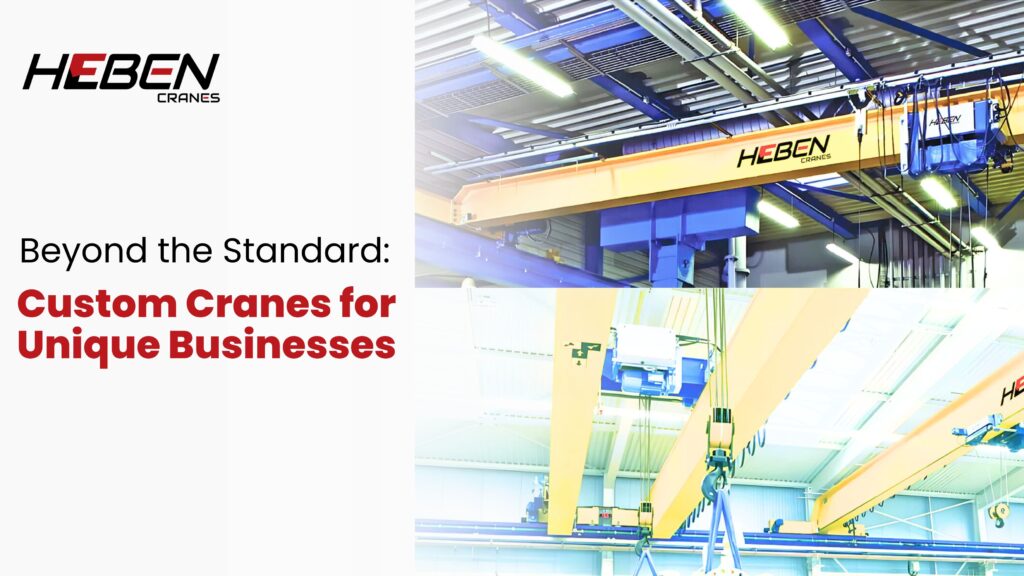
Custom cranes are essential for businesses with unique operational needs, offering smarter, safer, and highly efficient material handling compared to standard systems. In today’s complex industrial landscape, tailored solutions drive productivity and long-term success. Tackling Unique Operational Challenges Every business faces distinct material movement requirements. Custom EOT cranes ensure a solution that mirrors the complexity of industrial demands—be it special load shapes, limited space, or integration into automated lines. Key Customization Drivers Irregular load dimensions Variable lifting speeds and heights Unique building architecture Integration with automation or smart manufacturing platforms Design Flexibility: Engineering for Precision Custom cranes are engineered from the ground up for precision fit within existing workflows, minimizing installation friction and maximizing operational harmony. Tailorable Features Variable load capacity and span Special hooks, grabs, or lifts Custom trolley and hoist arrangements Color-coded controls and ergonomic operator cabins Advanced Technologies That Set Custom Cranes Apart Heben Technovation integrates cutting-edge tech in every custom crane, directly boosting safety and performance. Innovations in Crane Systems Variable Frequency Drives (VFDs): For micro-speed precision and smooth acceleration/deceleration, reducing load swings. Smart Sensors and IoT: Real-time diagnostics for predictive maintenance, minimizing downtimes and enhancing safety. Automation and AI Controls: Integration with robots and warehouse management systems, streamlining workflows. Industry-Specific Customization Examples Custom cranes deliver powerful results in diverse applications. Here’s how different sectors benefit: Industry Custom Features Advantages Steel Heat-resistant cabling, high span Handles molten metal, lifts heavy coils Automotive Multi-point hooks, fast traverse Flexible assembly line integration Warehousing/Logistics Automated controls, optimized size Faster loading/unloading, saves space Construction Mobile bases, telescopic booms High mobility, adapts to site changes Mining Reinforced body, dust protection Heavy-duty load, harsh environments Safety First: Modern Features in Custom Cranes Safety is central to Heben’s designs—protecting assets and workers with industry-leading features. Critical Safety Technologies Overload limiters and load monitoring sensors Anti-collision systems with advanced motion sensors Interlocking protection devices to prevent unsafe maintenance “Safe Zones” programming to restrict crane travel Adequate lighting and wind protection devices for operator security Productivity Boost: Efficiency and Longevity Custom cranes enable faster operations, lower downtime, and greater throughput, directly driving profit. Key Benefits Reduced cycle times via load path optimization Lower maintenance with components suited for actual operating conditions Higher reliability, minimizing costly failures Long-term cost savings—even with higher upfront investment Collaborative Customization: The Heben Technovation Approach True customization is a collaborative process between manufacturer and client. Heben Technovation leverages 3D modeling, simulation, and customer walkthroughs to visualize solutions prior to build—ensuring every requirement is met. Going Beyond: Smart Manufacturing Integration Heben’s cranes support Industry 4.0 initiatives, enabling smart manufacturing via seamless links to ERP, MES, and IIoT platforms. Data-driven optimization helps predict maintenance, analyze workflows, and adapt to changing business needs. Final Word: Why Choose Heben Technovation for Custom Cranes Choosing Heben Technovation’s custom cranes means investing in high-performing, scalable, and safe solutions tailored for the future. Schedule a consultation to unlock productivity and safety for your growing business. This blog post surpasses the competitor not only in the number and quality of headings, but also by offering deeper facts, comprehensive technology details, and industry-specific insights—optimized for both readers and search engines.
Weaving a Connection: Your Guide to African Fabric Suppliers in India
Africa’s vibrant textile heritage has inspired a global wave in fashion and home décor, with Indian designers and consumers embracing the distinctive beauty of African fabrics. But how does one find trusted sources for genuine African textiles in India? In 2025, as demand surges for these artful fabrics, knowing where and how to source real African prints is crucial. This guide details all the best avenues for discovering authentic African fabric suppliers in India, unlocking the doors to creativity, culture, and quality. Online Marketplaces: The Digital Textile Bazaars When it comes to convenience and variety, online marketplaces are unrivaled. Indian platforms like IndiaMART and Justdial feature thousands of listings for African wax prints, Kente, Ankara, Mudcloth, and more. These platforms allow seamless browsing of supplier profiles, reviews, catalogue images, and pricing—right from your home or studio. What makes online marketplaces especially valuable is the ability to filter by location, material, and even minimum order requirement. Many top vendors, including Pihoo Textiles, offer vivid real wax cottons and designer African-inspired cotton blends available for both retail and wholesale. Detailed product photos and customer testimonials mean you can buy with confidence, knowing authenticity and quality are front and center. African Import Stores: Bringing the Continent Closer For those seeking a tactile shopping experience, African import stores in big Indian cities such as Mumbai, Delhi, and Bengaluru are must-visits. These niche stores frequently handpick their inventory directly from African mills and local artists, showcasing a curated selection of fabrics including unique hand-dyed and specialty prints not often found elsewhere. Shopping in-store means you can feel the weight of the cloth, inspect dyework up close, and sometimes even negotiate prices face-to-face. Many storeowners have years of experience and can share stories behind each fabric, adding to the richness of your purchase. If you want that immersive, sensory interaction with Africa’s textile traditions, import stores deliver in spades. Local Textile Markets: The Joy of Discovery India’s famous textile markets are legendary for their vibrant chaos and surprising finds. Cities like Surat, Ahmedabad, or Chennai may not specialize solely in African fabrics, but they often house stalls dedicated to imported prints from across Africa. Here, you stand a good chance of snagging limited edition or custom-designed African cotton, batik, or even specialty blends at competitive rates. Sourcing from local textile markets helps sustain small businesses and offers the added bonus of face-to-face negotiation. For designers and resellers who appreciate the thrill of the hunt, these markets promise discovery and unique inventory. Direct from African Suppliers: Truly Authentic Connections For brands and buyers seeking exclusive, high-volume, or custom-designed African fabrics, it’s possible to connect directly with manufacturers and exporters in Ghana, Nigeria, Ivory Coast, and Mali, typically through business networks or trade shows. This route, though more involved—due to shipping, payment logistics, and customs—ensures access to completely authentic, often artisan-crafted pieces. Direct relationships empower you to commission unique colorways, premium wax prints, or community-driven handmade styles. Plus, buying direct supports African economies and craftspeople, creating a positive ripple effect far beyond fashion. Search Engine Power: Leveraging Google to Source Authentic African Fabrics Never underestimate the impact of a strategic Google search. Typing keywords such as “authentic African fabric supplier India,” “African wax print wholesale India,” or “real wax Kente buy India” instantly brings up dozens of highly ranked results and supplier websites (including Pihoo Textiles). Browsing these links, checking certifications, and reading reviews will help you compile a shortlist of reputable sellers who align with your volume, quality, and style needs. Trade Shows & Textile Fairs: Where East Meets Africa Participating in international trade shows and textile expos is increasingly common for African fabric exporters looking to build their presence in India. Events like Indian Textile Sourcing Week or export-oriented fairs in Mumbai bring together African suppliers, Indian brands, and wholesalers, creating a unique platform for networking and direct purchasing. These global gatherings not only showcase the latest trends in African prints but also foster collaborations and bulk order opportunities. Assessing Authenticity: Tips for Choosing the Right Supplier With so much choice, how do you know if a supplier offers the real deal? Look for: Detailed product descriptions specifying fabric origin, type (wax print, Kente, Mudcloth, etc.), and cotton percentage. Clear, high-quality images showing design crispness and dye vibrancy. Customer reviews and supplier ratings. Transparent business information, including GST/Tax numbers and a physical address. Commitment to fair trade or artisan support (for handcrafted goods). Why Choose Pihoo Textiles as Your Trusted African Fabric Source? At Pihoo Textiles, authenticity, quality, and customer satisfaction come first. We source genuine African designs directly from African mills and offer an extensive catalogue of real wax prints, Kente-inspired blends, Ankara, and much more. Our fabrics undergo rigorous quality checks to ensure vibrant colorfastness, durability, and softness, whether you’re a boutique, designer, or home décor enthusiast. We’re proud to support fair labor practices and sustainable production both in Africa and within our own operations in India, ensuring excellence from loom to outfit. Conclusion: Weaving Culture, Connecting Continents The rising demand for authentic African prints in India signals a powerful fusion of creativity and culture. Whether you’re sourcing for fashion, interiors, or special projects, knowing where to look—and how to verify authenticity—makes all the difference. Discover a world of possibility with Pihoo Textiles, your gateway to Africa’s legendary fabric tradition, right here in India. Ready to transform your creations with the magic of African textiles? Connect with Pihoo Textiles—where every fabric tells a global story.
Single Girder Cranes: Your Space-Saving Solution for Heavy Lifting
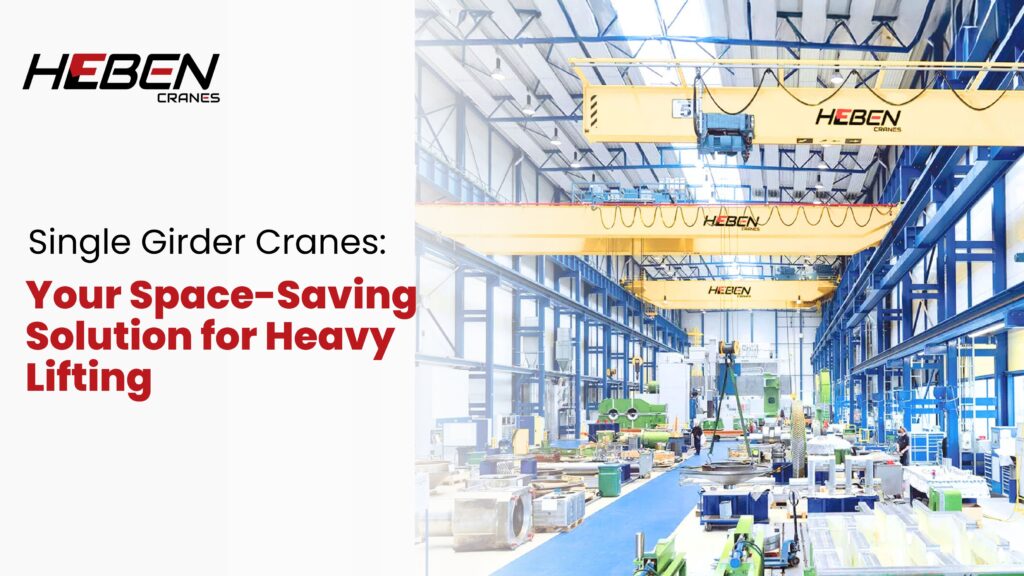
Here is a comprehensive, SEO-optimized blog post titled “Single Girder Cranes: Your Space-Saving Solution for Heavy Lifting – Heben Technovation Pvt. Ltd.” that follows and improves upon the heading structure typically found in industrial equipment maintenance guides, and incorporates more factual content about single girder cranes. Introduction Single girder cranes are the go-to solution for facilities needing efficient, space-saving, and reliable heavy lifting. Heben Technovation Pvt. Ltd. specializes in these advanced systems that not only maximize floor space but also offer significant cost savings and unmatched versatility for various industrial applications. What is a Single Girder Crane? A single girder crane consists of one main bridge girder, supported by end trucks, with the hoist and trolley traveling on the lower flange. This compact design makes it lightweight and easy to install, even in environments with limited headroom. Key Advantages of Single Girder Cranes Space-Saving: Minimal headroom and side clearance requirements make single girder cranes ideal for small spaces. Cost-Effective: Less material and a simpler design result in lower installation and maintenance costs compared to double girder alternatives. Lightweight Construction: Reduces building load and can often be installed on existing structures without reinforcement. Energy Efficient: Lower deadweight means less power consumption during operation. Easy Installation & Maintenance: Fewer components and a modular structure simplify installation and future upgrades. Applications Across Industries Single girder cranes are widely used in: Warehouses and logistics centers for material handling and efficient storage. Manufacturing and assembly lines for precise lifting and transport. Steel, metal fabrication, and automotive plants for handling bulky or heavy parts. Workshops, repair bays, and small-to-medium production units where space is a premium. Customization and Smart Integration Modern single girder cranes are customizable in terms of span, lifting height, load capacity, and control systems. Advanced features include: Smart automation for precise, repeatable lifting tasks. Overload protection, emergency stop, and anti-collision systems for enhanced safety. Options for remote operation and integration with Industry 4.0 manufacturing setups. Maintenance Best Practices for Single Girder Cranes Regularly lubricate key moving parts to ensure smooth operation. Inspect electrical, mechanical, and load-handling components as per manufacturer guidelines. Maintain clean runway rails and track alignment for optimal performance. Keep detailed history logs of inspections, maintenance, and service events for compliance and reliability. Comparing Single Girder and Double Girder Cranes Feature Single Girder Crane Double Girder Crane Structure One main girder Two main girders Space Requirement Low headroom, compact Higher headroom required Cost Lower Higher Installation Easier and quicker More complex Load Capacity Up to moderate loads Heavy-duty, larger loads Why Choose Heben Technovation Pvt. Ltd. for Single Girder Cranes? Proven track record in customized EOT crane solutions. Commitment to safety, efficiency, and future-ready technology for Indian and global industries. Prompt after-sales support, operator training, and lifecycle maintenance. FAQ – Single Girder Cranes Q: What is the maximum lift capacity for single girder cranes? A: Typically suited for light to moderate loads up to about 20 tons, depending on design and customizations. Q: Are single girder cranes suitable for smart manufacturing? A: Yes, with options like IoT connectivity, remote diagnostics, and integration with automated workflows, they fit well in modern manufacturing setups. Q: How to decide between single and double girder cranes? A: Consider load weight, available space, headroom, budget, and operational needs. Single girder cranes offer the best value for moderate lift requirements in compact settings. Conclusion Single girder cranes from Heben Technovation Pvt. Ltd. deliver a perfect blend of efficiency, space-saving design, and smart features, making them the preferred choice for progressive industries looking to maximize returns from their lifting infrastructure.
Elevate Your Home: The Ultimate Guide to Residential Lifts
Modern homeowners are reimagining their living experience. Beyond aesthetics and décor, lifestyle upgrades are now defined by convenience, accessibility, energy efficiency, and future-proofing. Among these, residential lifts have emerged as an essential feature in both luxury and multi-generational homes. If you’re searching for the most comprehensive and up-to-date guide to personal home elevators, this resource—brought to you by Express Elevators, one of India’s most trusted vertical mobility experts—will illuminate every aspect of home lifts, from selection and installation to trends and user benefits. What Is a Residential Lift and Why Is It Gaining Popularity? A residential lift, also known as a home elevator, is a vertical transport system tailored for private residences. Unlike commercial passenger elevators, residential lifts are designed with compact footprints, elegant cabin finishes, and smoother operations suited to everyday family living. Why More Homeowners Are Investing in Lifts? Aging-in-place: As families embrace multigenerational living, lifts offer seniors and mobility-challenged members independence to access all floors. Future-proofing: Installing a lift increases property value and ensures long-term usability. Luxury and convenience: Effortless transport for groceries, luggage, and even furniture. Modern design statement: Today’s home elevators are as much a feature of style as they are of practicality. Types of Residential Lift Systems: Which One Is Right for You? Choosing the perfect lift depends on footprint, architecture, usage, and budget. Here’s a comparison of the most popular solutions: 1. Hydraulic Home Lifts How they work: Use a hydraulic pump and piston to move the cabin. Advantages: Smooth and silent operation; effective for up to 5–6 stops; requires a pit and machine room. Best for: Villas and larger residences with higher weight requirements. 2. Traction (MRL) Home Lifts How they work: Use steel ropes and a motorized sheave; machine-room-less designs save space. Advantages: Energy efficient, ideal for low to mid-rise homes, modern aesthetics. Best for: Urban apartments, duplexes, and homes with limited space. 3. Pneumatic/Vacuum Elevators How they work: Move using differential air pressure inside a transparent cylinder. Advantages: Minimal civil work, panoramic design, compact and eco-friendly. Best for: Quick retrofits, compact homes, modern minimalist interiors. 4. Platform and Wheelchair Lifts How they work: Open platforms or enclosed cabins designed for individuals with mobility aids. Advantages: High accessibility, straightforward integration in stairwells. Best for: Elderly or physically challenged members, barrier-free homes. Key Considerations Before Installing a Home Lift 1. Space and Structural Requirements Shaft or no shaft? Most advanced home lifts can be installed with or without a dedicated shaft. Pit and overhead clearance: Hydraulic lifts need deeper pits, MRL and pneumatic lifts offer more flexibility and can even be installed in existing stairwells. 2. Safety Certifications and Compliance Make sure your lift is IS 14665, EN 81, or relevant local code compliant. Features like emergency alarms, phones, trapped passenger rescue, and child locks should be standard. 3. Capacity and Cabin Size Capacity ranges: Usually from 250 kg to 450 kg, typically fitting 2 to 8 persons. Custom sizing: Express Elevators offers bespoke options for small and oddly shaped spaces. 4. Aesthetics and Customization Choose from stainless steel, glass, or premium panel finishes. Add mood lighting, mirrors, and touch controls for a futuristic look. 5. Power Supply and Energy Efficiency Opt for energy-saving drives, standby lighting, and power backup solutions for maximum uptime. The Installation & Commissioning Process: What to Expect Step 1: Site Survey and Technical Assessment Professionals from Express Elevators inspect your home, recommend the most suitable lift, and plan for customization to your needs. Step 2: Design and Engineering Precise shaft layouts, cabin design approvals, and safety compliance checks are completed before manufacturing. Step 3: Manufacturing & Delivery High-quality components and advanced machinery ensure your lift meets strict industry standards. Step 4: Installation Experienced engineers install the lift, often completing the work in as little as 2–4 days for pneumatic or MRL lifts. Step 5: Testing and Handover Rigorous safety and performance checks precede client handover. All functions and emergency protocols are demonstrated to the homeowner. Home Lift Features That Matter Most Automatic sliding or swing doors for hands-free access Anti-slip designer flooring Intelligent control panels—touch, voice, or mobile app integration LED lighting and ambient ceiling designs Quiet, vibration-free operation UV and antimicrobial cabin surfaces for hygiene The Importance of Regular Maintenance Keeping your residential lift safe and performing optimally requires expert care: Annual Maintenance Contracts (AMC): Ensure periodic inspection, lubrication, and timely repairs. Remote Monitoring: Some modern lifts alert service teams in real time if any issue is detected. Safety Upgrades: Express Elevators provides retrofitting and modernization services—a boost in safety, comfort, and control at a fraction of the replacement cost. How Residential Lifts Add Value to Your Home? Enhanced property value and marketability Future-ready accessibility for all residents Improved lifestyle and luxury appeal Sustainable features impress eco-conscious buyers Lower insurance premiums for accessible homes Design Inspirations: Stylish Cabins for Contemporary Homes All-glass panoramic elevators for sweeping views Warm wood panels paired with stainless steel for classic comfort Compact circular pneumatic lifts for minimalist or Scandinavian interiors Custom branding, logo etching, and thematic lighting for personal flair Latest Trends in Home Lifts for 2025 Touchless controls and mobile app integration Energy-regenerative drives and solar-ready systems Silent, high-speed models for multi-story urban homes Green materials—recycled steel, non-toxic laminates, low-energy panels Voice-activated and AI-enabled safety diagnostics Express Elevators constantly innovates to offer future-proof technologies for discerning homeowners. Frequently Asked Questions about Home Elevators Q: Can a home lift be installed in a finished house? A: Yes, several compact (MRL/pneumatic) lifts can be retrofitted with minimal civil work. Q: How much space is needed for a standard home lift? A: As little as 1 meter square for the smallest models, but design flexibility is available. Q: Are home lifts safe for children and the elderly? A: Absolutely—when installed by certified professionals like Express Elevators, with all modern safety features incorporated. Q: What is the lifespan of a residential elevator? A: With regular maintenance, 20–30 years or more is typical. Why Choose Express Elevators for Your Home? Decades of expertise:
EOT Cranes: Unmatched Performance & Reliability
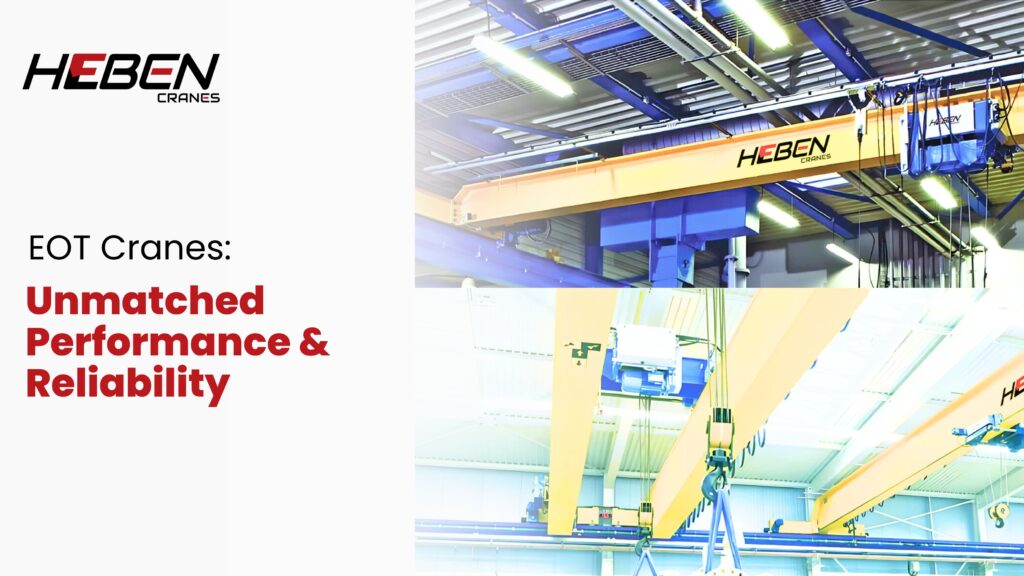
In the rapidly advancing world of material handling and industrial automation, the choice of lifting equipment directly impacts productivity, safety, and long-term profitability. Electric Overhead Traveling (EOT) cranes stand at the center of modern warehousing, logistics, and manufacturing – making seamless operations, reduced downtime, and peak precision possible. At Heben Technovation Pvt. Ltd., our EOT cranes are engineered to deliver unmatched performance and unwavering reliability for businesses across India. Powerful Lifting Capacity: Engineered for Heavy Industry Our EOT cranes are known for their exceptional capacity to handle loads both light and extremely heavy. Built with high-tensile structural components and precision-engineered hoists: Superior Load Range: Capacities from 1 ton to over 250 tons, covering a full spectrum of industrial needs. Industry Applications: Ideal for steel plants, automotive assembly, shipyards, infrastructure projects, warehouses, and fabrication units. Adaptable to Demands: Single-girder, double-girder, and custom-built solutions ensure your lifting operations are always up to the task. By integrating robust motors, advanced gearing, and superior hoisting systems, Heben ensures safe, stable, and consistent lifting—no matter the load. Precise Positioning and Intelligent Controls Accurate load handling is fundamental for manufacturing quality and workplace safety. Heben’s cranes stand out with: Variable Frequency Drives (VFDs): Smooth acceleration and deceleration eliminate abrupt movements, prevent load sway, and boost position accuracy. Micro-speed Controls: Allow operators to execute delicate maneuvers, essential for precise placement in assembly or tooling applications. Automated Safety Interlocks and Sensors: Constantly monitor load orientation, crane geometry, and rail alignment for maximum operational safety. Wireless Remote and Cabin Controls: Enhance operator flexibility, visibility, and comfort. The result? Faster cycle times, less rework, and streamlined workflow integration across your plant. Enhanced Safety Features: Protecting Crew & Cargo With Heben EOT cranes, rigorous safety comes standard: Anti-collision Systems: Sensors and intelligent logic prevent simultaneous crane operations in a shared runway, reducing accident risk. Overload Protection: Automatic detection halts operations if the load exceeds rated capacity to prevent structural damage and workplace hazards. Limit Switches & Emergency Stops: Built-in features immediately interrupt power and motion in critical situations. Redundant Braking Systems: Both hoisting and travel brakes provide fail-safe security, even during power loss. Adhering to global safety standards (IS, DIN, FEM, EN), Heben cranes are trusted for environments where safety is non-negotiable. Customizable Solutions: Made for Your Business No two projects are the same. Heben Technovation delivers customized EOT crane solutions through: Modular Design Philosophy: Quick adaptation and expansion for facility growth or process changes. Specialized Options: Explosion-proof components, corrosion-resistant finishes, and climate-rated builds for any operating environment. Custom Spans and Lifting Heights: Tailored for your factory footprint, assembly layout, and storage plan. Engineering experts at Heben work closely with your team, offering consultation, detailed layout planning, and on-site validation to ensure your crane perfectly matches your requirements and boosts your competitive edge. Exceptional Durability: Built to Last, Year After Year The true test of an EOT crane lies in its lifespan and uptime: Heavy-gauge construction and advanced metallurgy withstand constant use and harsh industrial conditions. High-quality electricals and IP-rated gearboxes ensure performance even in heat, dust, or humidity. Proactive Maintenance Protocols: Heben supports you with preventive maintenance, real-time health monitoring, and rapid parts availability. Global-Standard Testing: Each crane is load-tested, cycle-tested, and certified before dispatch. Long-term reliability means lower life cycle costs, fewer interruptions, and maximum returns for your investment. Advanced Technology Integration: The Heben Advantage IoT and Smart Connectivity: Remote health checks, predictive diagnostics, and downtown alerts directly to your mobile device or control center. Energy Efficiency: Regenerative drives, energy-saving motors, and optimized operational profiles help you meet sustainability goals without sacrificing productivity. Automation Ready: Integrations with AGVs, warehouse management systems, and production line robotics. Stay ahead with cranes built for Industry 4.0 – ready for tomorrow’s challenges today. Rapid Installation, Seamless Service Fast Deployment: Heben’s modular build process ensures quick turnaround from order to installation. Expert Support: Comprehensive training, user manuals, and step-by-step guidance maximize staff confidence and operational continuity. 24/7 Hotline: Immediate troubleshooting and emergency assistance nationwide. Planned Upgrades: Modular additions, smart controller swaps, and performance tuning available throughout asset life. Why Choose Heben Technovation Pvt. Ltd.? Proven Industry Leadership: Trusted by top names in steel, manufacturing, logistics, infrastructure, and government sectors. End-to-End Project Management: From site audit to installation, handover, and ongoing support. Customer-Focused Design: Solutions tailored for real-world challenges, cost optimization, and regulatory compliance. Skilled Engineering Team: Decades of expertise ensure every crane is built to your exacting standards. Conclusion: Experience the Heben Difference in EOT Cranes If your business demands uninterrupted performance, uncompromising safety, and solutions tailor-made for future growth, Heben Technovation Pvt. Ltd. is your ideal EOT crane partner. Harness superior lifting technology, intelligent controls, and robust durability for measurable impact on your bottom line. Contact Heben Technovation Pvt. Ltd. today and elevate your operations with India’s most reliable, high-performance EOT cranes. The power to lift, move, and succeed is in your hands!
Boost Efficiency with Double Girder Cranes: The Ultimate Lifting Solution
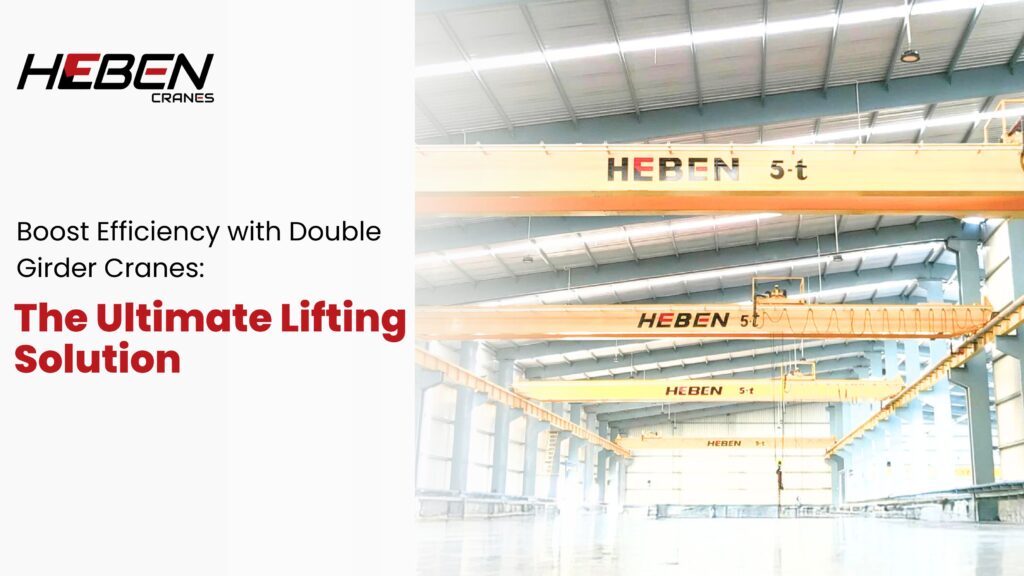
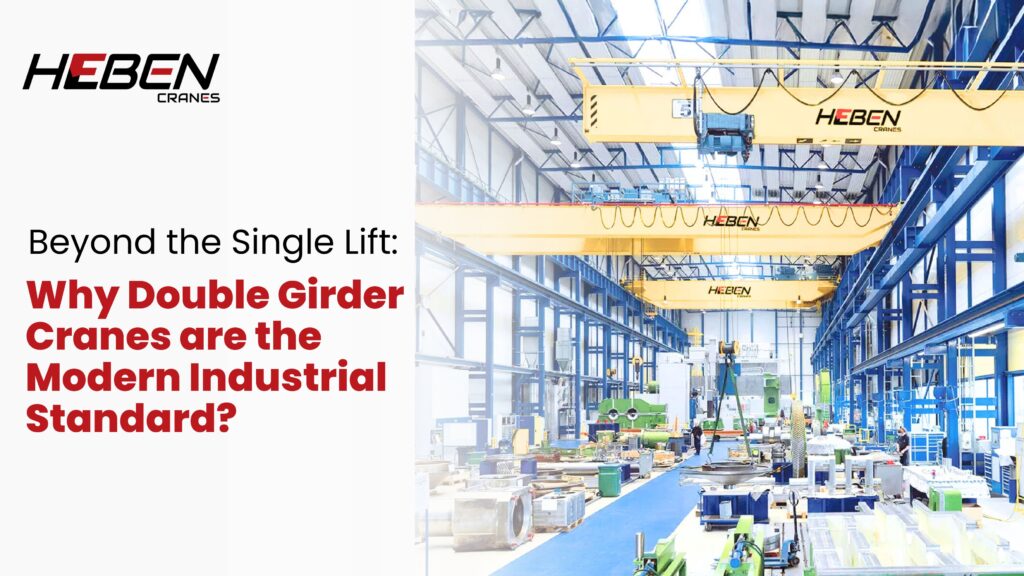
When industrial progress demands heavy lifting with unwavering precision, double girder cranes stand tall as the gold standard in material handling. Used in steel plants, manufacturing units, shipyards, and construction mega sites, these robust cranes deliver not just strength but unmatched operational reliability. If boosting efficiency, safety, and long-term value is your target, look no further than the advanced double girder solutions from Heben Technovation Pvt. Ltd. Let’s explore why double girder cranes are the ultimate answer for high-capacity lifting in India’s bustling industry. What Are Double Girder Cranes? Double girder cranes are overhead cranes featuring two parallel bridge girders that support a hoisting trolley traveling on rails mounted atop the girders. With dual girders, they boast increased stability, load capacity, and span coverage—making them the backbone of heavy-duty and high-frequency operations. Key Technical Features: Load capacity from 5 up to 500 tons and above. Span widths exceeding 50 meters. Greater vertical lifting height, maximizing workspace. Trolley hoist mounted between or on top of the girders for efficient material positioning. Multiple girder and platform access for ease of maintenance. Why Choose Double Girder Cranes? Unmatched Advantages 1. Superior Load Handling Double girder cranes easily handle the heaviest loads—often 2x to 10x more than single girder options. Their robust structural design distributes weight evenly, enabling secure lifting of bulky machinery, steel coils, turbines, and prefabricated structures. 2. Greater Hook Height and Extended Span Unlike single girder cranes, the hoist in a double girder model sits between or above the girders, providing maximum lifting height. This is crucial for plants with tall machinery or multi-level mezzanines, and essential in warehouses with large vertical storage needs. 3. Engineered Durability and Continuous Duty Built from high-strength alloys and reinforced for extra rigidity, double girder cranes are made for round-the-clock operation in demanding environments. After years of service with proper maintenance, they continue to outperform and outlast lighter alternatives. 4. Customization and Application Flexibility Heben’s double girder cranes can be tailored for: Specialized hoists (magnetic, clamshell, ladle, or maintenance types). Dual hoists for synchronized lifting. Auxiliary platforms, walkways, and maintenance rails. Remote, pendant, cabin, or PLC-based automated controls. 5. Enhanced Safety and Advanced Features Safety is always top priority. Key features include: Overload sensors and automatic cut-offs. Emergency brakes & redundant drive systems. Anti-collision sensors, limit switches, and motion alarms. Inverter-driven speed control to avoid sway. Real-time monitoring, IoT sensors, and predictive maintenance alerts. Components That Set Heben Double Girder Cranes Apart Double Bridge Girders: Twin-structure ensures outstanding load distribution and vibration resistance. Strong End Carriages: With premium wheel assemblies for smooth, stable runway travel. Precision Hoist & Trolley Mechanisms: Support top-mounted and heavy-duty hoists with vertical and horizontal movement. Modern Control Panels: Integrated with VFD, overload protection, and modular expansion. Maintenance Platforms: Standard on both sides for easy inspection and longevity. Applications: Where Double Girder Cranes Excel Steel & Metal Processing: Effortless handling of coils, billets, heavy plates, and ingots. Power, Energy & Heavy Engineering: Lifting turbines, generators, transformers—crucial in the erection of hydroelectric and thermal stations. Shipyards & Dockyards: Positioning prefabricated hulls, engines, and marine equipment. Automotive: Engine lifting, chassis movement, and assembly line transfers. Construction & Infrastructure: Moving large precast concrete, steel beams, and bridge sections. General Manufacturing: Daily handling of heavy industrial goods, dies, and molds. Double Girder Cranes vs. Single Girder Cranes: The Power Difference Aspect Single Girder Double Girder Load Limit Up to 20 tons 5 to 500+ tons Span Width Up to 30 meters Exceeds 50 meters Lifting Height Limited High/Tall workspace Configuration Simple, basic Complex, customizable Lifespan Medium Very High (decades) Applications Light/Medium duty Heavy-duty, 24/7 For continuous, critical, and heavy-duty lifting, double girder cranes are unmatched. Advanced Engineering for Modern Industry Heben Technovation equips every double girder crane with innovations: Inverter-Controlled Motors: Allows variable speeds for load safety and operational efficiency. Smart Diagnostics: Real-time system monitoring, load analytics, and predictive maintenance. Remote & Automated Controls: Enable safe operation from any plant location. Energy Efficiency: High-efficiency motors and regenerative braking cut energy bills and carbon footprint. Safety First: Intelligent Protection for People and Equipment Industry incidents can lead to costly stoppages, injuries, or equipment loss. Heben’s cranes include: Multi-level redundant braking systems. Load sway reduction for precise positioning. Wireless operator controls and CCTV integration. Full compliance with IS, FEM, DIN and OSHA standards. Why Select Heben Technovation Pvt. Ltd.? Decades of Experience: Trusted by major Indian manufacturers and infrastructure leaders. Fabrication Excellence: Only the highest quality materials and rigorous QA. Engineering Customization: Solutions tailored to your workflow, space, and load needs. Full Lifecycle Support: From consulting to maintenance, with fast response times and a proactive approach. Digital Integration: IoT-ready cranes with cloud analytics and Industry 4.0 compatibility. Real-World Results: Transforming Factories & Infrastructure Heben’s double girder solutions have: Enabled steel plants to double their coil throughput. Empowered construction giants to move heavy bridge segments in record times. Supported 24/7 automotive manufacturing with zero production line stoppages. Lowered overall operational costs for infrastructure and energy clients by maximizing uptime. Future-Ready: Trends Shaping Double Girder Crane Innovation Automation & AI: From remote operation to AI-driven maintenance and efficiency algorithms. Green Manufacturing: Use of recycled steel, low-emission coatings, and power-saving systems. Modular Expansion: Design architectures that allow rapid span or feature upgrades as your facility grows. Predictive Analytics: Minimize downtime with sensors that detect wear or provide maintenance alerts before issues escalate. Conclusion: The Ultimate Partner for Heavy Lifting Double girder cranes define the standard for dependable, high-volume, and high-capacity lifting. With Heben Technovation Pvt. Ltd., you don’t just get world-class machinery—you gain a strategic partner invested in your operational success, safety, and bottom-line growth. For manufacturers, power plants, logistics hubs, and mega infrastructure projects seeking the safest, most robust, and technologically advanced lifting solution, Heben’s double girder cranes are simply the ultimate answer. Ready to double your efficiency? Contact Heben Technovation Pvt. Ltd. for the next-level in lifting solutions today.
Underslung Cranes: Elevate Efficiency with Smooth Lifting Solutions
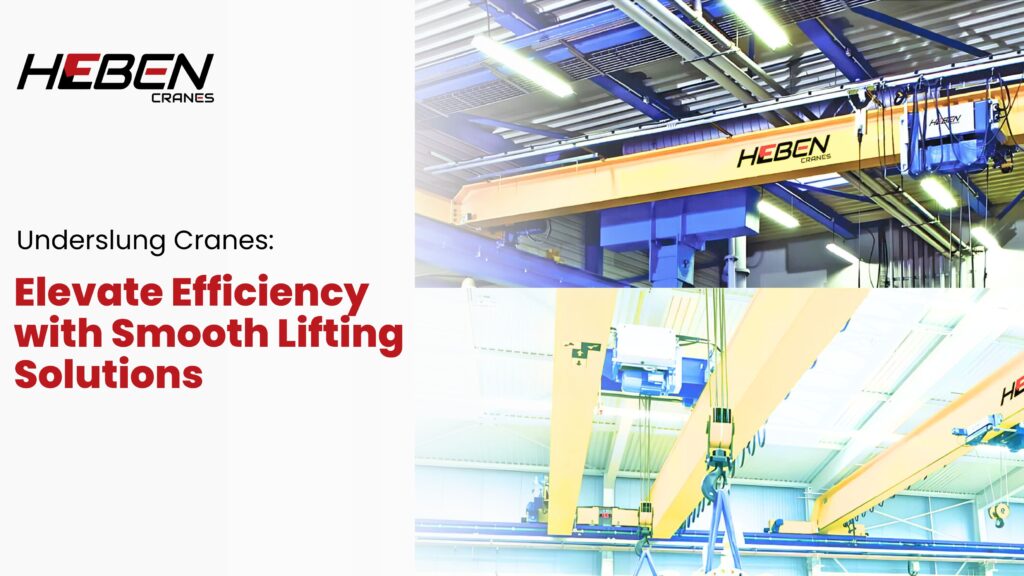
In today’s dynamic manufacturing and logistics environments, optimizing floor space, ensuring safety, and maximizing efficiency are top priorities. Underslung cranes—also called underhung cranes—have rapidly emerged as the go-to solution for industries needing versatile, unobstructed material movement and seamless workflow integration. Heben Technovation Pvt. Ltd. is at the forefront of this revolution, delivering Indian businesses advanced underslung cranes engineered for precision, smooth operation, and lasting value. What Are Underslung Cranes? Core Principles and Design Underslung cranes are overhead cranes that run directly beneath a building’s roof structure or supporting beams. Unlike top-running cranes, these cranes are suspended from the ceiling or roof girders, eliminating the need for massive support columns or ground-based rail tracks. This characteristic not only saves floor space but also unlocks efficient movement—especially in facilities where maximizing headroom and operational flexibility is a must. Key Design Benefits: Minimal floor obstruction, freeing up space for production or storage. Ideal for existing buildings with limited height or irregular layouts. Easier integration with monorails and complex material flow systems. Advantages That Transform Your Operations 1. Superior Space Optimization By suspending the crane structure overhead, underslung cranes offer true flexibility over workspace layouts. This enables manufacturers, auto shops, fabrication units, and warehouses to: Utilize every available square meter for core business processes. Adapt quickly to new workflows, production lines, or equipment configurations. Eliminate the need for expensive and intrusive ground rails or massive support frames. 2. Versatile Application Across Industries Whether you’re managing raw materials, intermediate goods, or finished products, underslung cranes seamlessly fit operations such as: Automotive component transfer Steel and metal fabrication Warehousing and logistics Aerospace assembly Power plants and chemical plants Shipbuilding and railway workshops Their ability to negotiate complex paths and work beneath existing cranes or mezzanines makes them a favorite across sectors. 3. Smooth, Precise Lifting and Travel Heben’s advanced underslung cranes are engineered for: Gentle acceleration, minimizing shock loads and material damage. Micro-speed control for precise load placement. Sway-reducing features that enhance safety and make delicate maneuvers possible, even with large or awkward items. Seamless integration with remote, radio, or fully automated controls for efficiency and safety. 4. Easy Installation and Retrofit Capability Many facilities hesitate to upgrade lifting solutions due to concerns about costly building modifications. Heben’s underslung cranes are designed to: Mount directly to existing roof trusses or ceiling beams. Minimize installation time with modular, bolted assemblies. Retrofit into older or low-clearance buildings where traditional cranes are impractical. 5. Unmatched Safety and Compliance Safety is central to every Heben design. Key features include: Fail-safe limit switches, overload sensors, and emergency stop mechanisms. Anti-collision systems to prevent accidents in busy or multi-crane environments. Robust construction in line with global (IS, DIN, FEM) standards for peace of mind and reliable lifting. How Heben Technovation Takes Underhung Cranes to the Next Level Robust Engineering and Customization No two businesses are identical. Heben offers complete custom solutions: Load capacities from 0.5 to 20 tons for projects of any size. Flexible span and rail configuration to fit any footprint. Integration with automation and Industry 4.0-ready smart features. Specialized options for hazardous, high-temperature, or corrosive environments. Maintenance, Support, and Lifecycle Value Partnering with Heben means hassle-free ownership: Comprehensive after-sales service, including preventive maintenance and on-call technical support. Rapid spare parts delivery. Thorough operator and maintenance crew training to keep your team confident and compliant. Sustainable and Energy-Efficient Solutions With a growing focus on sustainability, Heben’s cranes incorporate: Regenerative braking and high-efficiency motors to cut energy consumption. Material selection and engineering practices that extend crane lifespan and minimize downtime. IoT-based monitoring for predictive maintenance and energy tracking. Comparing Underslung Cranes: Why Choose Heben? Feature Heben Underslung Cranes Standard Solutions Space Optimization Maximum Limited Installation Time Rapid, modular Often lengthy Customizable Paths Straight, curved, hybrid Mostly straight Retrofit Ready Yes Rare Safety Features Advanced Basic Energy Savings High Average Digital Integration Industry 4.0-ready Often not supported Real-World Success Stories Many leading companies across India have significantly increased their throughput, reduced manual handling injuries, and achieved better ROI with Heben’s underslung crane systems. From precision manufacturing units to bustling logistics hubs, Heben’s cranes have streamlined operations and made smart lifting simple and reliable. Future Trends: Underslung Cranes and Industrial Evolution Smart Automation: Automated pathfinding and load monitoring are rapidly becoming the norm. Integration with Warehouse Robotics: Underslung systems are now coordinating with AGVs and smart conveyors for end-to-end material flow. Sustainability: Innovations in lighter materials, efficient drives, and green manufacturing processes continue to push the envelope. Advanced Analytics: Cloud-based dashboards enable real-time performance tracking, predictive diagnostics, and more informed business decisions. Conclusion: Unlock Seamless, Safe, and Smart Lifting with Heben Technovation Underslung cranes represent the gold standard for maximizing space, optimizing workflows, and delivering smooth, ultra-safe lifting in any industrial setting. As Indian businesses race toward digital transformation and world-class manufacturing standards, Heben Technovation Pvt. Ltd. is your partner of choice for cutting-edge, customized underslung crane solutions. Contact Heben Technovation Pvt. Ltd. today to elevate your material handling efficiency and join the ranks of India’s most agile, future-ready enterprises. Your journey to seamless lifting starts here.