
Single Girder EOT Crane Problems & Repair Guide

Unplanned downtime from single girder EOT crane failures costs facilities an average of $5,000-$15,000 per incident in lost productivity, yet 70% of these breakdowns stem from preventable maintenance oversights. Operators report subtle warning signs weeks before catastrophic failures, but facilities lacking systematic inspection protocols miss these indicators until equipment stops working entirely. Understanding common problems and their repair solutions transforms reactive emergency responses into planned maintenance that keeps cranes operational for 20-25 years. This guide covers the most frequent single girder EOT crane issues, diagnostic approaches, repair procedures, and preventive strategies that minimize downtime and extend equipment life. Misalignment and Tracking Problems Girder misalignment creates uneven load distribution, excessive vibrations, and accelerated wheel wear. Rails shift from foundation settlement, thermal expansion, or loose mounting bolts over time. The crane pulls to one side during travel or requires constant steering corrections to maintain straight movement. Diagnosis starts with visual inspection of rail straightness using string lines or laser alignment tools. Measure rail-to-rail parallelism at multiple points along the runway. Check mounting bolt torque and foundation integrity for settling or cracking. Repair Procedures Level and align rails using laser alignment equipment achieving parallelism within 3mm tolerance Tighten loose rail mounting bolts to manufacturer specifications Shim rail supports correcting elevation differences Replace damaged rail sections or repair foundation as needed Misalignment repairs prevent cascading failures in wheels, bearings, and drive systems that cost 3-5 times more than timely alignment correction. Electrical System Failures Electrical malfunctions account for 35-40% of single girder crane breakdowns. Loose wiring connections, motor overheating, faulty contactors, and control panel failures halt operations unexpectedly. Symptoms include intermittent operation, complete power loss, or erratic control response. Diagnostic tools include multimeters for voltage checks, insulation resistance testers verifying circuit integrity, and thermal imaging identifying hot spots indicating impending failures. Inspect control panels for loose terminals, burnt contactors, and signs of arcing or overheating. Common electrical repairs: Secure loose wiring connections and replace damaged cables Clean or replace worn contactors showing pitting or burning Test and replace failed limit switches and safety interlocks Upgrade outdated resistance controls to variable frequency drives for improved reliability Motor overheating requires checking ventilation system cleanliness, verifying proper voltage supply, and confirming load doesn’t exceed rated capacity. Clean motor cooling vents and replace thermal protection devices if tripping prematurely. Wire Rope Deterioration Wire rope failures create severe safety hazards and account for approximately 15% of crane-related accidents. Continuous use, overloading, and inadequate lubrication cause fraying, broken strands, and internal corrosion beneath grease layers that visual inspection misses. Inspection reveals broken wires (6 randomly distributed in one lay or 3 in one strand requires immediate replacement), kinking, bird-caging, reduced diameter, and corrosion. Remove accumulated grease periodically to examine actual wire condition rather than relying on external appearance. Repair involves complete rope replacement using genuine manufacturer-specified components. Never attempt to splice or repair damaged wire rope—replacement is the only safe option. Apply proper lubrication immediately after installation and maintain scheduled lubrication intervals based on duty cycle intensity. Motor and Brake Overheating Prolonged duty cycles without cooling periods, worn brake linings, and poor ventilation cause motor and brake overheating reducing component life 40-60%. Temperature monitoring during operation detects developing problems before complete failure occurs. Brake overheating stems from excessive adjustment clearance requiring frequent engagement, worn friction material, or contamination from oil or grease. Check brake lining thickness, adjustment clearances, and mounting bolt torque during regular inspections. Overheating Solutions Schedule cooling periods between intensive lift cycles Clean motor and brake ventilation openings removing dust accumulation Adjust brake clearances to manufacturer specifications Replace worn brake linings before material thickness drops below minimum standards Verify electrical supply voltage matches motor nameplate requirements Hoist Mechanism Malfunctions Hoist problems manifest as jerky lifting motion, uneven load handling, unusual noise, or complete lifting failure. Worn gearbox components, damaged drum surfaces, improper operator techniques, and inadequate lubrication contribute to hoist deterioration. Inspection includes checking gear tooth wear patterns, listening for abnormal grinding or squealing, measuring drum surface condition, and verifying proper lubrication levels in gearboxes. Oil level should reach indicator marks with quality meeting manufacturer specifications. Repairs range from simple lubrication and adjustment to complete gearbox overhaul or drum replacement depending on wear severity. Train operators on smooth acceleration and deceleration techniques reducing shock loads that accelerate component wear. Control System Obsolescence Outdated control panels lag responsively, fail frequently, and lack safety features available in modern systems. Upgrading to variable frequency drives provides smooth acceleration, precise speed control, and energy savings offsetting upgrade costs within 3-4 years. Wireless remote controls improve operator visibility and positioning accuracy compared to pendant controls restricting operator location. Modern control systems integrate safety interlocks, load monitoring, and diagnostic capabilities identifying developing problems before failures occur. Preventive Maintenance Schedule Daily operator checks verify control function, emergency stops, wire rope condition, and unusual noise or vibrations. Weekly inspections by maintenance mechanics thoroughly examine items identified during daily checks and verify lubrication levels. Monthly maintenance includes detailed electrical system inspection, brake adjustment verification, structural component examination for cracks or deformation, and wheel bearing assessment. Annual comprehensive inspections by qualified technicians cover load testing, complete structural analysis, and regulatory compliance documentation. Systematic documentation tracks inspection findings, component replacements, and maintenance activities guiding predictive interventions and demonstrating regulatory compliance. Frequently Asked Questions Q: How often should single girder EOT cranes undergo professional inspection? A: Daily pre-shift checks by operators verify immediate safety and function, monthly detailed inspections by maintenance staff assess wear and adjustment needs, and annual comprehensive examinations by certified inspectors ensure structural integrity and regulatory compliance. Heavy-duty operations require quarterly professional inspections due to accelerated component wear from intensive use. Q: What are definitive signs wire ropes need immediate replacement? A: Replace wire ropes when finding 6 randomly distributed broken wires in one lay, 3 broken wires in one strand, diameter reduction exceeding manufacturer limits (typically 7% or more), visible kinking or bird-caging deformation, or severe corrosion compromising wire integrity. Never attempt repairs—complete replacement is mandatory for safety. Q: Can electrical failures be prevented through
Top 5 Factors for Choosing a Single Girder Crane
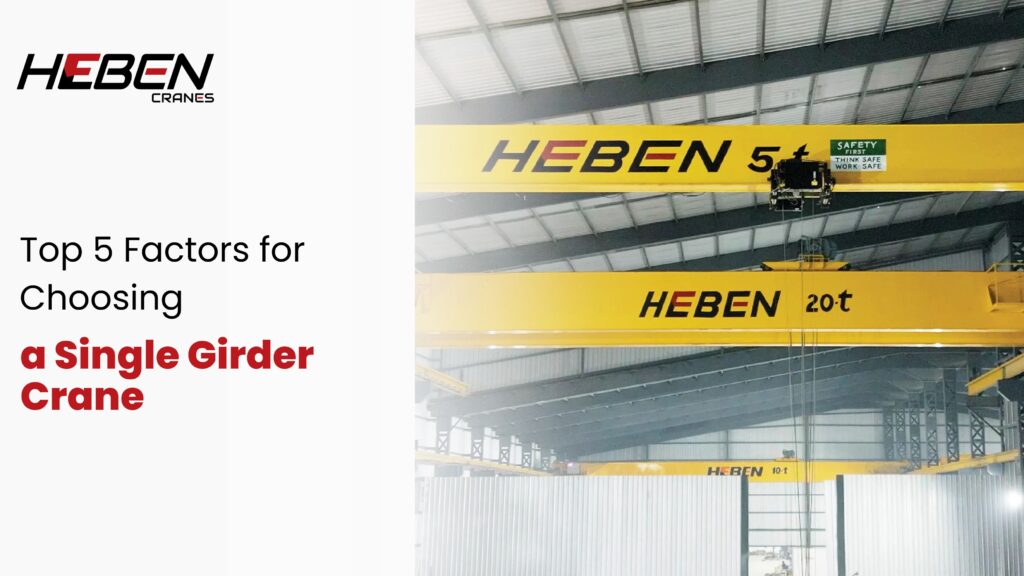
Single girder cranes account for roughly 65% of overhead crane installations globally, yet most buyers make selection decisions based on incomplete information. The reality: choosing the wrong capacity, span, or duty class costs 30-50% more over the crane’s lifespan through frequent repairs, premature replacement, or operational limitations forcing workflow compromises. Light to medium-duty operations need cranes balancing capacity, structural requirements, classification, and budget with long-term performance and reliability. This guide examines the five critical factors determining whether a single girder crane meets your needs efficiently: load capacity limits, span requirements, duty classification, configuration choices, and total ownership costs. Load Capacity Requirements Single girder cranes handle 1-20 ton capacities effectively, with most applications falling in the 5-15 ton range. Beyond 15-20 tons, double girder configurations become necessary due to structural capacity and safety requirements. Here’s the mistake most facilities make: specifying capacity matching only current maximum loads without growth buffer or dynamic load factors. A 10-ton fabrication part plus 1-ton rigging equipment under dynamic lifting conditions creates 12-13 tons of actual crane stress. Specifying an 11-ton crane leaves no margin, accelerating component wear and creating safety risks. The smart approach builds in 20-30% capacity buffer accommodating production growth, specialty tooling, and dynamic loading without premature crane replacement. This buffer costs 5-10% more upfront but avoids the 100% replacement expense when operations outgrow undersized equipment within 3-5 years. Capacity Selection Guidelines Calculate maximum load including rigging, lifting beams, and attachments Add 20-30% buffer for dynamic forces and future requirements Verify capacity matches realistic operational needs, not just peak theoretical demands Consider multiple smaller lifts versus occasional heavy loads impacting duty classification Span Length and Workspace Dimensions Single girder cranes economically cover spans up to 60-65 feet (18-20 meters). Beyond this length, material availability limitations and deflection concerns make double girder designs more practical and cost-effective. Span directly affects crane cost, structural requirements, and building modifications. A 30-foot span crane weighs approximately 40% less than a 60-foot unit of identical capacity, reducing runway support requirements and installation complexity. Measure your facility accurately. Column spacing determines maximum practical span, minus clearances for crane end trucks and safety margins. Most specifications require 18-24 inches total clearance, directly impacting usable lifting area. Duty Classification and Usage Intensity Duty class governs structural design, component quality, and expected service life. Single girder cranes typically operate in Class A through D ranges, with A3 and A4 most common for light industrial applications. Classification breakdown: Class A (standby/infrequent use) handles precise slow-speed lifting. Class B (light service) manages 2-5 lifts hourly. Class C (moderate service) completes 5-10 hourly lifts averaging 50% capacity. Class D (heavy service) performs 10-20 lifts per hour at 65% of rated capacity. The data most buyers ignore: a Class C crane operating under Class D conditions experiences 2-3 times normal wear rates, requiring major component replacement at 8-10 years instead of the designed 15-20 year lifespan. The 15-20% premium for proper duty classification pays back through extended service intervals and avoids early replacement. Duty Classification Matching Class A/B: Maintenance shops, occasional material handling, precise positioning requirements Class C: General manufacturing, fabrication shops, moderate cycling 5-10 lifts/hour+1 Class D: Production facilities, intensive material handling, 10-20 lifts/hour Class E/F: Typically exceed single girder practical limits; require double girder designs Top Running vs Under Running Configuration Top-running single girder cranes ride on rails mounted atop runway beams, offering higher capacity and easier maintenance access. Maximum capacities reach 15-20 tons with robust structural support. Under-running (underhung) cranes suspend from the bottom flange of runway beams, maximizing floor space when mounted to existing ceiling structures. This eliminates columns consuming production area but limits practical capacity to 10 tons and complicates service access. The contrarian insight: if building structure can’t support a 12-ton top-running crane, two 6-ton underhung units might provide equivalent capacity without expensive structural reinforcement. Total cost often favors this creative approach over single-crane building modifications. Maintenance accessibility differs significantly. Top-running designs allow direct technician access to wheels, rails, and drive components. Under-running systems require suspension rigging for component service, extending downtime and labor costs 40-60%. Total Cost of Ownership Initial purchase price represents only 40-60% of lifecycle costs over a crane’s 20-25 year service life. Maintenance frequency, component longevity, energy consumption, and downtime determine the remaining expenses. Single girder cranes cost 30-40% less initially than comparable double girder units due to lighter construction and simpler trolley designs. Installation expenses run 25-35% lower from reduced weight and faster assembly. Maintenance costs favor single girder designs through fewer components and simplified service procedures. Annual maintenance typically runs 3-4% of crane value versus 5-6% for double girder configurations. Energy efficiency depends more on control systems than structural design. Variable frequency drives reduce consumption 30-40% compared to resistance controls, recovering the 15% equipment premium within 3-4 years in facilities operating 2,000+ hours annually. Cost Comparison Reality Single girder advantages disappear when mismatched to applications. A Class C crane forced into Class D duty requires major overhauls at 8-10 years instead of designed 15-20 years, negating initial savings through premature failure. Proper specification matching application intensity delivers advertised lifecycle value. Frequently Asked Questions Q: Can single girder cranes be customized with platforms and walkways? A: Limited customization is possible but becomes difficult and expensive compared to double girder designs. The single main girder structure restricts attachment points for heavy platforms, service walkways, or specialized under-hook devices. Evaluate customization needs during specification—extensive modifications may justify double girder configurations offering better mounting flexibility. Q: What’s the maximum practical span for single girder cranes? A: Most single girder cranes limit spans to 60-65 feet (18-20 meters) due to standard rolled section availability and deflection concerns. Longer spans require fabricated box girders or double girder configurations providing necessary structural capacity. Pushing single girder designs beyond practical limits creates excessive deflection, reduced positioning accuracy, and accelerated wear. Q: How does duty classification affect crane lifespan? A: Duty class directly determines structural design strength and component quality targeting specific operational intensities. A Class C crane handles approximately 63,000 lifts
Economical 3-Ton Cranes for Light Industrial Lifting
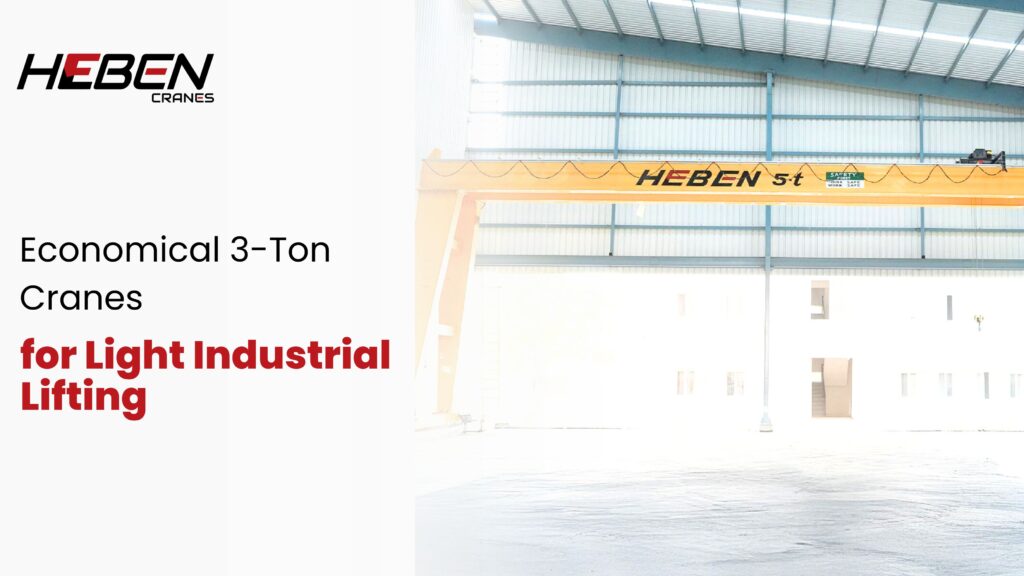
Budget-conscious buyers make a costly mistake when they prioritize the lowest purchase price over total ownership value. Here’s the data that shocks most procurement teams: a 3-ton crane costing 20% less upfront but requiring 40% more maintenance over 10 years actually costs 15-25% more in total expenses than a quality unit with higher initial investment. Light industrial operations need reliable lifting equipment that balances affordability with durability, safety, and serviceability. This guide examines economical 3-ton crane types, essential features preventing expensive repairs, customization optimizing value, typical applications, cost considerations beyond sticker price, and selection criteria ensuring smart purchasing decisions. Types of Economical 3-Ton Cranes Single girder overhead cranes dominate the 3-ton capacity range due to their lightweight structure, reduced material costs, and simpler installation requirements. They handle spans from 7.5 to 31.5 meters with lifting heights reaching 30 meters, covering most light industrial applications. Low headroom designs optimize vertical space by positioning the hoist mechanism on the bridge side rather than below, gaining 20-30% additional hook height compared to standard configurations. Facilities with ceiling clearance constraints benefit significantly from this design without sacrificing lifting capacity. Gantry cranes provide portable alternatives when building structures can’t support overhead installation. Three-ton gantry options include fixed position models, semi-gantry designs using one runway beam and building support, and adjustable height units accommodating varied workflows. Crane Type Selection Guide Standard Single Girder: Spans 7.5-31.5m, most economical for typical workshops, A3 duty class for 8-10 hour daily operation Low Headroom: Same capacity with 20-30% improved hook height, ideal for space-constrained facilities Underhung: Suspension from existing structure, eliminates floor supports, capacity typically limited to lighter ranges Portable Gantry: Flexible positioning, no building modification required, trade-off in stability vs mobility Essential Features for Long-Term Value Control system selection impacts both initial price and operational efficiency. Pendant controls offer the most economical option for stationary operator positions. Wireless remote controls increase cost 15-20% but improve operator visibility and positioning flexibility. Full cabin controls suit intensive operations requiring extended operator presence but add 30-40% to base price. Variable frequency drives (VFD) provide precise speed control, smooth acceleration reducing structural stress, and significant energy savings offsetting higher upfront costs. Dual-speed hoists enable both rapid transit at 8m/min and precision positioning at 2m/min. Safety features separate quality manufacturers from budget vendors cutting corners. Essential inclusions are overload protection preventing dangerous lifts, emergency stop systems with redundant controls, limit switches halting over-travel, and anti-sway technology improving load positioning. Customization Maximizing Value Span length and lifting height customization ensures cranes match facility dimensions without over-specification waste. Standard spans range 7.5-31.5 meters, with customization accommodating unusual building layouts or future expansion plans. Duty class selection affects structural design, component quality, and service life. A3 classification suits light to moderate use totaling 8-10 hours daily with lifting cycles under 25% of rated capacity. A5 duty handles more intensive operations but costs 20-30% more through heavier construction and upgraded components. Environmental adaptations prevent premature failure in challenging conditions. Dust-proof electrical enclosures protect components in cement or woodworking facilities. Heat-resistant materials and thermal protection suit foundries or high-temperature environments reaching 60°C. Corrosion-resistant coatings extend life in chemical processing or coastal locations. Power supply compatibility matters more than buyers expect. Verify voltage requirements (220V-660V options available) match facility electrical systems to avoid expensive transformer installations. Typical Applications and Use Cases CNC machining workshops benefit from 3-ton cranes handling precision molds weighing 0.8-2.5 tons, stainless steel shafts and titanium components ranging 0.5-2.7 tons, and tool-changing system modules. The combination of accurate positioning and adequate capacity supports efficient material flow without equipment over-sizing. Concrete production facilities use low headroom 3-ton cranes for cement bags, precast components under 2.7 tons, and production molds. The compact design adapts to limited vertical space while delivering 90% coverage of typical load demands in the sector. Steel pipe processing operations leverage 3-ton cranes moving 6-meter pipes weighing up to 2.7 tons individually or bundled loads of 1.5-2.8 tons. Remote control operation ensures stability handling long materials, with typical facilities completing 30-50 lifts daily. Warehousing and logistics applications use 3-ton capacity for inventory management, container handling, and loading operations where mobility and precision matter more than heavy lifting capability. Cost Considerations Beyond Purchase Price Initial investment for 3-ton cranes varies significantly by type and features. Standard single girder models range $2,130-$7,680 depending on span, lifting height, and specifications. Low headroom versions add approximately 5% premium. European FEM-standard cranes cost $4,980-$11,050 through enhanced materials and precision manufacturing. The uncomfortable truth most buyers ignore: purchase price typically represents 40-60% of total ownership cost over a crane’s 20-25 year lifespan. Maintenance frequency, component replacement rates, energy consumption, and downtime expenses determine the remaining 40-60%. Energy efficiency deserves calculation beyond marketing claims. VFD-equipped cranes consume 30-40% less electricity than resistance-controlled alternatives in typical duty cycles. For operations running 2,000+ hours annually, energy savings recover the 15-20% VFD premium within 3-4 years. Component quality from reputable manufacturers (motors, gearboxes, electrical controls) reduces maintenance frequency and extends intervals between major overhauls. Cheap alternatives require component replacement 2-3 times more frequently, negating initial savings through labor costs and downtime. After-Sales Support Value Installation support determines whether cranes operate reliably from commissioning or require expensive corrections. Professional manufacturers provide detailed assembly guidance, remote technical assistance, and optional on-site supervision ensuring proper setup. Operator training prevents equipment abuse extending service life and improving safety. Comprehensive programs cover safe operating procedures, pre-shift inspection protocols, load handling techniques, and emergency response. Maintenance contracts optimize uptime through scheduled inspections, predictive component replacement, priority response for breakdowns, and discounted parts. The investment typically costs 3-5% of crane value annually but reduces unplanned downtime 40-60% compared to reactive maintenance approaches. Spare parts availability affects both downtime duration and repair costs. Manufacturers maintaining stock and providing rapid shipping minimize production interruptions when components fail. Generic parts from lowest-cost sources often require modification, create compatibility issues, or fail prematurely. Frequently Asked Questions Q: What is the realistic lifespan of an economical 3-ton crane in light industrial use? A: Quality 3-ton cranes operate
Overhead or Underhung Cranes: Which Is Best?
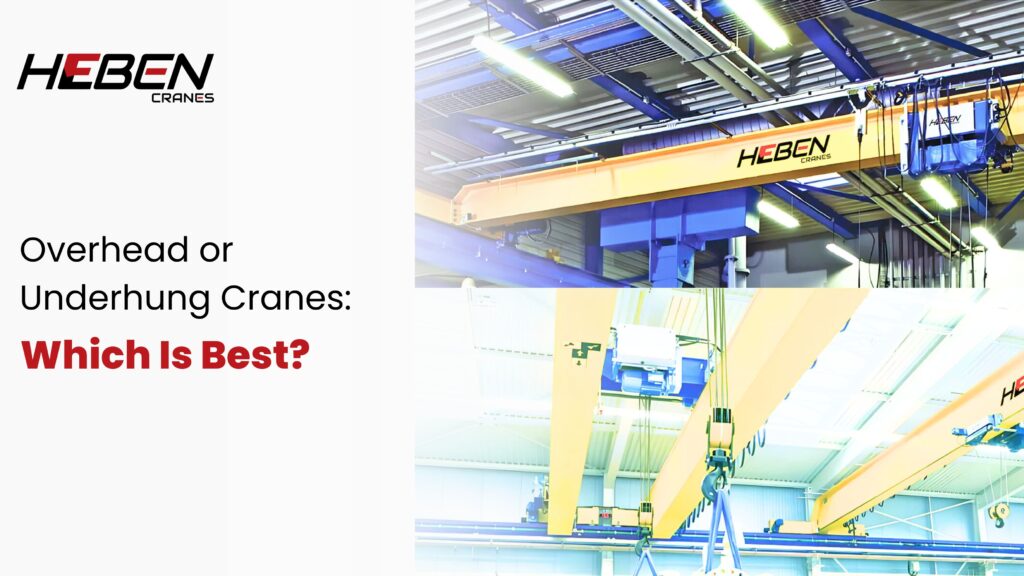
Choosing between overhead (top-running) and underhung (under-running) cranes confuses many facility managers because both systems appear to accomplish the same task—lifting and moving loads. Yet picking the wrong configuration costs thousands in unnecessary structural modifications, limits operational capacity, or creates maintenance headaches lasting decades. Here’s the surprising reality: most facilities choose based on upfront price alone, ignoring factors like headroom optimization, floor space utilization, and long-term service requirements that determine total ownership value. This guide examines how each crane type operates, their capacity and structural differences, key advantages and limitations, and the critical decision factors ensuring you select the optimal configuration for your facility’s specific needs. Basic Design and Operating Differences Overhead cranes ride on rails mounted atop runway beams, with end trucks carrying the bridge along the top of the support structure. The hoist and trolley can run beneath the bridge on single girder designs or on top of the bridge on double girder configurations, maximizing hook height. Underhung cranes suspend from the bottom flange of runway beams, traveling underneath the support structure. The entire crane system hangs from the runway, with wheels moving along the lower beam flange rather than riding on top-mounted rails. This fundamental structural difference affects everything from building requirements to maintenance procedures. Overhead systems require stronger runway beams capable of supporting rail systems and crane loads from above. Underhung systems distribute weight differently, often allowing integration with existing ceiling structures without major reinforcement. Capacity and Lifting Height Comparison Load capacity represents the clearest distinction between configurations. Overhead cranes handle anywhere from 1/4-ton to over 400 tons with no practical upper limit. They scale from light-duty applications through the heaviest industrial lifting requirements. Underhung cranes typically max out at 10-15 tons capacity, though some specialized designs push slightly higher. The suspended design and lighter structural components limit practical capacity for most applications to the light-to-medium duty range. Capacity Guidelines Overhead Single Girder: 1/4-ton to 20 tons, spans under 65 feet, light to medium duty Overhead Double Girder: 20-400+ tons, spans over 65 feet, medium to heavy duty Underhung Systems: 1/4-ton to 15 tons, spans under 65 feet, light to medium duty Hook height differences matter more than most buyers expect. Overhead cranes—particularly double girder configurations—provide 3-6 feet additional lifting height because the hoist runs atop the bridge girders. This extra height proves critical in facilities with limited headroom or requiring maximum vertical reach. Underhung systems sacrifice lifting height because the bridge and hoist hang beneath the runway beams. Facilities with abundant ceiling clearance handle this limitation easily, but space-constrained operations face real constraints. Structural and Installation Requirements Building structure capacity determines which configuration works without expensive reinforcement. Overhead cranes demand robust runway beam support capable of handling concentrated loads from rail-mounted crane travel. Older facilities or lighter construction often require structural upgrades adding significant cost. Underhung cranes frequently integrate with existing ceiling trusses or roof structures because the suspended design distributes loads differently. This compatibility reduces or eliminates structural modification expenses in many installations. Freestanding support becomes necessary when building structures can’t accommodate crane loads. Overhead cranes use columns supporting runway beams and rails. Underhung systems similarly require columns when ceiling attachment proves impractical. Both freestanding configurations consume valuable floor space that might otherwise support production or storage. Here’s the insight most specifications miss: if your building can’t support a 10-ton overhead crane, two 5-ton underhung cranes might provide equivalent lifting capacity without structural reinforcement. This creative approach avoids construction costs while maintaining operational capability. Advantages of Overhead Cranes No capacity limitations represent the primary advantage—overhead configurations handle any lifting requirement from fractional tons through hundreds of tons. This scalability accommodates current needs and future growth without replacement. Easier maintenance and service access stems from the top-mounted design. Wheels, rails, and drive components sit accessible on top of runway beams rather than requiring suspension from below. Service and alignment procedures complete faster with less downtime. Maximum hook height and lifting reach suit facilities needing every available inch of vertical clearance. Double girder designs particularly excel when headroom optimization determines operational capability. Higher speeds for trolley and bridge movement accelerate cycle times in high-volume operations. The robust construction supports faster travel without structural concerns limiting performance. Advantages of Underhung Cranes Floor space maximization happens when underhung cranes mount to existing ceiling structures, eliminating columns that would otherwise consume production area. Facilities where every square foot counts gain significant value from this space efficiency. Better side approach and coverage across building width results from the suspended design. Underhung configurations can position loads closer to walls and edges than overhead systems where runway structure creates clearance requirements. Fewer tracking problems occur because underhung cranes bolt directly to I-beams secured to building structure. This attachment limits movement and reduces rail misalignment issues that top-running systems experience more frequently. Lower initial costs in facilities with suitable ceiling structure make underhung systems attractive for budget-conscious operations. Eliminating runway support columns and using lighter components reduces material and installation expenses. Service and Maintenance Considerations Overhead crane rail alignment requires more frequent checking but proves easier to perform. Technicians access rails and wheels directly without complex rigging. Service completes quickly with minimal downtime. Underhung crane alignment happens less frequently due to the stable I-beam attachment. However, when service becomes necessary, suspension and rigging requirements extend downtime significantly compared to overhead systems. The complexity of accessing suspended components increases both time and cost. Parts availability favors overhead configurations, particularly for common capacities and spans. Standardization and market dominance mean replacement components ship faster and cost less than specialized underhung parts. Decision Factors for Selection Load capacity requirements drive the fundamental choice. Operations regularly handling over 15 tons need overhead configurations. Lighter-duty applications gain flexibility choosing based on other factors. Existing building structure and ceiling height determine practical options. Limited headroom favors overhead cranes maximizing hook height. Facilities with robust ceiling structures but restricted floor space benefit from underhung designs. Budget constraints including installation costs matter, but smart buyers evaluate total ownership expenses rather
Gantry Crane Safety & Performance Inspection Checklist
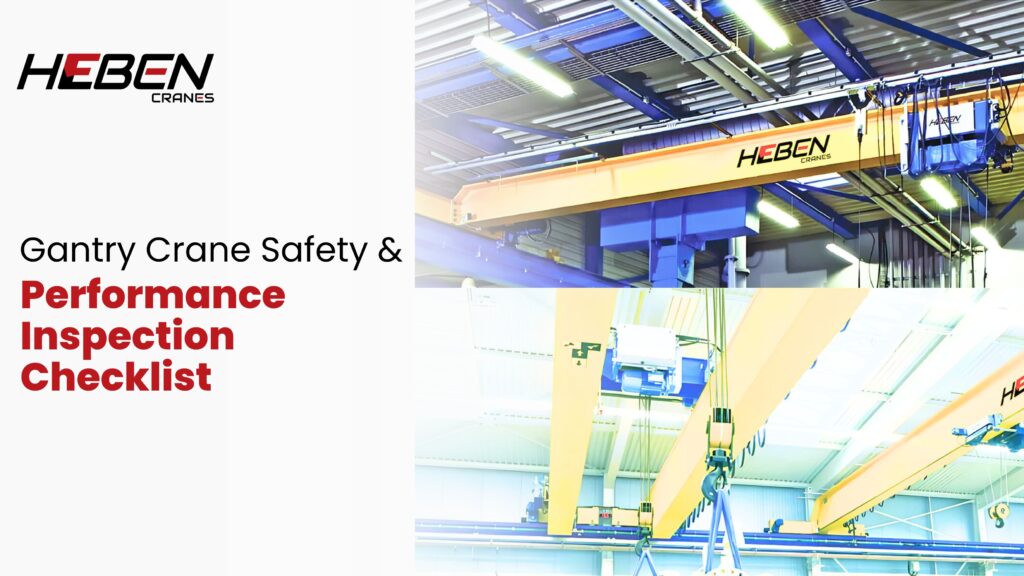
Inspection lapses are OSHA’s top crane citation, more than the next two combined. Three out of four gantry-crane accidents come from human error and weak inspections, not bad hardware. Miss a cracked weld or a worn wire rope buried in grease and you invite shutdowns and injuries. Use a checklist. It fixes the what, when, and who of every check. This guide spells out daily pre-shift checks, monthly deep reviews, annual full audits, and the critical parts that govern gantry-crane safety and performance. Why Checklist-Based Inspection Works? Gantry cranes operate in demanding environments where structural loads, environmental exposure, and continuous cycling stress every component. Inspection finds problems at early fixable stages rather than waiting for catastrophic failure during peak production periods. Data from crane accident analysis reveals that 90% of incidents trace back to human factors—primarily failure to identify deterioration through proper inspection protocols. Regular maintenance guided by thorough inspection can reduce mechanical failures by up to 40%, directly impacting operational reliability and safety performance. The difference between effective and ineffective inspection programs comes down to consistency. Checklists ensure nothing gets skipped regardless of operator experience level, shift timing, or production pressure. They create documented records proving due diligence and guiding maintenance planning based on actual equipment condition rather than arbitrary schedules. Inspection Frequency Requirements OSHA 1910.179 and ANSI B30.17 establish clear frequency standards based on service classification. Normal service requires monthly frequent inspections and yearly periodic assessments. Heavy service demands weekly to monthly frequent checks with annual comprehensive reviews. Severe service operations need daily to weekly frequent inspections and quarterly periodic examinations. Operating hours provide better correlation with wear rates than calendar intervals. Gantry cranes running multiple shifts daily experience accelerated component degradation compared to equipment used occasionally. Adjust inspection frequency to match actual operational intensity rather than applying generic schedules that under-inspect heavily used equipment. Service Classification Guide Normal Service: Monthly frequent inspections, annual periodic reviews—for light-duty operations under 50% capacity with infrequent use. Heavy Service: Weekly to monthly frequent checks, annual comprehensive inspections—for regular operations at 50–65% capacity. Severe Service: Daily to weekly frequent inspections, quarterly periodic assessments—for continuous operations above 65% capacity with heavy cycle rates. Daily Pre-Shift Inspection Checklist Pre-shift inspections catch immediate hazards before the crane enters service. Operators conduct these visual and functional checks at the beginning of each shift, taking 10–15 minutes to verify operational readiness. Start with control function testing: push buttons, emergency stops, limit switches, and directional controls. Verify each control responds correctly without sticking, delays, or erratic behavior. Test emergency stop systems to confirm they immediately halt all crane motion. Wire rope or chain condition requires careful visual examination. Look for broken wires (six randomly distributed in one rope lay or three in one strand constitutes removal criteria), kinking, bird-caging, corrosion, and proper lubrication. Significant internal corrosion often develops beneath grease layers invisible during surface inspection. Hook and load attachment inspection checks for cracks, deformation, throat opening increase beyond 15% of original dimension, and safety latch operation. Any visible crack requires immediate removal from service regardless of size. Daily Checklist Items All control functions including emergency stops respond properly Wire ropes show no broken wires, kinks, excessive wear, or corrosion Hooks intact with no cracks, deformation, or latch damage Wheels and bearings operate smoothly without unusual noise or binding Travel rails clear of obstructions with end stops properly positioned Audible warning devices and visual indicators function correctly Power supply connections secure with no visible damage Load chain properly seated on sprockets if chain hoist equipped Monthly Performance Inspection Checklist Monthly inspections examine components with slower wear progression requiring more detailed assessment. Qualified maintenance personnel conduct these checks, typically requiring 1–2 hours depending on crane size and complexity. Structural examination covers legs, beams, crossmembers, and connections. Check for cracks—especially around welds and high-stress areas—corrosion that reduces load-bearing capacity, deformation indicating overload conditions, and loose bolts or fasteners. Structural cracks propagate over time—early detection prevents catastrophic failure. Brake system assessment verifies stopping reliability. Examine friction material thickness, adjustment maintaining proper clearances, responsiveness during test cycles, and signs of overheating or fluid leaks on hydraulic systems. Brake failures create dangerous load swing conditions when cranes don’t stop precisely where operators expect. Electrical system inspection checks wiring insulation integrity, connection tightness, control panel condition, and limit switch function under no-load conditions. Electrical malfunctions cause unpredictable crane behavior and create electrocution hazards. Travel rail assessment examines alignment, rail condition, joint gaps, and fastener security. Misaligned rails cause uneven wheel loading, accelerated wear, and crane skew during travel. Loose rail attachment bolts allow improper alignment that compounds rapidly under operational loads. Monthly Inspection Focus Areas Structural members: cracks, corrosion, deformation, loose connections Brake systems: lining wear, adjustment, test cycle performance Wire rope detailed examination: internal wire condition, lubrication adequacy Wheels and bearings: diameter measurements, surface condition, play assessment Electrical components: insulation resistance, connection integrity, control responsiveness Hydraulic systems if equipped: fluid levels, leak detection, pressure testing Annual Comprehensive Inspection Checklist Annual inspections provide the most thorough assessment, typically performed by certified inspectors using specialized diagnostic equipment. These comprehensive examinations verify regulatory compliance and fitness for continued service. Load testing confirms structural integrity and system performance under actual working conditions. Testing involves lifting 110% of rated capacity to sufficient height for complete system verification, holding briefly while checking for abnormal deflection or behavior, and ensuring all controls function properly under load. Complete structural analysis goes beyond visual examination to include dimensional measurements, deflection assessment, weld integrity verification using non-destructive testing methods where warranted, and foundation condition review. Foundation settlement or column damage compromises crane stability under load. Mechanical component detailed inspection covers motors, gearboxes, couplings, sheaves, and drive systems. Measure wear parameters against manufacturer specifications, assess lubrication adequacy, check for excessive play or misalignment, and verify proper adjustment of all systems. Documentation review ensures all previous inspection records, maintenance logs, repair documentation, and modification approvals are complete and current. Missing records create liability exposure and make trend analysis impossible. Annual Comprehensive Checklist Load test at
Overhead Crane Inspection: Safety & Stability
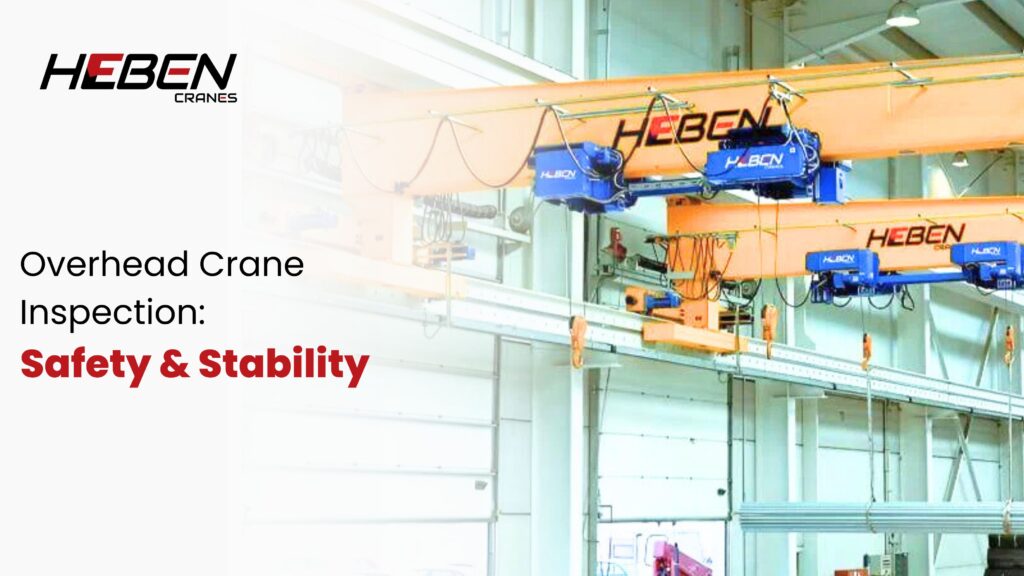
An analysis of 249 overhead crane incidents revealed 838 OSHA violations resulting in 133 injuries and 133 fatalities. Most of these failures trace back to inadequate inspection practices rather than equipment defects. Wire rope corrosion hides beneath grease layers, brake wear progresses unnoticed, and structural cracks develop gradually until catastrophic failure occurs. Systematic inspection programs eliminate these risks by catching deterioration at early, fixable stages. This guide covers inspection types, critical components to examine, stability assessment procedures, documentation requirements, and the technical processes that keep overhead cranes operating safely for decades. Why Inspection Determines Crane Safety? Overhead cranes don’t fail suddenly without warning signs. Components deteriorate progressively through normal use, environmental exposure, and operational stress. The question is whether inspections detect problems before they cause accidents or production shutdowns. Research shows approximately 90% of crane accidents result from human error—primarily failure to identify and address developing issues during inspection. Equipment failures that do occur typically stem from maintenance gaps where inspections missed or ignored deterioration indicators. Regular inspection creates the documentation trail that proves regulatory compliance and demonstrates due diligence if incidents occur. Beyond legal requirements, inspection data guides maintenance planning by revealing wear patterns, component lifespans, and optimal replacement timing before failures happen. Inspection Types and Frequency Requirements OSHA 1910.179 establishes two distinct inspection categories for overhead cranes: frequent inspections and periodic inspections. The terminology matters because frequency requirements differ significantly based on crane usage intensity and duty classification. Frequent inspections occur at daily to monthly intervals depending on operational intensity. Cranes running multiple shifts daily require more frequent checks than equipment used occasionally. These inspections focus on operational components most likely to wear or fail: controls, wire ropes, hooks, brakes, and limit switches. Periodic inspections happen at 1 to 12-month intervals and involve more comprehensive examination of structural elements, mechanical systems, and electrical components. Class C cranes (moderate duty) typically need periodic inspection every 500 operating hours, while heavy-duty Class D and E cranes require quarterly or semi-annual comprehensive assessment. Inspection Frequency Guidelines Daily Pre-Use Checks: Visual inspection of all control functions, safety devices, wire ropes, and hooks before each shift Monthly Inspections: Documented examination of mechanical components, electrical systems, and structural elements Annual Comprehensive: Detailed assessment by qualified inspectors covering all crane systems with load testing Heavy Duty Operations: Quarterly inspections for Class E and F cranes running continuous multiple-shift operations Critical Components Requiring Inspection Wire rope inspection tops the priority list because rope failure causes immediate load drops and severe accidents. Visual examination checks for broken wires, kinks, corrosion, wear, and proper lubrication. The critical insight most operators miss: significant internal corrosion develops beneath grease layers, invisible during standard visual checks. Analysis of wire rope failures reveals uniform corrosion of internal surfaces progresses undetected until individual wires fail under load, overloading remaining strands and causing complete rope failure. Removing grease to examine wire condition catches this deterioration before it reaches critical stages. Brake systems demand careful assessment because worn brakes reduce stopping reliability and create swing hazards when loads don’t stop precisely. Check friction material thickness, adjustment, responsiveness during test cycles, and any signs of overheating or contamination. Structural components including bridge beams, end trucks, trolley frames, and runway supports require inspection for cracks, corrosion, deformation, and loose connections. Weld integrity particularly matters because crack propagation in welds can progress to structural failure. Essential Inspection Points Wire Ropes: Broken wires (6 randomly in one lay or 3 in one strand), reduction in diameter exceeding manufacturer limits, kinks, bird-caging, corrosion Hooks: Cracks, deformation, throat opening increase beyond 15%, latch operation, wear in saddle area Brakes: Lining wear, adjustment, responsiveness, unusual noise, fluid leaks on hydraulic systems Electrical Systems: Insulation condition, connection tightness, control responsiveness, limit switch function Structural Elements: Beam deflection, crack development, corrosion, bolt tightness, weld Stability Assessment Procedures Crane stability depends on multiple interrelated factors that standard operational checks don’t always evaluate thoroughly. Runway alignment affects how loads distribute across wheels and whether the crane travels straight without binding. Misaligned rails create uneven loading, accelerated wheel wear, and potential for crane skew during travel. Foundation integrity supports the entire system. Settlement, cracking, or deterioration in runway support structures compromises stability under load. Annual inspections should verify foundation condition, column alignment, and structural adequacy for crane loads. Load testing confirms the crane can safely handle rated capacity without excessive deflection, control problems, or structural distress. Testing typically involves lifting 110% of rated load to a height sufficient to verify all systems, holding briefly, and checking for any abnormal behavior or permanent deformation. Wheel condition directly impacts stability. Worn wheels, flat spots, or diameter differences between wheels cause rocking motion and uneven load distribution. Measure wheel diameter at multiple points and replace wheels before wear exceeds manufacturer specifications. Documentation and Record-Keeping Requirements Inspection records serve multiple critical functions beyond regulatory compliance. They create the historical record demonstrating when components were last examined, what conditions existed, and what actions were taken. This documentation proves essential during accident investigations and insurance claims. OSHA requires dated and signed records for all periodic inspections with deficiencies noted and resolution documented. Records must remain available for review throughout the crane’s service life. Digital systems simplify record-keeping and make historical data accessible for trend analysis. Effective documentation includes detailed descriptions of component condition, measurements where applicable, photographs of concerning issues, and clear identification of items requiring follow-up. Generic pass/fail checklists provide less value than specific condition assessments with quantitative data. Deficiency tagging removes unsafe cranes from service until repairs are completed and verified. Clear visual tags attached to crane controls prevent inadvertent use of equipment with unresolved safety issues. Removal from service requires supervisor approval in writing with specific authorization to return equipment to operation after repair verification. Common Inspection Failures and Oversights Visual inspection alone misses internal deterioration in critical components. Wire rope corrosion beneath lubrication, crack initiation in structural welds, and early bearing failure don’t present obvious external indicators until damage is severe. Inspection intervals based on calendar time rather
Overhead Crane Selection & Configuration for Heavy Machinery Plants
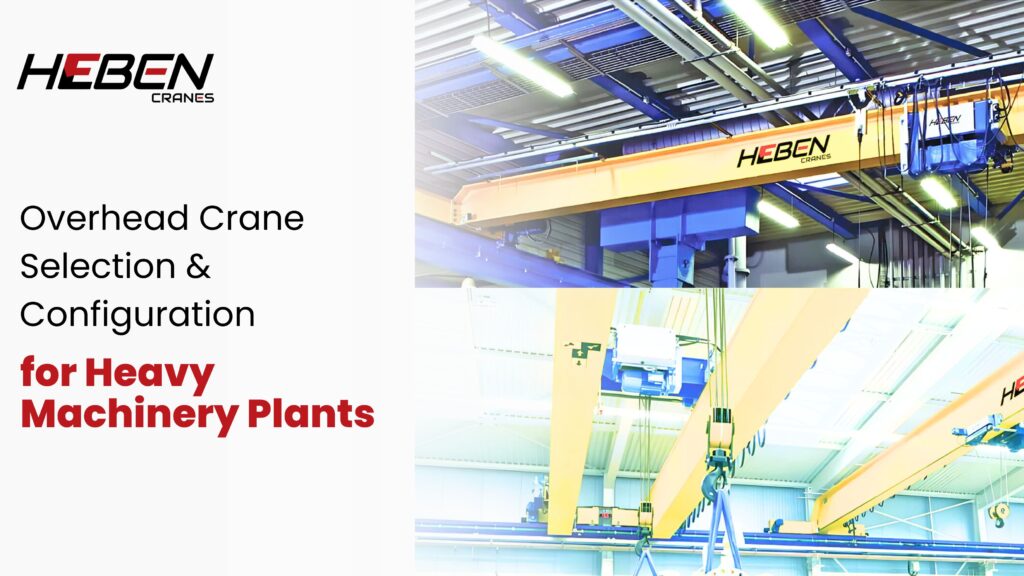
Over 60% of crane installations end up mismatched to actual operational demands within five years. The result is reduced efficiency, premature equipment failure, or expensive replacement. Selecting the right overhead crane configuration from the start eliminates these costly mistakes and ensures decades of reliable service. This guide covers load assessment, duty classification, crane type selection, configuration choices, environmental factors, safety features, and installation planning—everything needed to specify cranes that match heavy machinery plant requirements precisely. Understanding Plant Lifting Requirements Start with an honest assessment of what needs to move through the facility. Heavy machinery plants handle diverse loads: raw materials, work-in-progress components, finished assemblies, tooling, and maintenance equipment. Each category has different weight, dimensions, handling frequency, and precision requirements. Dynamic loads complicate the calculation. Swinging loads, sudden stops, and rapid acceleration generate forces beyond the static weight. A 10-ton load moving at speed can create impact forces requiring a crane rated for 12-15 tons to handle safely without premature wear. Future capacity planning matters more than most buyers expect. Plants that select cranes based solely on current needs often face replacement within two years as production scales. Building in a 20-30% capacity buffer accommodates growth without the disruption and expense of early replacement. Load Characteristics Checklist Maximum and average load weights with rigging equipment included Load dimensions, center of gravity location, and attachment points Daily lifting cycles and peak usage periods Load types: uniform, irregular, fragile, high-temperature, or hazardous materials Required positioning precision and travel speeds Duty Classification Selection Duty class determines structural strength, operational frequency capability, and service life. The A1-A8 classification system matches crane design to usage intensity. Heavy machinery plants typically require A6 through A8 duty ratings for reliable performance. Here’s what the numbers mean in practice. A6 cranes handle 20 cycles per hour across 4,000 operating hours annually, delivering approximately 2 million fatigue cycles over a 25-year lifespan. A7-A8 cranes manage 40+ cycles per hour with 7,000+ annual operating hours, providing 5.6 million fatigue cycles over 20 years. Most plants underestimate required duty class during specification. A crane rated A5 (medium duty) operating under A7 conditions experiences accelerated component degradation, frequent breakdowns, and safety risks. The cost difference between duty classes is modest compared to premature failure and replacement expenses. Duty Class Applications A6 (Heavy Duty): Steel fabrication shops, heavy assembly operations, continuous moderate loading A7 (Extra Heavy Duty): Foundries, forge shops, metallurgical operations, intensive material handling A8 (Severe Duty): Continuous grab bucket operations, metallurgical charging, demanding industrial processes Crane Type and Configuration Single girder versus double girder represents the fundamental configuration choice. The decision point is clearer than most suppliers admit: single girder cranes rarely exceed 15 tons capacity and perform best under 65-foot spans. Single girder cranes handle 1-20 ton loads across short to medium spans efficiently. They cost less initially, require lighter building structure support, and suit facilities with restricted headroom. The hoist hangs below the girder, limiting hook height but improving side approach dimensions. Double girder configurations start at 10 tons and scale to 500+ tons with spans exceeding 100 feet. The hoist trolley rides on top of the girders, maximizing hook height and providing superior stability for heavy loads. They accommodate walkways, operator cabs, and specialized lifting attachments that single girder designs struggle to integrate. Configuration Decision Matrix Factor Single Girder Best Choice Double Girder Required Load Capacity 1-15 tons 15-500+ tons Span Length Up to 65 feet Over 65 feet Hook Height Limited by design Maximum available Duty Class A3-A5 light to medium A6-A8 heavy to severe Initial Cost Lower Higher but justified for capacity Environmental and Structural Considerations Building constraints dictate crane design more than operational requirements in many installations. Measure ceiling height, column spacing, runway beam positions, and identify obstructions before finalizing specifications. Top-running cranes ride on rails mounted atop runway beams, requiring robust structural support but maximizing floor space. Under-running (underhung) cranes suspend from the bottom flange of existing beams, reducing building modification costs but limiting capacity. Outdoor installations or harsh environments demand weatherproofing, corrosion-resistant materials, and environmental protection for electrical components. High-temperature operations near furnaces or forges require heat-resistant components and specialized lubrication systems. Runway system integrity is critical. Misaligned rails cause uneven wheel wear, crane skew during travel, and premature structural damage. Professional rail alignment surveys and foundation assessments prevent expensive correction work after installation. Advanced Safety and Control Features Modern overhead cranes integrate technology that improves both safety and productivity. Anti-sway systems reduce load oscillation during travel, enabling faster cycle times with better positioning accuracy. Target positioning features automate repetitive moves, reducing operator fatigue and improving consistency. Overload protection systems prevent dangerous lifts exceeding rated capacity. Load monitoring displays provide real-time feedback to operators, while automatic cut-offs stop operations before structural damage occurs. Remote monitoring and predictive maintenance capabilities track operating parameters, component wear, and maintenance schedules. This data-driven approach shifts maintenance from reactive repairs to planned interventions, dramatically reducing unplanned downtime. Essential Safety Features Emergency stop systems with redundant controls Limit switches preventing over-travel and over-hoisting Brake monitoring with failure detection Collision avoidance for multiple crane installations Operator presence detection and safety interlocks Installation Planning and Building Integration Coordinate crane specifications with building design from the earliest planning stages. Retrofitting cranes into existing facilities costs 30-50% more than purpose-built installations due to structural reinforcement requirements. Runway beam selection affects long-term operational costs significantly. Under-specified beams flex excessively, causing alignment problems and accelerated wear. Proper beam design accounts for crane deadweight, maximum lifted load, dynamic impact factors, and seismic requirements where applicable. Factory acceptance testing (FAT) verifies crane performance before shipment, while site acceptance testing (SAT) confirms proper installation and integration. These protocols catch problems when correction is straightforward rather than after months of problematic operation. Professional installation teams complete commissioning faster with fewer issues than general contractors unfamiliar with crane-specific requirements. They handle alignment, load testing, control calibration, and operator familiarization systematically. Operator Training and Maintenance Planning The best crane specification delivers poor results with inadequately trained operators. Comprehensive training covers safe
Overhead Crane Maintenance & Repair Services (Inspection to Emergency)
You can count labor and cost the whole day, but if your crane does not perform with certainty, your tally doesn’t help much. Lost production time, delayed deliveries, missed deadlines, and frustrated customers stack up rapidly. The obvious is the hours of downtime that’s going to cost you thousands in lost revenue. And the worst is urgent repairs often demanding expedited parts shipments and premium labor rates. Therefore building a maintenance framework that prevents breakdowns, one with proper compliance, is mandatory for any business out there. This guide walks through what makes a comprehensive crane maintenance and repair program work, from routine inspections to 24/7 emergency response, so facilities can minimize risk and maximize uptime. Why Regular Inspection Matters? Scheduled inspections catch problems before they escalate into expensive failures. Visual checks on structural components, wire ropes, hooks, brakes, and limit switches reveal early signs of wear or misalignment that might seem minor but compound quickly under heavy loads. Compliance with OSHA, ASME, and ANSI standards isn’t just a regulatory box to tick—it’s a structured approach to spotting hazards and documenting crane health over time. OSHA mandates three tiers of inspection: initial checks before first use, frequent inspections (daily or monthly depending on usage intensity), and periodic annual assessments conducted by qualified personnel. These aren’t optional suggestions. Facilities that skip or delay inspections see higher breakdown rates, more severe component damage, and increased liability exposure when accidents occur. Components Under the Microscope Every inspection should systematically cover bridge and trolley structures, mechanical drives including gearboxes and motors, electrical systems such as slip rings and overload relays, wire ropes or chains, hooks and load attachment points, and safety devices like limit switches and emergency stops. Load testing verifies that the crane can safely handle its rated capacity without structural deformation or control failure. Advanced facilities integrate sensor data and predictive analytics to monitor crane performance in real time, flagging anomalies before they cause shutdowns. This shift from reactive to predictive maintenance reduces unplanned downtime and extends equipment lifespan by addressing issues at the optimal intervention point. Preventive Maintenance Programs Preventive maintenance keeps cranes operational and extends their service life by addressing wear systematically rather than waiting for failure. A well-designed program includes scheduled lubrication of moving parts, alignment checks for wheels and rails, inspection and replacement of consumables like brushes and contactors, and calibration of safety devices. Annual maintenance contracts (AMCs) customize service frequency based on crane usage intensity, operating environment, and criticality to production. Facilities running multi-shift operations or handling corrosive materials need more frequent interventions than those with light, intermittent use. Key maintenance tasks include monitoring wire rope condition for broken strands, corrosion, or excessive wear; checking brake performance and adjusting as needed; inspecting trolley and bridge wheels for cracks, flat spots, or misalignment; testing electrical controls and replacing worn components; and verifying structural integrity of welds, bolts, and connections. Emergency Repair Services Despite the best preventive efforts, unexpected failures happen. Mechanical overload, electrical faults, control system malfunctions, or operator error can bring a crane to a halt without warning. The financial impact of unplanned downtime makes rapid emergency response critical. 24/7 emergency repair services mobilize qualified technicians—mechanics, electricians, and riggers—to diagnose and resolve failures. The first priority is immediate assessment: activating emergency stops, isolating the affected area, securing any suspended loads, and conducting visual inspection to identify the apparent cause. Temporary Fixes and Permanent Solutions When replacement parts aren’t immediately available, skilled technicians implement temporary repairs to restore partial functionality and minimize downtime. This pragmatic approach keeps production moving while sourcing the correct components for permanent repair. Documentation during emergency repairs is essential—recording the failure mode, actions taken, parts replaced, and any additional issues discovered guides future preventive measures and helps identify patterns that might indicate systemic problems. Breakdown Repair and Component Replacement Component failure is inevitable over a crane’s operational life. Wire ropes fray and lose strength. Bearings wear and create excessive play. Motors burn out under sustained heavy loads. Brake linings deteriorate and lose stopping power. Effective breakdown repair starts with systematic troubleshooting using diagnostic tools like multimeters, oscilloscopes, and load testing equipment. Referring to manufacturer technical documentation ensures repairs meet original specifications. Critical component identification prioritizes parts whose failure would halt operations or create safety hazards. Common replacement items include wire ropes and chains, brake shoes and electromagnetic brakes, hoist motors and gearboxes, trolley and bridge wheels, limit switches and control pendants, electrical contactors and relays, and hook assemblies. Genuine or manufacturer-approved parts ensure compatibility and reliability, avoiding the false economy of cheap substitutes that fail prematurely. Modernization and Upgrades Older cranes operate less efficiently and require more maintenance than modern equipment. Retrofits and upgrades improve performance, safety, and reliability without the capital expense of complete replacement. Common upgrades include variable frequency drives (VFDs) for smoother control and energy savings, automation integration for reduced operator dependency, anti-sway systems for precise load positioning, remote monitoring and diagnostics for predictive maintenance, and LED lighting for improved visibility. Structural modifications can extend crane capacity or span, while control system upgrades replace obsolete components with current technology that’s easier to maintain and more reliable. When to Modernize vs Replace Age alone doesn’t determine upgrade viability. Assess structural condition, availability of replacement parts, operational requirements, and total cost of ownership over the remaining equipment life. If the crane structure remains sound but controls and drives are outdated, targeted upgrades deliver significant improvements at reasonable cost. When multiple major systems need replacement or structural integrity is compromised, full replacement may be more economical. Crane Relocation and Reinstallation Facility expansions, production line reconfigurations, or equipment consolidation often require moving cranes between locations. Professional relocation services handle dismantling, transportation, and reinstallation while maintaining equipment integrity and safety compliance. The process includes detailed documentation of crane configuration before disassembly, careful labeling of components and connection points, safe rigging and transportation using appropriate equipment, and complete reinstallation with alignment checks and load testing before return to service. Experienced teams minimize downtime and avoid damage that
Beyond the Hook: The Future of Industrial Lifting with IoT
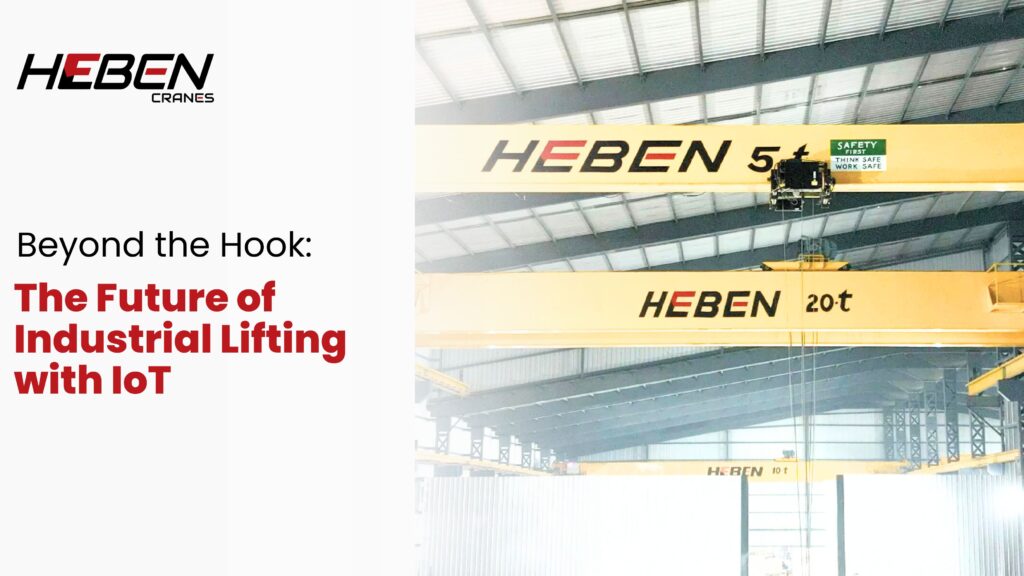
Industrial lifting has always been about muscle—raw power hoisting tons of steel, machinery, or cargo with rugged mechanical ingenuity. But the future of lifting isn’t just about the hook anymore. It’s about the intelligence hooked onto that rig—the digital sensibilities that drive safety, precision, and productivity in ways brute force alone never could. The Industrial Internet of Things (IIoT) isn’t a gimmick slapped on as an afterthought. It’s the game-changer transforming how cranes and lifting equipment operate at their core. By 2025, over 75 billion connected devices will be deployed globally, with industrial IoT accounting for a massive portion—signaling a profound shift in manufacturing and supply chain landscapes. This tidal wave of connectivity is not bypassing the lifting industry. If anything, the stakes are higher here. Every minute a crane halts equates to lost production, missed deadlines, and safety vulnerabilities. Enter IIoT’s ability to deliver real-time insights, predictive foresight, and safety autonomy—a transformation that Heben Crane is engineering into every lift they design. What Is IoT in Industrial Lifting? More Than Just Sensors Many equate IoT simply to sensors embedded in equipment. This is hardly enough. Industrial IoT in lifting encompasses networks of smart sensors, data acquisition systems, edge and cloud computing, and analytics engines that form a holistic intelligence ecosystem around cranes, hoists, and rigging gear. Unlike traditional cranes, IoT-enabled cranes collect continuous data on load weight, motor health, vibration patterns, and operational cycles, uploading this data live to cloud platforms for instant analysis and alerts. This integration elevates equipment from dumb steel to a strategic asset commanding operational foresight. Heben Crane leverages this architecture seamlessly within their line of smart cranes—embedding sensor arrays that track every bolt’s health, monitor wire rope integrity, and detect load anomalies. These systems don’t just monitor; they predict wear and suggest maintenance windows before failures occur, shifting downtime from reactive crises to planned, optimized workflows. Real-Time Monitoring & Predictive Maintenance: Downtime’s Antidote Downtime isn’t just lost minutes; it’s cascading production shutdowns with ripple effects costing manufacturers millions annually. IIoT flips the script by enabling real-time remote monitoring, turning every crane into a sensor-laden sentinel. One leading study revealed IIoT-equipped cranes reduce unplanned downtime by up to 40%, while extending service intervals by 25-30%. Predictive analytics algorithms sift through operational data to forecast component lifespans with 90% accuracy—empowering preemptive maintenance scheduling rather than expensive emergency repairs. For instance, Heben Crane’s clients have reported 30% reduction in maintenance costs and a 35% increase in operational availability thanks to these predictive insights. This isn’t magic: it’s mathematical modeling combined with on-site sensor precision. Safety and Compliance: From Reactive to Proactive Historically, crane accidents resulted from operator error or unnoticed mechanical failure. IoT changes the paradigm by embedding continuous safety verification and automated alerts into operations. Load sensors enable real-time weight monitoring to prevent overload, while anomaly detection algorithms flag unusual operational patterns that precede faults. Operator interfaces provide immediate feedback on unsafe load positioning or mechanical irregularities. Heben Crane’s smart systems integrate automatic load-limiting, geo-fencing to restrict movement into hazardous zones, and digital logging that simplifies compliance audits—translating regulatory adherence from paperwork drudgery to seamless automation. Operational Optimization: Analytics Beyond Energy Savings IoT’s benefits extend beyond maintenance and safety; it acts as a command center for operational optimization. Real-time usage data feeds analytics dashboards exposing energy usage, operator efficiency, and workflow bottlenecks. In one case, embedding IoT in overhead cranes optimized travel routes and motor acceleration profiles, reducing energy consumption by 15% without sacrificing throughput. Combined with AI algorithms, cranes adapt dynamically to load and operational conditions, optimizing cycle times and minimizing wear. Heben Crane’s IoT platforms integrate with broader supply chain systems, enhancing inventory tracking and material flow synchronization—turning cranes into nodes of industrial intelligence. Scalability and Flexibility: The Modular IoT Architecture IoT success hinges on systems designed for scalability and modularity. Industrial lifting environments evolve with new assets, expanded layouts, or shifting production priorities. IoT solutions must flex accordingly. This means edge computing nodes manage local data flow with minimal latency, while cloud backbones enable centralized analytics and remote management. Modular sensor packs and communication protocols, including 5G and LPWAN, ensure seamless integration across diverse equipment fleets. Heben Crane implements such architectures, allowing industrial customers to expand their IoT ecosystem gradually, preserving investment and avoiding disruptive overhauls. Overcoming IoT Adoption Challenges No revolution is without resistance. Major hurdles include cybersecurity risks, integration complexity, and upfront investment concerns. Security is paramount: IIoT expands attack surfaces for cyber threats. Leading crane manufacturers embed multi-layered encryption, network segmentation, and intrusion detection tools. Heben Crane prioritizes cybersecurity in every device layer, mitigating risks inherent in connected systems. Integration is eased by open standards and vendor collaboration, turning once-daunting technical barriers into manageable practices. Financially, while early IoT deployments require capital, operational savings often offset costs within 18-24 months, as numerous users have demonstrated. The Road Ahead: AI, Digital Twins, and Autonomous Lifting The future will see AI-driven decision-making guiding crane operations beyond human capacity, enabling autonomous lifts, predictive pathway adjustments, and dynamic risk assessment. Digital twins—virtual replicas of physical cranes updated in real time—will allow engineers to simulate, diagnose, and optimize performance remotely. Industry pioneers like Heben Crane are already developing such capabilities, cementing leadership in smart, autonomous lifting solutions that extend far beyond traditional expectations. Conclusion: IoT as the New Industrial Lifting Paradigm The era where strength alone defined industrial lifting is over. The future belongs to those who couple power with insight, weight with wisdom, hooks with connected intelligence. Heben Crane offers not just cranes but integrated IoT-enabled lifting platforms, empowering operators and managers to extract unprecedented value—safety, efficiency, foresight, and scalability—from every lift. The question isn’t if IoT will transform industrial lifting. It’s how quickly you’ll move beyond the hook to embrace this digitized, data-driven future. Are you ready to lift smarter, safer, and with strategic confidence? Speak with Heben Crane’s experts today and elevate your operations with the future already in motion.
The High and Mighty Rules: Operating a Gantry Crane Safely
Here’s a statistic that should stop every crane operator cold: 90% of crane accidents stem from human error, with 80% attributed to exceeding operational capacity. Yet the deadliest revelation isn’t operator mistakes—it’s the systematic neglect of safety protocols that turns industrial workhorses into workplace killers. Between 2011-2017, 297 crane-related deaths occurred in the United States, averaging 42 fatalities annually. When OSHA analyzed 249 overhead crane incidents, they discovered 838 violations resulting in 133 injuries and 133 fatalities. Heben Crane confronts this grim reality head-on through unwavering commitment to safety-first design and operator protection. As global leaders perpetually advancing at the forefront of innovation, Heben engineers safety into every component—from advanced control systems to fail-safe mechanisms that protect lives when human judgment falters. Pre-Operation Inspection: Your Safety Lifeline The 15-Minute Investment That Saves Lives Daily pre-shift inspections represent the most cost-effective safety measure in industrial operations. Studies demonstrate that facilities implementing rigorous daily inspection protocols reduce unplanned downtime by 30-40% while extending equipment life by up to 25%. Critical Pre-Operation Checklist Structural Assessment → Visual inspection for cracks, deformation, corrosion on main girders, legs, and connections Rail System Verification → Foundation stability, track alignment, absence of debris or obstructions Wire Rope Analysis → Check for fraying, kinking, proper lubrication, diameter reduction, or broken wires Hook and Block Inspection → Verify safety latch function, check for deformation, cracks, or wear Control System Testing → Test all movement controls, emergency stops, limit switches, and warning devices Brake System Validation → Verify holding capacity for hoist, trolley, and bridge brakes “Any defect that affects safe operation must be recorded, reported, and fixed before the crane works again,” mandates OSHA regulation 29 CFR 1926.1412. Documentation isn’t bureaucracy—it’s legal protection and operational intelligence. Operator Qualifications and Training Requirements The Human Factor: Where Safety Lives or Dies The crane industry’s dirty secret: inadequate training costs more than education ever will. OSHA’s 29 CFR 1926.1427 makes employers legally responsible for ensuring every crane operator is trained, certified, or licensed before operating covered equipment. Certification Standards → NCCCO Certification: National Commission for the Certification of Crane Operators → State/Local Licensing: Must meet federal criteria and include crane-specific evaluation → Employer Assessment: On-site evaluation for specific crane types and operational conditions Training Duration Realities → Novice Operators: 80-120 hours minimum for comprehensive competency → Experienced Operators: 16-40 hours for equipment-specific certification → Annual Recertification: Mandatory refresher training and skill validation Heben Crane supports this critical foundation through comprehensive training programs, operator certification assistance, and ongoing education that transforms crane operation from risky endeavor to precision craft. Load Management and Capacity Rules The Physics of Catastrophic Failure Load capacity violations don’t cause gradual deterioration—they trigger catastrophic collapse. Safety margins built into crane design aren’t invitations to exceed limits; they’re buffers against the unexpected. The Ten No-Lift Rules → Load exceeds rated capacity (including rigging weight) → Load center of gravity unknown or unstable → Rigging equipment damaged, uncertified, or improperly applied → Personnel in the fall zone without proper protection protocols → Weather conditions exceed operational limits (wind, precipitation, visibility) → Power lines within the minimum approach distance → Ground conditions are unstable, or the bearing capacity is insufficient → Crane mechanical defects identified during inspection → Operator fatigue, impairment, or distraction evident → Load path obstructed or escape routes blocked “A crane rated for 50 tons might have a safety margin allowing 10-15% additional capacity, but this margin is designed for safety, not routine overloading,” warns industry analysis. Every pound over capacity compounds risk exponentially. Safe Operating Procedures During Crane Movement Precision in Motion: The Art of Controlled Power Movement Fundamentals → Smooth Acceleration: Gradual starts prevent load swing and structural shock → Controlled Deceleration: Progressive stops maintain load stability and prevent pendulum effects → Clear Sight Lines: Maintain visual contact with load or employ qualified signal personnel → Communication Protocols: Standardized hand signals, radio procedures, and emergency signals Load Handling Precision → Tag Lines: Control load rotation and prevent uncontrolled swinging → Spotters: Positioned to monitor blind spots and potential hazards → Ground Personnel Coordination: Clear communication channels and defined responsibilities Environmental Awareness → Wind Speed Monitoring: Operations cease when conditions exceed manufacturer specifications → Visibility Requirements: Adequate lighting and clear atmospheric conditions → Traffic Control: Coordinate with other equipment and personnel movement Critical Safety Systems and Emergency Protocols When Everything Goes Wrong: Fail-Safe Engineering Modern gantry cranes integrate sophisticated safety systems designed to prevent accidents even when human judgment fails. Essential Safety Devices → Overload Protection: Automatic shutdown when capacity is exceeded → Anti-Collision Systems: Proximity sensors preventing crane-to-crane contact → Upper/Lower Limit Switches: Mechanical stops preventing over-travel → Emergency Stop Systems: Immediate power disconnection capabilities Emergency Response Protocols → Equipment Malfunction: Immediate shutdown, area evacuation, supervisor notification → Load Drop: Secure area, assess injuries, preserve evidence for investigation → Power Line Contact: Do not exit crane until power is confirmed disconnected → Personnel Emergency: Coordinate with emergency services while maintaining crane stability Heben Crane’s advanced engineering integrates multiple redundant safety systems, ensuring that single-point failures don’t cascade into catastrophic events. Environmental and Site Safety Considerations Operating in the Real World Weather Limitations → Wind Speed: Typically 20-25 mph maximum for standard operations → Precipitation: Wet conditions affect visibility and surface traction → Temperature: Extreme cold affects material properties and operator performance → Lightning: Immediate shutdown required during electrical storms Power Line Safety “45% of crane accidents result from boom or crane contact with energized power lines,” reports OSHA analysis. Minimum approach distances aren’t suggestions—they’re survival requirements. Site Preparation Standards → Runway Conditions: Level, stable surfaces capable of supporting crane loads → Clearance Verification: Adequate height, width, and obstacle-free operation zones → Ground Bearing Capacity: Soil analysis ensuring foundation stability under full load Post-Operation Safety and Maintenance Responsibilities Securing the Silent Sentinel Shutdown Procedures → Load Removal: Never leave loads suspended overnight or unattended → Control Lockout: Secure controls to prevent unauthorized operation → Parking Position: Position crane in designated safe area with brakes set → Power