
Preventing EOT Crane Component Failures: Maintenance Strategies

Electric Overhead Traveling (EOT) cranes are indispensable in various industries, facilitating the movement of heavy loads with remarkable efficiency. However, like all machinery, they are subject to wear and tear, which can lead to component failures if not properly maintained. Understanding these common failures and implementing preventive measures is crucial for ensuring safety and operational efficiency. This article delves into the typical component failures in EOT cranes and offers practical strategies for prevention. Understanding EOT Crane Components EOT cranes consist of several key components that work together to lift and move loads. These include: Hooks: Designed to securely hold the load. Wire Ropes: Essential for lifting; they bear the entire weight of the load. Controllers: Manage the crane’s movements. Brakes: Ensure the safe stopping of the crane. Reducers: Help in controlling the speed of movements. Electrical Systems: Power the crane’s operations. Each component plays a vital role in the crane’s functionality, and failure in any part can lead to significant operational issues. Common Component Failures Hook Failures Hooks are critical for safely lifting loads, but they can become damaged over time due to continuous usage. “If a load above the rated load is lifted, the lift may get bent or damaged,” warns ABCO Engineers. Regular inspection for deformation or cracks is essential to prevent accidents. Wire Rope Degradation Wire ropes are particularly susceptible to damage as they endure significant tension during operations. Common causes of degradation include: Continuous usage beyond rated capacity Corrosion at connection points Worn-out wires within the rope It is important to inspect every part of the wire before operation to avoid any accidents. Ensuring proper lubrication and replacing compromised ropes immediately can mitigate these risks. Controller Malfunctions The controller is responsible for managing the crane’s movements. Issues such as poor contact or disconnections can lead to malfunctions. Regular testing of control buttons and connectors is crucial to ensure they respond correctly. Test all control buttons and connectors to ensure they respond correctly. Brake Failures Brakes are vital for safely halting crane movements. Faulty brakes can pose serious workplace hazards. Regular checks should confirm that brakes engage and release smoothly. Neglecting brake maintenance can lead to catastrophic failures during operation. Reducer Faults Reducers control the speed of crane movements, and wear over time can lead to inefficiencies or failures. Regular lubrication and inspection are necessary to ensure that reducers function properly. Electrical System Failures Electrical systems are integral to EOT cranes, powering all operations. Common issues include blown fuses, contact interruptions, or wiring problems. Timely inspection and repair of each of these components is key. Regular checks can prevent electrical failures that could compromise safety. Prevention Strategies Regular Inspections Routine inspections are the first line of defense against potential failures. Daily checks should include: Inspecting hooks and chains for deformation or excessive wear. Checking wire ropes for fraying or corrosion. Testing control systems for responsiveness. Ensuring brakes engage smoothly. By performing these checks regularly, you can preemptively address potential failures. Proper Maintenance Practices Proper maintenance practices extend the lifespan of EOT cranes significantly. Key practices include: Lubrication: Regular lubrication minimizes friction and wear on moving parts. It’s essential to lubricate gears, chains, pulleys, and other components according to manufacturer guidelines. Load Management: Operators must adhere strictly to load limits. Overloading can lead to structural damage and increase wear on components. Training and Awareness: Operators should be well-trained in safe operating procedures, including recognizing early signs of failure. Utilizing Quality Spare Parts When replacing parts, always opt for manufacturer-recommended components. Using inferior-quality parts can compromise safety and efficiency. Addressing Minor Repairs Swiftly Timely attention to minor repairs prevents them from escalating into major issues. As noted by Global EHS, “Addressing minor repairs swiftly is crucial.” Regular maintenance schedules should include checks for loose connections or damaged components. Conclusion Understanding common EOT crane component failures and implementing preventive measures is essential for maintaining safety and operational efficiency in industrial settings. By conducting regular inspections, adhering to maintenance best practices, managing loads effectively, providing training for operators, using quality parts, and addressing repairs promptly, you can significantly reduce the risk of component failures. EOT cranes are vital assets in many industries; treating them with care ensures their longevity and reliability. As passionate amateurs in this domain, your commitment to learning about these systems will not only enhance your operational knowledge but also contribute positively to workplace safety standards.
A Comprehensive Guide to Pre-Setup Site Safety Assessments for Crane Operations

Cranes are among the major engineering marvels that support both construction and industrial operations. Because of the complexity involved, there is a high risk from such heavy machinery. A pre-setup site safety assessment for a crane is not only a regulatory requirement but also a crucial step in ensuring the safety and success of the personnel involved in the operation. This paper looks at key aspects of a site safety assessment, focusing on preparation, risk management, and communication. Understanding Crane Operations These include mobile cranes, tower cranes, and overhead cranes that serve specific purposes in lifting and moving heavy loads. Such understanding is elemental to personnel concerned with crane operations. For instance, a mobile crane is versatile, and easy to move from site to site, while tower cranes are fixed and offer height advantages for big construction projects. Despite their utility, cranes pose several hazards. According to a study by the Konecranes Training Institute, 37% of crane-related incidents involve being crushed by loads, often due to load swings or drops caused by unstable rigging practices. Additionally, 27% of incidents result from dropped loads, which can occur if proper safety measures are not followed during setup and operation. These statistics highlight the critical need for comprehensive safety assessments before any crane operation begins. Pre-Assessment Steps Site Survey The first step in any site safety assessment is conducting a thorough site survey. This involves identifying potential obstacles such as power lines, buildings, trees, or other structures that may interfere with crane operations. As noted in a guide on safe staging practices for mobile cranes, “Always begin with a thorough site assessment. Look for potential hazards like soft ground, slopes, or obstacles.” During this survey, it’s essential to assess ground conditions. The stability of the ground where the crane will be set up can significantly affect safety. Soft or uneven surfaces can lead to tipping or instability during lifts. If necessary, use leveling devices and mats to stabilize the crane. Environmental Considerations Environmental factors also play a crucial role in crane safety. Weather conditions such as wind speed and visibility must be considered before proceeding with operations. High winds can affect load stability and increase the risk of accidents. According to industry best practices, “Adapting your safety protocols to account for these environmental factors is important in maintaining a secure work site.” Additionally, understanding site-specific hazards—like nearby structures or utilities—is vital for ensuring safe crane operations. Risk Assessment Process Identifying Potential Risks Once the site survey is complete, the next step is to identify potential risks associated with the crane setup. This includes evaluating not only environmental hazards but also operational risks such as equipment failure or human error. A systematic risk assessment should consider all possible scenarios that could lead to accidents. Developing a Risk Mitigation Plan After identifying risks, it’s essential to develop a risk mitigation plan tailored to the specific conditions of the site and the type of crane being used. This plan should outline safety measures to address identified risks effectively. For example, if there are overhead power lines nearby, establishing safe distances and using signal persons can help prevent accidents. Crane Setup Guidelines Selecting the Right Location Choosing an optimal location for crane setup is critical for ensuring safe operations. The crane should be positioned on firm, level ground to minimize risks associated with tipping or instability during lifts. Conduct a thorough site survey to identify potential obstacles such as power lines, buildings, or trees. Using outriggers is also essential for stabilizing mobile cranes. Outriggers should be fully extended and placed on stable ground or pads to distribute the crane’s weight evenly. Stabilization Techniques Proper stabilization techniques are crucial for preventing accidents during crane operations. Operators should ensure that outriggers are not placed over voids or depressions that could compromise stability. The use of pads can help distribute weight more evenly and enhance stability. Communication and Coordination Team Coordination Effective communication among team members is vital for safe crane operations. All personnel involved in the lift should understand their roles and responsibilities clearly. Utilizing hand signals and radios can facilitate coordination during lifts and ensure everyone is aware of ongoing operations. As emphasized in various safety guidelines, “Clear and consistent communication is vital.” This includes briefing all team members on the lift plan before commencing work. Emergency Preparedness Establishing emergency protocols is another critical aspect of communication and coordination. All team members should be familiar with emergency procedures in case something goes wrong during operations. Regular drills can help ensure that everyone knows how to respond effectively in an emergency situation. Technology in Safety Assessments Utilizing Advanced Tools Incorporating technology into safety assessments can significantly enhance crane operation safety. Tools such as load moment indicators help monitor load stability during lifts, while anti-collision systems prevent accidents involving nearby structures or equipment. The National Safety Council highlights that “the crane industry can be dangerous,” emphasizing that technology combined with training can make a significant difference in preventing injuries before they occur. Integrating Technology with Human Oversight While technology plays a crucial role in enhancing safety, it should complement human vigilance rather than replace it. Operators must remain attentive to their surroundings and communicate effectively with team members throughout the operation. Conclusion In conclusion, conducting a thorough site safety assessment before crane setup is essential for ensuring safe operations and protecting personnel from potential hazards. By understanding crane operations, performing detailed pre-assessments, identifying risks, selecting optimal locations for setup, coordinating effectively within teams, and utilizing advanced technology, we can significantly reduce the likelihood of accidents. As we continue to evolve our understanding of crane safety practices, it’s crucial for passionate amateurs and professionals alike to commit to ongoing education in this field. Safety should always be our top priority—after all, every successful lift begins with careful planning and preparation!
The Ultimate Guide to Overhead Crane Operator Certification

The role of an overhead crane operator is critical in the workshop. These skilled professionals are responsible for maneuvering heavy loads with precision, ensuring that materials are moved safely and efficiently. With the increasing complexity of machinery and the critical nature of safety in these environments, obtaining a certification as an overhead crane operator is not just beneficial—it’s essential. This article will guide you through the various aspects of overhead-crane operator certification programs, illuminating the path for passionate individuals to embark on this rewarding career. What is Certification? Certification serves as a formal recognition of an individual’s skills and knowledge in operating cranes safely. It is a crucial step in establishing credibility in the field. The National Commission for the Certification of Crane Operators (NCCCO) is one of the most recognized certifying bodies in the United States, offering specialized certifications for various types of crane operations, including overhead cranes. According to NCCCO, “Certification is a voluntary process instituted by a non-governmental agency in which individuals are recognized for their knowledge and skill”. Benefits of Crane Operator Certification Programs The advantages of becoming a certified overhead crane operator are manifold: Enhanced Job Opportunities: Employers often prefer certified operators due to their proven expertise. Increased Earning Potential: Certified operators typically command higher wages compared to their non-certified counterparts. Safety Compliance: Certification ensures compliance with industry standards and regulations, reducing the risk of accidents on job sites. Confidence and Skill Development: The training received during certification programs equips operators with essential skills, boosting their confidence in handling complex tasks. Crane Operator Certification Program Requirements Basic Eligibility Criteria To embark on the journey toward certification, candidates must meet certain eligibility criteria: Age Requirement: Most programs require candidates to be at least 18 years old. Educational Background: A high school diploma or GED is typically required. Physical and Medical Requirements: Operators must pass a medical examination to ensure they can safely operate heavy machinery. Training Programs Overview Training programs vary in duration but generally last between four to eight weeks. They encompass both classroom instruction and practical hands-on experience. The curriculum covers essential topics such as: Safety protocols Load handling techniques Pre-operational inspections Emergency procedures The Crane Operator Certification Process Written Examination The written exam assesses theoretical knowledge related to crane operations. It typically includes questions on safety practices, load charts, and operational procedures. According to OSHA studies, “70% of accidents could have been prevented with adequate training”. This highlights the importance of thorough preparation for the written test. Practical Examination The practical exam evaluates an operator’s ability to maneuver a crane effectively. Candidates must demonstrate their skills in real-world scenarios, such as lifting loads and navigating obstacles. This hands-on experience is invaluable, as it prepares operators for the challenges they will face on job sites. Types of Overhead Crane Operator Certifications Various certifications cater to different aspects of crane operation: NCCCO Overhead Crane Operator Certification: This certification focuses specifically on overhead crane operations and is widely recognized across industries. OSHA Compliance Training: While OSHA does not provide its own certification, it mandates that operators be certified through recognized organizations like NCCCO. Specialty Certifications: Some programs offer certifications for specific types of cranes or unique operational contexts, allowing operators to specialize further. Choosing the Right Crane Operator Certification Program When selecting a training program, consider the following factors: Accreditation Status: Ensure that the training provider is accredited by recognized bodies like OSHA or ANSI to guarantee quality education. Curriculum Content: Look for programs that offer comprehensive training covering both theoretical knowledge and practical skills. Hands-On Experience: Programs that incorporate simulation training or real-world practice will better prepare you for actual operations. Continuing Education and Recertification The field of crane operation is constantly evolving with new technologies and regulations. Therefore, ongoing education is vital. Many certifying bodies require operators to undergo recertification every few years to maintain their credentials. This process often involves additional training sessions and examinations to ensure that operators stay updated on best practices and safety standards. Conclusion Becoming a certified overhead crane operator opens up a world of opportunities in various industries, from construction to manufacturing. The journey requires dedication and commitment but offers significant rewards in terms of career advancement and personal satisfaction. As you explore local training programs, remember that certification not only enhances your employability but also contributes to safer work environments for everyone involved.
Decoding Crane Load Charts: A Comprehensive Guide to Safe EOT Crane Operations
Within the confines of heavy lifting, Electric Overhead Traveling (EOT) cranes play a pivotal role in various industries, from construction to manufacturing. Understanding how to interpret load charts is essential for ensuring safety and efficiency during crane operations. This guide aims to equip passionate amateurs with the knowledge needed to decipher these crucial charts, enhancing both their operational skills and safety awareness. Understanding Crane Load Charts A crane load chart is a graphical representation that provides essential information about a crane’s lifting capacity under various conditions. It serves as a fundamental tool for crane operators, engineers, and other professionals involved in lifting operations. A crane load chart is an essential tool for crane operators to calculate a crane’s lifting capabilities. This chart ensures that the crane does not exceed its lifting capacity, accounting for variations in lift capacity based on distance and angle. The importance of load charts cannot be overstated. They help prevent overloads that could harm both people and equipment, ensuring compliance with safety regulations set forth by organizations such as OSHA and the National Commission for the Certification of Crane Operators (NCCCO). Using load charts correctly is not just about safety. It also meets legal requirements for a safe work area. Key Components of Load Charts To effectively read and utilize a load chart, one must understand its key components: Lift Capacity The lift capacity measurement of a crane tells us how much load it can lift safely. This includes factors such as the dimensions of the load, lift height, and lift angle. The average crane can lift between 10,000 and 60,000 pounds. However, this capacity can vary significantly based on several factors: Crane Design: Different designs yield different capacities. For instance, single girder cranes typically have lower capacities compared to double girder cranes. Load Distribution: Properly distributing loads is crucial to prevent tipping or structural failure. Unevenly distributed loads can lead to catastrophic failures. Environmental Factors: Conditions such as wind speed, temperature fluctuations, and ground stability can affect lifting capabilities. For example, high winds may necessitate reduced load capacities. Radius The radius is defined as the horizontal distance from the center of the crane’s rotation to the load being lifted. This distance plays a critical role in determining how much weight the crane can safely lift. The farther the load is from the center of rotation, the less weight the crane can handle safely. The farther the load, the less weight can be lifted. This relationship emphasizes the importance of planning lifts carefully, considering both radius and weight. Boom Angle The boom angle refers to the angle at which the boom is positioned relative to the horizontal plane. Different angles can significantly affect both stability and lifting capacity. A steeper boom angle may allow for higher lifts but decreases stability and increases risk. Understanding how different angles affect the center of gravity is essential for safe operations. A crane may lose balance when lifting a weight larger than the angle supports. Therefore, operators must be well-versed in selecting optimal boom angles for various lifting scenarios. Load Chart Layout Load charts typically include several sections that provide vital information: Capacity Tables: These tables illustrate maximum lifting capacities based on different boom lengths and angles. Diagrams: Many load charts include diagrams that show safe operating zones and highlight critical limits. Special Considerations: Notes regarding two-blocking (when the hook or load block comes into contact with the boom) or other operational limits are often included. Understanding these sections allows operators to make informed decisions about their lifts. Additional Parameters Beyond the primary components mentioned above, there are additional parameters that should be considered: Tip Load: This indicates limits on how much weight can be lifted without risking tipping over. Operators must always adhere to these limits to maintain safety. Dynamic vs. Static Loads: Dynamic loads refer to weights in motion while static loads are stationary. Understanding these differences is crucial for making accurate assessments during lifts. Reading a Load Chart To effectively read a load chart, operators should follow a systematic approach: Locate the Load Chart: Ensure that you have access to your specific crane’s load chart at all times during operation. Identify Key Sections: Familiarize yourself with sections detailing lift capacity, radius measurements, and boom angles. Consult Capacity Tables: Use these tables to determine maximum allowable loads based on your specific operational parameters. Consider Environmental Conditions: Always take into account external factors such as wind speed or ground stability before proceeding with any lift. Practical Example: For instance, if you need to lift a 5-ton load at a 20-foot radius with a 30-degree boom angle, consult your load chart to find corresponding values that indicate whether this operation is safe. Understanding how to interpret this information effectively will enhance both safety and efficiency during operations. Conclusion In conclusion, understanding EOT crane load charts is not merely an academic exercise; it is essential for ensuring safe and efficient operations in any industrial setting. By familiarizing themselves with key components such as lift capacity, radius, boom angle, and proper reading techniques of load charts, operators can significantly reduce risks associated with heavy lifting tasks.
The Difference Between Electric Winch and Electric Hoist

Electric winches and electric hoists are two indispensable tools that serve distinct purposes. Understanding the nuances between these two devices is crucial for optimizing operations and ensuring safety. This blog will delve into the fundamental differences, functionalities, and applications of electric winches and hoists, empowering you to make informed decisions in your lifting endeavors. Fundamental Definitions Electric Winch: An electric winch is a device designed primarily for pulling heavy loads horizontally. It operates using an electric motor that winds a rope or cable around a cylindrical drum. This mechanism allows for efficient tension application, making it ideal for tasks like towing vehicles, moving machinery, or even deploying equipment in marine environments. As noted by STR Subsea, “Electric winches consume much less energy and tend to be quieter than their hydraulic counterparts,” making them a preferred choice in various sectors. Electric Hoist: On the other hand, an electric hoist is engineered specifically for lifting loads vertically. Utilizing an electric motor, it raises and lowers heavy items with precision and ease. Electric hoists are commonly found in warehouses, construction sites, and manufacturing facilities where vertical movement of materials is essential. The efficiency of electric hoists is highlighted by their ability to handle heavier loads faster than manual alternatives, providing significant time savings in operations. Key Differences Operation Mode The most significant difference lies in their operation modes. Electric hoists are designed to translate loads vertically, allowing for more flexibility in positioning items at various heights. In contrast, electric winches are primarily fixed in place and excel at pulling or dragging loads horizontally. Speed and Efficiency When it comes to speed, electric winches generally outperform hoists. Winches can reach speeds of up to 20 meters per minute depending on the model, while electric hoists typically operate at around 8 meters per minute. This speed advantage makes winches particularly useful in scenarios requiring rapid load movement over horizontal distances. Lifting Height and Capacity Electric hoists are often equipped with wire ropes that have predetermined lengths—usually ranging from 6 to 12 meters—making them suitable for lifting tasks within these limits. Conversely, winches can accommodate longer cables (often up to 100 meters), providing greater versatility in applications where extended reach is necessary. Size and Installation Requirements Electric hoists are generally more compact than winches, making them ideal for installations in confined spaces such as I-beams or overhead tracks. Their smaller footprint allows for easier repositioning as needed. Winches, however, tend to be larger and require sturdier installations due to their design focused on pulling power. Functional Features Braking Systems The braking systems of these devices further differentiate them. Electric winches mainly use dynamic brakes that allow for smooth operation during pulling tasks. In contrast, electric hoists often employ mechanical braking systems which provide enhanced safety during vertical lifting operations by securely holding the load in place. Control Mechanisms Modern electric winches come equipped with advanced control systems that enable operators to manage load speed and direction with precision. Many models feature wireless remote controls that enhance safety by allowing operators to maintain a safe distance from heavy loads during operation. Applications in Industry Common Uses for Electric Winches Electric winches find extensive use across various industries due to their versatility. They are indispensable in: Marine Operations: Used for towing vessels or deploying underwater equipment. Construction Sites: Ideal for moving heavy machinery or materials across horizontal distances. Automotive Recovery: Perfect for towing vehicles out of difficult situations. Electric winches offer a number of benefits which have made them a preferred alternative to their hydraulic counterparts, including ease of use and lower maintenance requirements. Common Uses for Electric Hoists Electric hoists are predominantly utilized in settings where vertical lifting is essential: Warehousing: Efficiently moving goods between different levels. Manufacturing: Assisting in assembly lines where heavy components need to be lifted. Construction: Elevating materials to higher floors during building projects. Electric hoists are faster and more powerful than manual or pneumatic hoists, making them a reliable choice for heavy-duty applications. Choosing the Right Equipment When deciding between an electric winch and an electric hoist, several factors should be considered: Load Capacity: Assess the weight of the items you plan to lift or pull. Winches typically handle heavier horizontal loads while hoists excel at vertical lifting. Frequency of Use: For regular lifting operations, investing in an electric hoist may provide better long-term value due to its efficiency. Space Constraints: If working in tight areas, opt for a compact electric hoist that can be easily maneuvered. Cost Considerations: While manual options may have lower upfront costs, consider the long-term savings associated with reduced labor and increased efficiency when opting for electric models. Conclusion Understanding the differences between electric winches and electric hoists is essential for anyone involved in material handling or crane operations. Each device has its unique strengths tailored for specific applications—winches excel at horizontal pulling while hoists are designed for vertical lifting tasks. As you embark on your journey as a crane operator or heavy-lifting enthusiast, consider your specific needs carefully. Whether you’re looking to optimize your towing capabilities with an electric winch or enhance your vertical lifting efficiency with an electric hoist, make informed decisions based on the factors discussed above.
5 Benefits of Remote Monitoring EOT Cranes

Are you still using wired control systems for navigating overhead cranes at your factory? You might not realize but you might be putting your workers at a huge risk. Safety and security are highly critical, especially when working with a menacing ton of steel giant to hoist and swing with immense power. A single misstep and disaster could strike. But what if you could remove the human element from the most dangerous spot? Monitoring remotely does wonders. And It transforms the ways to operate overhead cranes. Not only for the fact that it offers higher convenience and productiveness. But EOT crane experts are deliberating how it’s considerably better from the safety perspective to work your crane remotely. This article gives insights into the top gains of remote monitoring EOT cranes. Let’s get started. Enhanced Safety The very first advantage of remote monitoring EOT cranes is the worker’s safety. When you allow your employees to control the crane from a distance, the risk of accidents caused by operating in close proximity to the crane goes down significantly. The operator can control the crane from a very safe distance and have greater flexibility and increased confidence in his operation. This is a benefit not only to the operator but also to the operators who are working at the site. Additionally, the remote monitor systems provide alerts on any unsafe conditions in real-time. It also capitalizes on a lot of technologies from the Internet of Things (IoT). Managers can receive immediate notifications when something goes wrong. It is a proactive approach and gives space to take swift action before the accident occurs saving lives and property. Improved Efficiency Remote monitoring technology offers remarkable improvements in operational efficiency. With centralized online portals, crane data is accessible at the click of a button, providing users with vital operating information and safety alerts transmitted directly via email or text. This level of visibility into crane usage allows businesses to optimize their operations effectively. The flexibility afforded by remote monitoring EOT cranes enables operators to manage multiple cranes simultaneously and respond quickly to changing conditions on the ground. This increased responsiveness can lead to higher productivity levels and less downtime. The Industrial Internet promises to help make equipment across industries more intelligent and enable efficiencies that were unimaginable just a short time ago. Predictive Maintenance Another key benefit of remote monitoring of EOT cranes is its ability to facilitate predictive maintenance. Continuous data collection enables operators to identify wear and tear before they result in significant failures. Remote monitoring systems can provide early warning signs of potential problems with your overhead equipment. This capability allows businesses to schedule maintenance proactively rather than reactively, significantly reducing downtime and extending equipment lifespan. Cost Savings Implementing remote monitoring of EOT cranes can lead to substantial cost savings over time. By improving operational efficiency and reducing unplanned downtime through predictive maintenance, businesses can lower their overall operational costs significantly. With remote monitoring of EOT cranes, a crane may even be able to tell its owners when it needs service or how much time remains before a specific component must be replaced. Enhanced Data Analytics The advent of remote monitoring has revolutionized how businesses analyze performance metrics related to their overhead cranes. With access to a centralized online dashboard, users can easily track usage statistics and performance data. This wealth of information provides valuable insights that can inform training programs for operators, ensuring they are well-equipped to handle various scenarios safely and efficiently. Best Practices for Implementing Remote Monitoring EOT Cranes To fully leverage the benefits of remote monitoring systems for overhead cranes, businesses should adhere to several best practices: Choosing the Right System: Selecting an appropriate remote monitoring system tailored to specific business needs is crucial. Companies should evaluate different options based on features such as data accessibility, alert systems, and integration capabilities with existing equipment. Integration with Existing Systems: Ensuring compatibility between new monitoring systems and current equipment is essential for seamless operation. Businesses should work closely with manufacturers or vendors during implementation to address any potential integration issues. Employee Training: Comprehensive training programs are vital for staff members who will be using remote monitoring EOT cranes. Proper training ensures that operators understand how to interpret data effectively and respond promptly to alerts. Regular Review and Updates: Businesses should regularly review their monitoring practices and update systems as needed. Staying current with technological advancements enables companies to maximize the benefits derived from remote monitoring EOT cranes. Conclusion To sum up what has been stated so far, the pros of remote monitoring for overhead cranes are clear: enhanced safety, improved efficiency, predictive maintenance capabilities, cost savings, and advanced data analytics all contribute to more effective crane operations. As industries continue to evolve technologically, investing in remote monitoring solutions will safeguard personnel and drive productivity gains. FAQ How much does remote monitoring for overhead cranes cost? The implementation cost of remote monitoring for overhead cranes can be up to 10 times lower than traditional setups. New data transmission techniques and modular solutions are cost-effective and easy to implement, even for smaller businesses. Specific costs will depend on the scale of the operation, the number of cranes, and the complexity of the monitoring system, with some systems starting around $4,000 for basic setups. How do I convince my manager that the initial investment for remote monitoring is worthwhile? You should highlight the cost-saving potential in reducing downtime and the cost of maintenance. Highlight the potential for real-time data that can be used for predictive maintenance, thereby preventing costly breakdowns and enhancing efficiency in operations. Lastly, stress the potential for enhanced safety monitoring that will reduce workplace accidents. What kind of training is needed for operators to operate remote monitoring systems? There may be a need to train operators on how to read the data from the remote monitoring system, including understanding dashboards, alerts, and analytics related to crane performance. Training might also focus on troubleshooting common issues and understanding the protocols for
EOT Crane Safety Tips for Heavy Lifting

Safety is the top priority when doing heavy lifting with your EOT cranes. Crane operations are critical yet fraught with risk. The potential for accidents can lead to devastating consequences, for businesses in terms of financial loss, occupational hazard, and reputational damage. A comprehensive guide and a checklist are required to ensure safety endorsement. This blog serves that purpose. This guide aims to empower safety managers, and project leaders with essential crane safety tips to prevent accidents, protect assets, and ensure smooth operations. Why Are We Talking About This? Crane-related accidents are alarmingly common and can have severe repercussions. A recent study revealed that 249 industrial overhead crane incidents resulted in 133 injuries and 133 fatalities over ten years. The leading causes of these incidents included being crushed by loads (37%) and dropped loads (27%)—often due to poor rigging practices. The financial implications are staggering: the average cost of a major injury exceeds $200,000, while a fatality can cost upwards of $4 million. Forget the immediate costs for a second—the indirect consequences can be even more detrimental. Companies may face increased insurance premiums, loss of future production, and potential legal fees. And ultimately, the psychological impact. The employees who witness or experience such incidents can lead to long-term trauma. To avert these, one must adopt a proactive mindset toward crane safety. Pre-Operation Essentials For EOT Crane Safety Before any lifting operation begins, it is vital to conduct thorough pre-operation checks: Inspection Checklist: Cranes should be inspected for wear and tear, and mechanical issues. Worksite Evaluation: Assessing ground stability, and potential overhead obstructions is essential. Operator Qualifications: Ensure operators are certified and trained specifically for the equipment Best Practices During Operations For EOT Crane Safety Once operations commence, adhering to best practices is key: Know your crane’s limit: Never exceed weight limits; always double-check calculations before lifting. Overloading cranes is a leading cause of accidents. How to talk to each other: Utilize standardized signals or modern communication tools to coordinate the team effectively. Clear communication minimizes misunderstandings that could result in dangerous situations. What to do in an Emergency: Define and practice protocols for emergencies such as load drops or equipment malfunctions. Regular drills ensure that all team members know their roles in case of an incident. Advanced Safety Measures For EOT Crane Safety Modern technology offers numerous tools to enhance EOT crane safety: Anti-Collision Systems: These systems help prevent cranes from colliding with obstacles or other cranes on-site. Load-Monitoring Devices: These devices provide real-time data on load weights and help ensure that cranes operate within safe limits. Drones for Site Surveillance: Drones can be utilized for site inspections, allowing for a comprehensive overview without putting personnel at risk. Data Analytics for Predictive Maintenance: By analyzing operational data, businesses can predict when maintenance is needed before failures occur, thus preventing accidents. Compliance and Regular Training For EOT Crane Safety Understanding and complying with OSHA standards is essential for safe crane operations. OSHA’s Standard 1910.179 outlines critical safety requirements for overhead cranes, including regular inspections and operator training6. Companies must maintain detailed records of inspections and ensure compliance with both local regulations and industry best practices. Routine safety audits and refresher training programs are invaluable in fostering a culture of safety over mere compliance. A well-trained crew not only reduces the likelihood of accidents but also enhances operational efficiency. Conclusion Safety is a cornerstone of effective heavy-lifting operations. Implementing robust safety practices ensures not only the well-being of employees but also the financial health of the business. As an actionable takeaway, consider conducting a comprehensive safety audit today or implementing a new safety measure immediately. With the right safety practices in place, your crane operations can reach new heights—literally and figuratively. FAQ How much does all this new technology, like anti-collision systems and drones, cost? The cost of anti-collision systems for cranes varies depending on the specific technology and features. For instance, prices for crane anti-collision devices can range from ₹3,000 to ₹6,500 per piece based on the model and manufacturer. More advanced systems with enhanced features may be priced higher, potentially reaching up to ₹10,000 or more. Drones used for monitoring or inspection purposes can also vary widely in cost, with basic models starting around ₹20,000 and more sophisticated systems exceeding ₹100,000, depending on their capabilities and specifications. How often should we be doing EOT crane safety audits and refresher training courses? Safety audits should be conducted at least annually, but more frequent audits (e.g., quarterly or bi-annually) are recommended for high-risk environments or where significant changes in operations occur. Refresher training courses for operators and staff should also be held at least once a year to ensure that everyone is up-to-date with safety protocols and operational procedures. However, it’s advisable to conduct additional training whenever new equipment is introduced or when there are changes in regulations or procedures. Where can I find more information about OSHA’s standard 1910.179? You can find detailed information about OSHA’s standard 1910.179, which pertains to overhead and gantry cranes, directly on the OSHA website. This standard outlines safety requirements for the design, maintenance, and operation of overhead cranes. Additionally, resources such as industry publications and safety training organizations often provide summaries and interpretations of these standards to help employers comply effectively. For the most accurate and comprehensive information, visiting the official OSHA website is recommended.
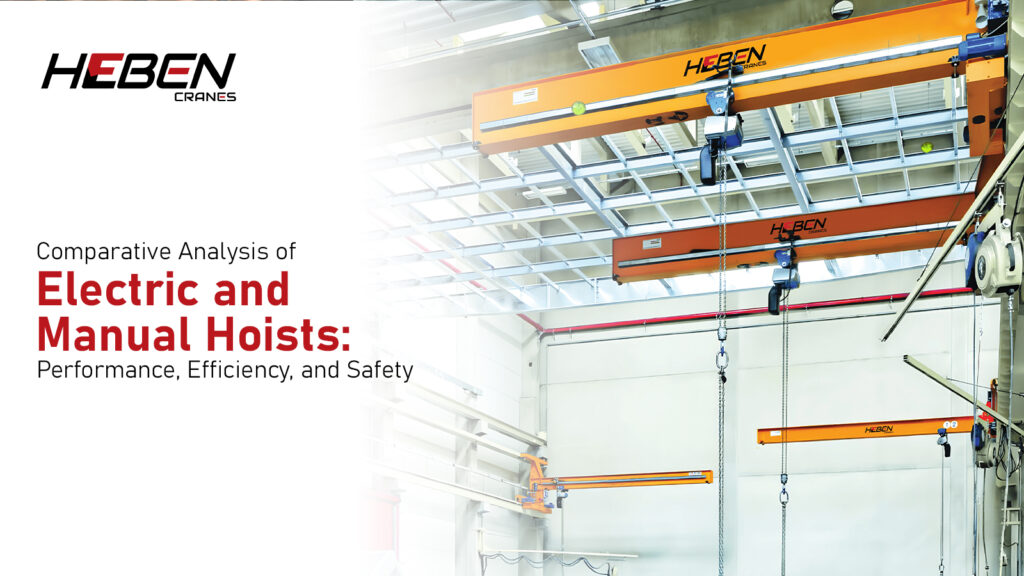
Comparative Analysis of Electric and Manual Hoists: Performance, Efficiency, and Safety
Whether you’re in construction, manufacturing, or any sector that requires moving heavy loads, if you are going to have or already have an overhead crane installed at your workstation, you have to understand the differences between electric hoists and manual hoists. This article aims to provide an in-depth comparison of these two types of hoists, highlighting their mechanisms, efficiency, safety features, and overall suitability for different applications. Understanding Hoist Types Manual Hoists Manual hoists are mechanical devices that rely on human effort to lift and lower loads. Typically utilizing a chain or lever system, these hoists require the operator to exert physical force to move the load. Manual hoists work by the operator exerting manual force… powered entirely by the operator, making them straightforward yet labor-intensive tools. Common applications for manual hoists include workshops, garages, and residential settings where portability and simplicity are prioritized. They are ideal for occasional lifting tasks or maintenance work where power sources may be limited. Electric Hoists On the other hand, electric hoists are powered by an electric motor, allowing for effortless lifting and lowering of heavyweights with just the touch of a button. Electric hoists are devices designed for lifting, lowering, and moving materials and products… enhancing operational efficiency and reducing manual effort. These hoists are commonly found in environments like warehouses and manufacturing facilities where heavy lifting is a regular requirement.. Mechanism of Operation Manual Hoist Mechanism The operation of a manual hoist involves a chain or lever mechanism that requires physical input from the user. The operator pulls a hand chain that activates gears within the hoist to lift the load. This method relies heavily on human strength, making it less efficient for heavier loads or prolonged use. The mechanical advantage gained from multiple gears allows for significant weight lifting despite the slow operation speed. Electric Hoist Mechanism In contrast, electric hoists utilize an electric motor to facilitate lifting tasks. The motor’s power translates into mechanical energy that drives the lifting mechanism. Electric hoists achieve this by using either a chain or a wire rope to lift loads. This automation not only speeds up operations but also reduces the risk of physical strain on operators. Efficiency and Speed When comparing efficiency and speed between manual and electric hoists, electric models clearly have the upper hand. Electric hoists can lift loads more quickly and consistently than their manual counterparts. Electric hoists are noted for having more effective higher lifting capacity, making them suitable for applications requiring frequent heavy lifting. Manual hoists can be slower due to their reliance on human effort; speed varies significantly depending on the operator’s strength and technique. In scenarios where time is critical, electric hoists enable quicker turnaround times and increased productivity. Load Capacity Load capacity is another critical factor when selecting between electric and manual hoists. Electric hoists typically offer higher load capacities than manual ones. For instance, while manual hoists may be limited to lighter loads suitable for occasional use, electric models can handle significantly heavier weights with ease. The choice between these two types should be influenced by specific workload requirements. Choosing the wrong hoist can be a costly mistake! Therefore, businesses must evaluate their typical load sizes before making a decision. Safety Features Safety is paramount when operating lifting equipment. Manual hoists require careful handling and operator training to mitigate risks associated with fatigue or human error. While they can be operated safely with proper precautions, they often lack built-in safety features found in electric models. Electric hoists excel in this area with advanced safety mechanisms such as overload prevention systems and emergency stop buttons. Electric hoists offer better safety features… aiding in accident avoidance. These features not only protect operators but also ensure the safe handling of loads during operation. Cost Considerations When considering costs, businesses must evaluate both initial investments and long-term expenses associated with each type of hoist. Manual hoists generally have lower upfront costs compared to electric models; however, they may incur higher labor costs over time due to the physical effort required for operation. Electric hoists come with higher initial costs but tend to offer better long-term value through increased efficiency and reduced labor needs. Manual hoists are usually much cheaper than their electric counterpart, but businesses should weigh this against potential productivity gains from using electric models. Portability and Power Supply Portability is another significant factor in choosing between these two types of hoists. Manual hoists are typically lighter and easier to transport from one location to another without needing a power supply. This makes them ideal for sites where electricity may not be readily available. Conversely, electric hoists require a consistent power source to operate effectively. While they can handle heavier loads efficiently, they involve complex electrical wiring that may necessitate professional installation—time-consuming yet crucial for optimal performance. Applications Best Suited for Each Type When to Use Manual Hoists Manual hoists shine in scenarios where portability is essential or when dealing with lighter loads that do not require frequent lifting. They are perfect for maintenance tasks or situations where power sources are limited or unavailable. When to Use Electric Hoists Electric hoists are best suited for environments requiring heavy lifting on a regular basis—such as construction sites or manufacturing facilities—where speed and efficiency are paramount. Their ability to handle larger loads with precision makes them indispensable in high-demand settings. Conclusion Choosing between Electric Hoists vs. Manual Hoists ultimately depends on your specific operational needs and safety considerations. Electric hoists offer enhanced efficiency, improved control over lifting operations, and higher load capacities—making them ideal for heavy-duty applications. In contrast, manual hoists provide affordability and portability suited for lighter tasks or infrequent use. Consider factors like load requirements, safety features, cost implications, and operational frequency to make an informed decision that aligns with your business objectives. Consult with experts in the field to further ensure that you select the right type of hoist tailored to your unique needs.