
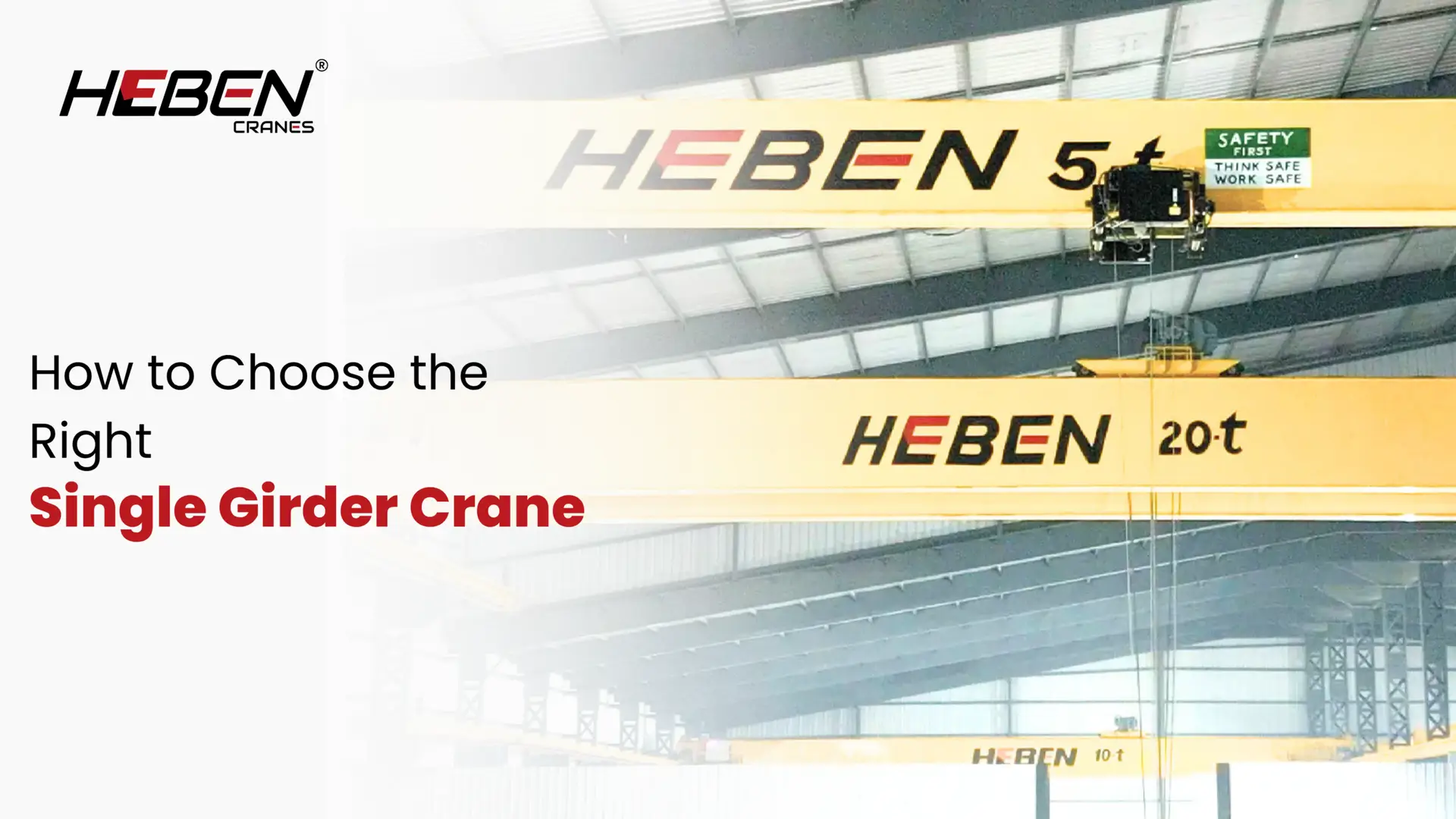
Most crane purchases go wrong before the crane even ships. A buyer picks a capacity that sounds safe, guesses at span, skips duty class entirely, and finds out three years later that the hoist brakes are worn down to nothing. The equipment wasn’t defective. It was mismatched to the job from day one.
A single girder crane is the workhorse of light-to-medium industrial lifting — one main beam, an underhung hoist, and a price tag that’s a fraction of a double girder system. But “single girder” isn’t one product. It’s a category, and picking the wrong version inside it is how facilities end up either overpaying for capacity they never use or replacing parts on a machine that’s barely out of warranty.
This guide walks through the seven decisions that actually determine whether a single girder crane fits your operation, followed by quick answers to the questions buyers ask most, and a straight recommendation on what to do next.
Start With Your Load Capacity
Capacity is the first number everyone asks about, and it’s also the one most people get wrong — not because they guess too high, but because they only think about the heaviest load, not the average one.
-
Identify your maximum single lift, including rigging and attachments.
-
Identify your average lift — the weight you’ll move most days.
-
Add a 20–30% safety margin on top of your maximum, not your average.
-
Compare that number against the standard single girder range, which typically tops out between 15 and 32 tons depending on the manufacturer.
If you’re regularly lifting above that ceiling, or your heaviest loads happen often rather than occasionally, a double girder setup is worth pricing out before you commit.
Nail Down Your Span
Span gets measured wrong more often than any other spec on the sheet. It’s the distance between the centerlines of the two runway rails — not the width of your building, and not the gap between support columns.
Most single girder cranes are limited to spans of 60 to 65 feet, largely because that’s the longest length rolled steel sections come in without custom fabrication. Go wider than that, and you’re either paying for a reinforced design or looking at a double girder crane instead. Get your building drawings in front of your supplier before the design is finalized — a span error caught after manufacturing is expensive to fix and slow to correct.
Understand Duty Class Before You Buy
This is the spec buyers skip most often, and it’s the one that quietly wrecks equipment. Duty class describes how hard the crane is built to work — lifts per hour, average load relative to rated capacity, and operating environment.
There’s a pattern worth knowing here: a crane engineered for occasional, light use but deployed in a facility running it ten or more times an hour will wear out its brakes, hoist components, and structural welds years ahead of schedule. Parts rated for a decade of service can fail inside three years. It’s one of the most common — and most preventable — mistakes in crane procurement, and it rarely shows up until the warranty’s already expired.
Before you order, map out:
-
How many lifts per hour, on a typical day and a peak day.
-
What percentage of those lifts are near maximum capacity.
-
Whether the environment adds stress — heat, dust, corrosion, outdoor exposure.
Top Running or Under Running?
A single girder crane runs one of two ways. Top running cranes ride on top of the runway beam and carry more weight for the same footprint. Under running (underhung) cranes hang from the bottom of the runway or building structure, trading some capacity for headroom and floor space, since they don’t need dedicated support columns.
If your ceiling height is the limiting factor, underhung is usually the better fit. If you need every ton of capacity the crane can offer, top running wins.
Pick the Right Hoist Type
The hoist is the component doing the actual lifting, and the two common options solve different problems.
-
Wire rope hoists handle medium to heavy loads with smoother operation and a longer service life.
-
Chain hoists suit lighter loads, cost less, and take up less vertical space — useful when headroom is tight.
Match the hoist to the load profile you mapped out earlier, not to whichever option your supplier has in stock.
Check Your Headroom
Lifting height is the vertical distance from the floor to the hook at full elevation, and it’s easy to overestimate. Subtract the girder’s depth, the hoist housing height, and a safety clearance margin from your actual ceiling height before you assume a crane will clear your workspace. This step alone catches more design conflicts than any other single check on this list.
Match the Crane to Your Site
Beyond the crane itself, three site conditions determine whether installation goes smoothly:
-
Power supply — confirm voltage and phase match the hoist’s requirements before ordering.
-
Indoor vs. outdoor use — outdoor installations need weatherproofing that indoor units skip.
-
Mounting method — fixed rail systems suit permanent installs; rubber-tired gantry designs suit facilities that need to relocate the crane.
Factor In Total Cost, Not Just Price
A single girder crane costs less upfront than a double girder system — less steel, lighter components, faster install. But the sticker price only tells part of the story. A crane specified one duty class below what your operation actually demands looks like a bargain on day one and becomes a maintenance expense by year two. Price the crane against your real duty cycle, not against the lowest quote on the table.
FAQs
What’s the maximum weight a single girder crane can lift? Most models are rated between 10 and 32 tons, depending on the manufacturer and configuration. Loads above that range typically call for a double girder crane instead.
How do I know if I need a top running or under running crane? Choose top running if you need maximum capacity for your footprint. Choose under running if ceiling height or floor space is limited and you want to avoid dedicated support columns.
Can a single girder crane be used outdoors? Yes, provided it’s built with appropriate weatherproofing and corrosion protection. Confirm this with your supplier at the design stage rather than after installation.
How long does a single girder crane typically last? With duty class matched correctly to actual use, major components often run 10 years or more before requiring replacement. Mismatched duty class can cut that lifespan to a third.
Is a single girder crane cheaper to maintain than a double girder crane? Generally yes — fewer components and simpler structure mean lower routine maintenance costs, as long as the crane wasn’t under-specified for its actual workload.
Conclusion
Choosing the right single girder crane comes down to seven decisions: capacity, span, duty class, running configuration, hoist type, headroom, and site fit. Get those right before you order, and the crane will outperform its price tag for a decade. Get duty class wrong, and you’ll be replacing parts long before you should.
About Heben Cranes
At Heben Cranes, we build single girder systems designed around your actual duty cycle, not a generic spec sheet. Our team works through capacity, span, and duty class with you before a single part is manufactured, so the crane you install is the one your operation actually needs. If you’re evaluating a single girder crane for your facility, contact Heben Cranes for a consultation and a quote built around your real lifting requirements.