
Weaving a Connection: Your Guide to African Fabric Suppliers in India
Africa’s vibrant textile heritage has inspired a global wave in fashion and home décor, with Indian designers and consumers embracing the distinctive beauty of African fabrics. But how does one find trusted sources for genuine African textiles in India? In 2025, as demand surges for these artful fabrics, knowing where and how to source real African prints is crucial. This guide details all the best avenues for discovering authentic African fabric suppliers in India, unlocking the doors to creativity, culture, and quality. Online Marketplaces: The Digital Textile Bazaars When it comes to convenience and variety, online marketplaces are unrivaled. Indian platforms like IndiaMART and Justdial feature thousands of listings for African wax prints, Kente, Ankara, Mudcloth, and more. These platforms allow seamless browsing of supplier profiles, reviews, catalogue images, and pricing—right from your home or studio. What makes online marketplaces especially valuable is the ability to filter by location, material, and even minimum order requirement. Many top vendors, including Pihoo Textiles, offer vivid real wax cottons and designer African-inspired cotton blends available for both retail and wholesale. Detailed product photos and customer testimonials mean you can buy with confidence, knowing authenticity and quality are front and center. African Import Stores: Bringing the Continent Closer For those seeking a tactile shopping experience, African import stores in big Indian cities such as Mumbai, Delhi, and Bengaluru are must-visits. These niche stores frequently handpick their inventory directly from African mills and local artists, showcasing a curated selection of fabrics including unique hand-dyed and specialty prints not often found elsewhere. Shopping in-store means you can feel the weight of the cloth, inspect dyework up close, and sometimes even negotiate prices face-to-face. Many storeowners have years of experience and can share stories behind each fabric, adding to the richness of your purchase. If you want that immersive, sensory interaction with Africa’s textile traditions, import stores deliver in spades. Local Textile Markets: The Joy of Discovery India’s famous textile markets are legendary for their vibrant chaos and surprising finds. Cities like Surat, Ahmedabad, or Chennai may not specialize solely in African fabrics, but they often house stalls dedicated to imported prints from across Africa. Here, you stand a good chance of snagging limited edition or custom-designed African cotton, batik, or even specialty blends at competitive rates. Sourcing from local textile markets helps sustain small businesses and offers the added bonus of face-to-face negotiation. For designers and resellers who appreciate the thrill of the hunt, these markets promise discovery and unique inventory. Direct from African Suppliers: Truly Authentic Connections For brands and buyers seeking exclusive, high-volume, or custom-designed African fabrics, it’s possible to connect directly with manufacturers and exporters in Ghana, Nigeria, Ivory Coast, and Mali, typically through business networks or trade shows. This route, though more involved—due to shipping, payment logistics, and customs—ensures access to completely authentic, often artisan-crafted pieces. Direct relationships empower you to commission unique colorways, premium wax prints, or community-driven handmade styles. Plus, buying direct supports African economies and craftspeople, creating a positive ripple effect far beyond fashion. Search Engine Power: Leveraging Google to Source Authentic African Fabrics Never underestimate the impact of a strategic Google search. Typing keywords such as “authentic African fabric supplier India,” “African wax print wholesale India,” or “real wax Kente buy India” instantly brings up dozens of highly ranked results and supplier websites (including Pihoo Textiles). Browsing these links, checking certifications, and reading reviews will help you compile a shortlist of reputable sellers who align with your volume, quality, and style needs. Trade Shows & Textile Fairs: Where East Meets Africa Participating in international trade shows and textile expos is increasingly common for African fabric exporters looking to build their presence in India. Events like Indian Textile Sourcing Week or export-oriented fairs in Mumbai bring together African suppliers, Indian brands, and wholesalers, creating a unique platform for networking and direct purchasing. These global gatherings not only showcase the latest trends in African prints but also foster collaborations and bulk order opportunities. Assessing Authenticity: Tips for Choosing the Right Supplier With so much choice, how do you know if a supplier offers the real deal? Look for: Detailed product descriptions specifying fabric origin, type (wax print, Kente, Mudcloth, etc.), and cotton percentage. Clear, high-quality images showing design crispness and dye vibrancy. Customer reviews and supplier ratings. Transparent business information, including GST/Tax numbers and a physical address. Commitment to fair trade or artisan support (for handcrafted goods). Why Choose Pihoo Textiles as Your Trusted African Fabric Source? At Pihoo Textiles, authenticity, quality, and customer satisfaction come first. We source genuine African designs directly from African mills and offer an extensive catalogue of real wax prints, Kente-inspired blends, Ankara, and much more. Our fabrics undergo rigorous quality checks to ensure vibrant colorfastness, durability, and softness, whether you’re a boutique, designer, or home décor enthusiast. We’re proud to support fair labor practices and sustainable production both in Africa and within our own operations in India, ensuring excellence from loom to outfit. Conclusion: Weaving Culture, Connecting Continents The rising demand for authentic African prints in India signals a powerful fusion of creativity and culture. Whether you’re sourcing for fashion, interiors, or special projects, knowing where to look—and how to verify authenticity—makes all the difference. Discover a world of possibility with Pihoo Textiles, your gateway to Africa’s legendary fabric tradition, right here in India. Ready to transform your creations with the magic of African textiles? Connect with Pihoo Textiles—where every fabric tells a global story.
Elevate Your Home: The Ultimate Guide to Residential Lifts
Modern homeowners are reimagining their living experience. Beyond aesthetics and décor, lifestyle upgrades are now defined by convenience, accessibility, energy efficiency, and future-proofing. Among these, residential lifts have emerged as an essential feature in both luxury and multi-generational homes. If you’re searching for the most comprehensive and up-to-date guide to personal home elevators, this resource—brought to you by Express Elevators, one of India’s most trusted vertical mobility experts—will illuminate every aspect of home lifts, from selection and installation to trends and user benefits. What Is a Residential Lift and Why Is It Gaining Popularity? A residential lift, also known as a home elevator, is a vertical transport system tailored for private residences. Unlike commercial passenger elevators, residential lifts are designed with compact footprints, elegant cabin finishes, and smoother operations suited to everyday family living. Why More Homeowners Are Investing in Lifts? Aging-in-place: As families embrace multigenerational living, lifts offer seniors and mobility-challenged members independence to access all floors. Future-proofing: Installing a lift increases property value and ensures long-term usability. Luxury and convenience: Effortless transport for groceries, luggage, and even furniture. Modern design statement: Today’s home elevators are as much a feature of style as they are of practicality. Types of Residential Lift Systems: Which One Is Right for You? Choosing the perfect lift depends on footprint, architecture, usage, and budget. Here’s a comparison of the most popular solutions: 1. Hydraulic Home Lifts How they work: Use a hydraulic pump and piston to move the cabin. Advantages: Smooth and silent operation; effective for up to 5–6 stops; requires a pit and machine room. Best for: Villas and larger residences with higher weight requirements. 2. Traction (MRL) Home Lifts How they work: Use steel ropes and a motorized sheave; machine-room-less designs save space. Advantages: Energy efficient, ideal for low to mid-rise homes, modern aesthetics. Best for: Urban apartments, duplexes, and homes with limited space. 3. Pneumatic/Vacuum Elevators How they work: Move using differential air pressure inside a transparent cylinder. Advantages: Minimal civil work, panoramic design, compact and eco-friendly. Best for: Quick retrofits, compact homes, modern minimalist interiors. 4. Platform and Wheelchair Lifts How they work: Open platforms or enclosed cabins designed for individuals with mobility aids. Advantages: High accessibility, straightforward integration in stairwells. Best for: Elderly or physically challenged members, barrier-free homes. Key Considerations Before Installing a Home Lift 1. Space and Structural Requirements Shaft or no shaft? Most advanced home lifts can be installed with or without a dedicated shaft. Pit and overhead clearance: Hydraulic lifts need deeper pits, MRL and pneumatic lifts offer more flexibility and can even be installed in existing stairwells. 2. Safety Certifications and Compliance Make sure your lift is IS 14665, EN 81, or relevant local code compliant. Features like emergency alarms, phones, trapped passenger rescue, and child locks should be standard. 3. Capacity and Cabin Size Capacity ranges: Usually from 250 kg to 450 kg, typically fitting 2 to 8 persons. Custom sizing: Express Elevators offers bespoke options for small and oddly shaped spaces. 4. Aesthetics and Customization Choose from stainless steel, glass, or premium panel finishes. Add mood lighting, mirrors, and touch controls for a futuristic look. 5. Power Supply and Energy Efficiency Opt for energy-saving drives, standby lighting, and power backup solutions for maximum uptime. The Installation & Commissioning Process: What to Expect Step 1: Site Survey and Technical Assessment Professionals from Express Elevators inspect your home, recommend the most suitable lift, and plan for customization to your needs. Step 2: Design and Engineering Precise shaft layouts, cabin design approvals, and safety compliance checks are completed before manufacturing. Step 3: Manufacturing & Delivery High-quality components and advanced machinery ensure your lift meets strict industry standards. Step 4: Installation Experienced engineers install the lift, often completing the work in as little as 2–4 days for pneumatic or MRL lifts. Step 5: Testing and Handover Rigorous safety and performance checks precede client handover. All functions and emergency protocols are demonstrated to the homeowner. Home Lift Features That Matter Most Automatic sliding or swing doors for hands-free access Anti-slip designer flooring Intelligent control panels—touch, voice, or mobile app integration LED lighting and ambient ceiling designs Quiet, vibration-free operation UV and antimicrobial cabin surfaces for hygiene The Importance of Regular Maintenance Keeping your residential lift safe and performing optimally requires expert care: Annual Maintenance Contracts (AMC): Ensure periodic inspection, lubrication, and timely repairs. Remote Monitoring: Some modern lifts alert service teams in real time if any issue is detected. Safety Upgrades: Express Elevators provides retrofitting and modernization services—a boost in safety, comfort, and control at a fraction of the replacement cost. How Residential Lifts Add Value to Your Home? Enhanced property value and marketability Future-ready accessibility for all residents Improved lifestyle and luxury appeal Sustainable features impress eco-conscious buyers Lower insurance premiums for accessible homes Design Inspirations: Stylish Cabins for Contemporary Homes All-glass panoramic elevators for sweeping views Warm wood panels paired with stainless steel for classic comfort Compact circular pneumatic lifts for minimalist or Scandinavian interiors Custom branding, logo etching, and thematic lighting for personal flair Latest Trends in Home Lifts for 2025 Touchless controls and mobile app integration Energy-regenerative drives and solar-ready systems Silent, high-speed models for multi-story urban homes Green materials—recycled steel, non-toxic laminates, low-energy panels Voice-activated and AI-enabled safety diagnostics Express Elevators constantly innovates to offer future-proof technologies for discerning homeowners. Frequently Asked Questions about Home Elevators Q: Can a home lift be installed in a finished house? A: Yes, several compact (MRL/pneumatic) lifts can be retrofitted with minimal civil work. Q: How much space is needed for a standard home lift? A: As little as 1 meter square for the smallest models, but design flexibility is available. Q: Are home lifts safe for children and the elderly? A: Absolutely—when installed by certified professionals like Express Elevators, with all modern safety features incorporated. Q: What is the lifespan of a residential elevator? A: With regular maintenance, 20–30 years or more is typical. Why Choose Express Elevators for Your Home? Decades of expertise:
EOT Cranes: Unmatched Performance & Reliability
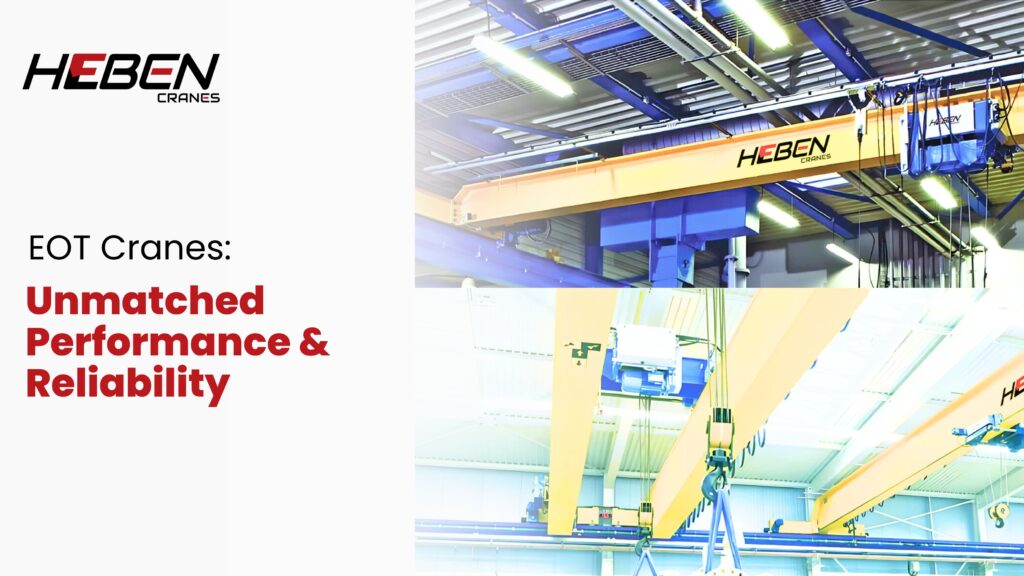
In the rapidly advancing world of material handling and industrial automation, the choice of lifting equipment directly impacts productivity, safety, and long-term profitability. Electric Overhead Traveling (EOT) cranes stand at the center of modern warehousing, logistics, and manufacturing – making seamless operations, reduced downtime, and peak precision possible. At Heben Technovation Pvt. Ltd., our EOT cranes are engineered to deliver unmatched performance and unwavering reliability for businesses across India. Powerful Lifting Capacity: Engineered for Heavy Industry Our EOT cranes are known for their exceptional capacity to handle loads both light and extremely heavy. Built with high-tensile structural components and precision-engineered hoists: Superior Load Range: Capacities from 1 ton to over 250 tons, covering a full spectrum of industrial needs. Industry Applications: Ideal for steel plants, automotive assembly, shipyards, infrastructure projects, warehouses, and fabrication units. Adaptable to Demands: Single-girder, double-girder, and custom-built solutions ensure your lifting operations are always up to the task. By integrating robust motors, advanced gearing, and superior hoisting systems, Heben ensures safe, stable, and consistent lifting—no matter the load. Precise Positioning and Intelligent Controls Accurate load handling is fundamental for manufacturing quality and workplace safety. Heben’s cranes stand out with: Variable Frequency Drives (VFDs): Smooth acceleration and deceleration eliminate abrupt movements, prevent load sway, and boost position accuracy. Micro-speed Controls: Allow operators to execute delicate maneuvers, essential for precise placement in assembly or tooling applications. Automated Safety Interlocks and Sensors: Constantly monitor load orientation, crane geometry, and rail alignment for maximum operational safety. Wireless Remote and Cabin Controls: Enhance operator flexibility, visibility, and comfort. The result? Faster cycle times, less rework, and streamlined workflow integration across your plant. Enhanced Safety Features: Protecting Crew & Cargo With Heben EOT cranes, rigorous safety comes standard: Anti-collision Systems: Sensors and intelligent logic prevent simultaneous crane operations in a shared runway, reducing accident risk. Overload Protection: Automatic detection halts operations if the load exceeds rated capacity to prevent structural damage and workplace hazards. Limit Switches & Emergency Stops: Built-in features immediately interrupt power and motion in critical situations. Redundant Braking Systems: Both hoisting and travel brakes provide fail-safe security, even during power loss. Adhering to global safety standards (IS, DIN, FEM, EN), Heben cranes are trusted for environments where safety is non-negotiable. Customizable Solutions: Made for Your Business No two projects are the same. Heben Technovation delivers customized EOT crane solutions through: Modular Design Philosophy: Quick adaptation and expansion for facility growth or process changes. Specialized Options: Explosion-proof components, corrosion-resistant finishes, and climate-rated builds for any operating environment. Custom Spans and Lifting Heights: Tailored for your factory footprint, assembly layout, and storage plan. Engineering experts at Heben work closely with your team, offering consultation, detailed layout planning, and on-site validation to ensure your crane perfectly matches your requirements and boosts your competitive edge. Exceptional Durability: Built to Last, Year After Year The true test of an EOT crane lies in its lifespan and uptime: Heavy-gauge construction and advanced metallurgy withstand constant use and harsh industrial conditions. High-quality electricals and IP-rated gearboxes ensure performance even in heat, dust, or humidity. Proactive Maintenance Protocols: Heben supports you with preventive maintenance, real-time health monitoring, and rapid parts availability. Global-Standard Testing: Each crane is load-tested, cycle-tested, and certified before dispatch. Long-term reliability means lower life cycle costs, fewer interruptions, and maximum returns for your investment. Advanced Technology Integration: The Heben Advantage IoT and Smart Connectivity: Remote health checks, predictive diagnostics, and downtown alerts directly to your mobile device or control center. Energy Efficiency: Regenerative drives, energy-saving motors, and optimized operational profiles help you meet sustainability goals without sacrificing productivity. Automation Ready: Integrations with AGVs, warehouse management systems, and production line robotics. Stay ahead with cranes built for Industry 4.0 – ready for tomorrow’s challenges today. Rapid Installation, Seamless Service Fast Deployment: Heben’s modular build process ensures quick turnaround from order to installation. Expert Support: Comprehensive training, user manuals, and step-by-step guidance maximize staff confidence and operational continuity. 24/7 Hotline: Immediate troubleshooting and emergency assistance nationwide. Planned Upgrades: Modular additions, smart controller swaps, and performance tuning available throughout asset life. Why Choose Heben Technovation Pvt. Ltd.? Proven Industry Leadership: Trusted by top names in steel, manufacturing, logistics, infrastructure, and government sectors. End-to-End Project Management: From site audit to installation, handover, and ongoing support. Customer-Focused Design: Solutions tailored for real-world challenges, cost optimization, and regulatory compliance. Skilled Engineering Team: Decades of expertise ensure every crane is built to your exacting standards. Conclusion: Experience the Heben Difference in EOT Cranes If your business demands uninterrupted performance, uncompromising safety, and solutions tailor-made for future growth, Heben Technovation Pvt. Ltd. is your ideal EOT crane partner. Harness superior lifting technology, intelligent controls, and robust durability for measurable impact on your bottom line. Contact Heben Technovation Pvt. Ltd. today and elevate your operations with India’s most reliable, high-performance EOT cranes. The power to lift, move, and succeed is in your hands!
Underslung Cranes: Elevate Efficiency with Smooth Lifting Solutions
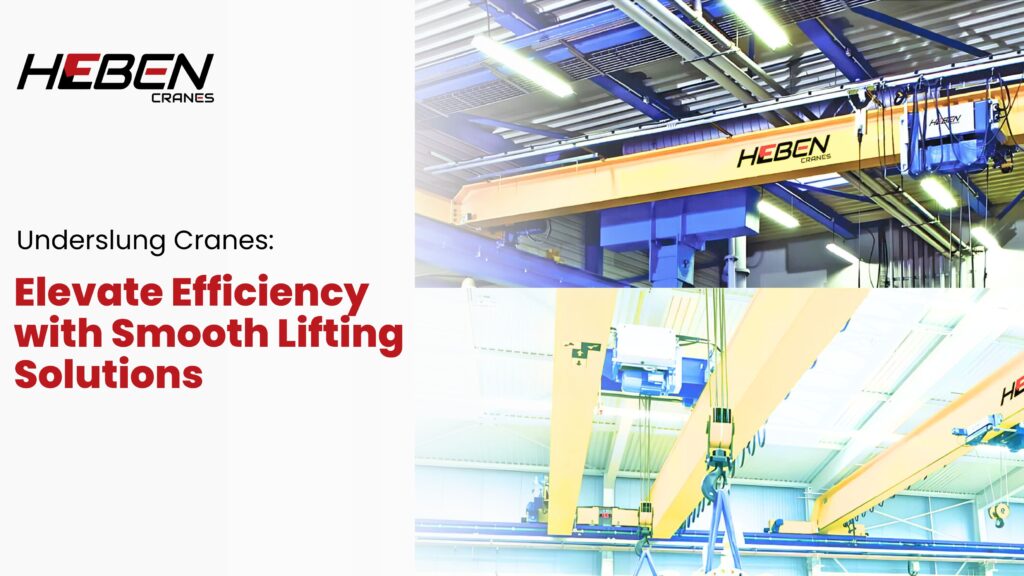
In today’s dynamic manufacturing and logistics environments, optimizing floor space, ensuring safety, and maximizing efficiency are top priorities. Underslung cranes—also called underhung cranes—have rapidly emerged as the go-to solution for industries needing versatile, unobstructed material movement and seamless workflow integration. Heben Technovation Pvt. Ltd. is at the forefront of this revolution, delivering Indian businesses advanced underslung cranes engineered for precision, smooth operation, and lasting value. What Are Underslung Cranes? Core Principles and Design Underslung cranes are overhead cranes that run directly beneath a building’s roof structure or supporting beams. Unlike top-running cranes, these cranes are suspended from the ceiling or roof girders, eliminating the need for massive support columns or ground-based rail tracks. This characteristic not only saves floor space but also unlocks efficient movement—especially in facilities where maximizing headroom and operational flexibility is a must. Key Design Benefits: Minimal floor obstruction, freeing up space for production or storage. Ideal for existing buildings with limited height or irregular layouts. Easier integration with monorails and complex material flow systems. Advantages That Transform Your Operations 1. Superior Space Optimization By suspending the crane structure overhead, underslung cranes offer true flexibility over workspace layouts. This enables manufacturers, auto shops, fabrication units, and warehouses to: Utilize every available square meter for core business processes. Adapt quickly to new workflows, production lines, or equipment configurations. Eliminate the need for expensive and intrusive ground rails or massive support frames. 2. Versatile Application Across Industries Whether you’re managing raw materials, intermediate goods, or finished products, underslung cranes seamlessly fit operations such as: Automotive component transfer Steel and metal fabrication Warehousing and logistics Aerospace assembly Power plants and chemical plants Shipbuilding and railway workshops Their ability to negotiate complex paths and work beneath existing cranes or mezzanines makes them a favorite across sectors. 3. Smooth, Precise Lifting and Travel Heben’s advanced underslung cranes are engineered for: Gentle acceleration, minimizing shock loads and material damage. Micro-speed control for precise load placement. Sway-reducing features that enhance safety and make delicate maneuvers possible, even with large or awkward items. Seamless integration with remote, radio, or fully automated controls for efficiency and safety. 4. Easy Installation and Retrofit Capability Many facilities hesitate to upgrade lifting solutions due to concerns about costly building modifications. Heben’s underslung cranes are designed to: Mount directly to existing roof trusses or ceiling beams. Minimize installation time with modular, bolted assemblies. Retrofit into older or low-clearance buildings where traditional cranes are impractical. 5. Unmatched Safety and Compliance Safety is central to every Heben design. Key features include: Fail-safe limit switches, overload sensors, and emergency stop mechanisms. Anti-collision systems to prevent accidents in busy or multi-crane environments. Robust construction in line with global (IS, DIN, FEM) standards for peace of mind and reliable lifting. How Heben Technovation Takes Underhung Cranes to the Next Level Robust Engineering and Customization No two businesses are identical. Heben offers complete custom solutions: Load capacities from 0.5 to 20 tons for projects of any size. Flexible span and rail configuration to fit any footprint. Integration with automation and Industry 4.0-ready smart features. Specialized options for hazardous, high-temperature, or corrosive environments. Maintenance, Support, and Lifecycle Value Partnering with Heben means hassle-free ownership: Comprehensive after-sales service, including preventive maintenance and on-call technical support. Rapid spare parts delivery. Thorough operator and maintenance crew training to keep your team confident and compliant. Sustainable and Energy-Efficient Solutions With a growing focus on sustainability, Heben’s cranes incorporate: Regenerative braking and high-efficiency motors to cut energy consumption. Material selection and engineering practices that extend crane lifespan and minimize downtime. IoT-based monitoring for predictive maintenance and energy tracking. Comparing Underslung Cranes: Why Choose Heben? Feature Heben Underslung Cranes Standard Solutions Space Optimization Maximum Limited Installation Time Rapid, modular Often lengthy Customizable Paths Straight, curved, hybrid Mostly straight Retrofit Ready Yes Rare Safety Features Advanced Basic Energy Savings High Average Digital Integration Industry 4.0-ready Often not supported Real-World Success Stories Many leading companies across India have significantly increased their throughput, reduced manual handling injuries, and achieved better ROI with Heben’s underslung crane systems. From precision manufacturing units to bustling logistics hubs, Heben’s cranes have streamlined operations and made smart lifting simple and reliable. Future Trends: Underslung Cranes and Industrial Evolution Smart Automation: Automated pathfinding and load monitoring are rapidly becoming the norm. Integration with Warehouse Robotics: Underslung systems are now coordinating with AGVs and smart conveyors for end-to-end material flow. Sustainability: Innovations in lighter materials, efficient drives, and green manufacturing processes continue to push the envelope. Advanced Analytics: Cloud-based dashboards enable real-time performance tracking, predictive diagnostics, and more informed business decisions. Conclusion: Unlock Seamless, Safe, and Smart Lifting with Heben Technovation Underslung cranes represent the gold standard for maximizing space, optimizing workflows, and delivering smooth, ultra-safe lifting in any industrial setting. As Indian businesses race toward digital transformation and world-class manufacturing standards, Heben Technovation Pvt. Ltd. is your partner of choice for cutting-edge, customized underslung crane solutions. Contact Heben Technovation Pvt. Ltd. today to elevate your material handling efficiency and join the ranks of India’s most agile, future-ready enterprises. Your journey to seamless lifting starts here.
Explore EOT Crane Types & Key Features: Your Complete Selection Guide

Here’s what the aftermarket won’t tell you: EOT crane maintenance costs can be reduced by up to 60% if you choose the right configuration upfront. Yet 73% of facilities still base their crane selection on initial purchase price alone—a strategy that routinely costs them six figures in downstream inefficiencies. The truth is starker than most procurement teams realize. Your crane choice doesn’t just move materials—it shapes operational capacity, defines maintenance burn rates, and determines whether your facility scales or stalls. Let’s cut through the vendor noise and examine what actually matters. 1. Single-Girder EOT Cranes: The Efficiency Paradox The Surprising Reality: Single-girder systems dominate small-to-medium operations not because they’re cheaper, but because they’re often over-engineered for their actual use cases. Single girder cranes consist of one box girder supported by End truck on each side and it is suitable for lifting & shifting load from 250kg to 15 Ton upto 18M span, making them the workhorses of precision manufacturing. The critical insight: their simplified structure translates to reduced headroom requirements—typically 12-18 inches less than double-girder alternatives. Design Trade-offs That Matter: Span Limitations: Beyond 18-20 meters, deflection becomes problematic Hoist Positioning: Under-running trolleys limit lifting height but improve hook approach Maintenance Access: Fewer components mean fewer failure points, but component replacement requires more downtime ROI Reality Check: For operations under 10-ton capacity with moderate duty cycles, single-girder systems deliver 15-20% lower total cost of ownership over 15 years. The economic sweet spot? Manufacturing facilities with 8-12 hour daily operations and predictable load patterns. Modern single-girder systems from leading manufacturers like Heben integrate advanced control systems that were once exclusive to heavy-duty installations, making them surprisingly sophisticated for their structural simplicity. 2. Double-Girder EOT Cranes: Engineering for Extremes When Tata Steel needed to handle 125-ton ladles in their Jamshedpur facility, the engineering constraints were unforgiving: high-temperature environments, continuous operation, and zero tolerance for unplanned downtime. Structural Advantages: Load Distribution: Twin girders eliminate deflection issues at extreme spans (up to 40+ meters) Hoist Versatility: Top-running configuration allows multiple hoists and auxiliary equipment Access Superiority: Walkways and platforms enable maintenance without facility shutdown Performance Data Points: Duty Classification: Routinely handle Class A4-A8 operations (heavy to severe service) Precision Capability: Position accuracy within ±5mm at full load Speed Variability: Multi-speed controls from creep (0.5 m/min) to rapid traverse (120 m/min) Application Matrix: Steel Mills: Ladle handling, coil manipulation, scrap charging Shipyards: Hull section assembly, engine installation Power Generation: Turbine maintenance, fuel handling Heavy Manufacturing: Press operations, large assembly work A crane with a higher purchase price but lower operating costs can offer a better ROI over its lifespan than a cheaper model that incurs higher maintenance expenses—a principle that defines double-girder economics. 3. Top-Running vs Underslung: The Infrastructure Reality Structural Truth: Your building dictates the choice more than your load requirements. Top-Running Systems: Cranes travel on rails mounted atop runway beams Maximum lifting height utilization Requires robust building structure to handle concentrated wheel loads Ideal for new construction with engineered runway beams Underslung (Under-Running) Systems: Cranes suspend from bottom flange of runway beams Reduces building structural requirements by 30-40% Limited lifting height but excellent for retrofit applications Perfect for facilities with constrained headroom or older buildings The Headroom Factor: In space-constrained facilities, underslung systems can provide 2-4 feet of additional lifting height—often the difference between operational viability and expensive building modifications. 4. Gantry & Goliath Cranes: Mobility Meets Muscle Mobile Gantry Evolution: Today’s rubber-tired gantries deliver precision once exclusive to fixed installations. Configuration Breakdown: Full Gantry: Four-leg design for maximum stability, ideal for container handling Semi-Gantry: One runway rail, one leg assembly—optimizes yard space utilization A-Frame: Simplified structure for lighter loads, rapid deployment Site Deployment Intelligence: Ground Bearing Pressure: Modern RTGs distribute loads across 8-12 contact points Wind Resistance: Advanced systems automatically adjust to crosswind loading Terrain Adaptability: All-wheel steering enables operation on 2% grades 5. Jib Cranes: The Productivity Multiplier The Ergonomics Revelation: Properly positioned jib cranes can increase workstation productivity by 35-45% through reduced material handling steps. Work-Cell Integration: Slewing Range: 270° coverage eliminates dead zones in corner installations Reach Optimization: 8-12 meter booms cover multiple workstations Height Variability: Under-boom clearance from 2.5-6 meters accommodates diverse operations Productivity Analytics: Manufacturing studies show jib cranes reduce operator fatigue by 60% while improving cycle times in assembly operations. 6. Industrial & Metallurgical Variants: Purpose-Built Performance Magnetic Handling Systems: Modern electromagnetic cranes integrate load sensing to prevent dropped loads during power fluctuations—a critical safety evolution. Foundry Specifications: Heat-Resistant Design: Components rated for ambient temperatures up to 60°C Spark-Proof Electronics: Explosion-proof classifications for foundry environments Specialized Attachments: Ladle hooks, tong lifting, crucible handling Industry-Specific Engineering: Steel Plants: Coil handling, slab manipulation, charging operations Aluminum Smelting: Pot tending, anode handling, metal transfer Heavy Forging: Press feeding, billet manipulation, finished part handling 7. Smart Crane Technology Revolution Control System Evolution: Variable frequency drives (VFDs) have transformed crane precision, enabling smooth acceleration curves and energy recovery during lowering operations. Safety Integration: Load Moment Indicators: Prevent overload conditions before they occur Anti-Collision Systems: Laser-guided proximity detection Operator Assistance: Load swing dampening and positioning aids Efficiency Gains: Modern control systems reduce energy consumption by 20-30% compared to conventional resistance control. 8. Selection Framework: The Decision Matrix Facility Assessment Priority: Load Requirements: Not just maximum weight—consider load frequency and duty cycle Space Constraints: Existing building limitations often override ideal configurations Operational Patterns: Continuous vs. intermittent use dramatically affects component selection Future Expansion: Design for 125% of current requirements to avoid premature obsolescence TCO Components (15-year analysis): Initial Investment: 25-30% of total cost Maintenance & Operations: 45-50% of total cost Energy Consumption: 10-15% of total cost Downtime Costs: 10-20% of total cost (often underestimated) 9. Installation Realities Critical Path Items: Runway Beam Installation: Often requires 6-8 week lead time for structural steel Electrical Infrastructure: Power delivery to moving crane requires specialized cable management Load Testing: Required by OSHA—plan for 125% rated capacity testing Regulatory Timeline: Allow 4-6 weeks for inspection and certification after installation completion. 10. Maintenance Economics Predictive Maintenance Revolution: Predictive maintenance
Building Tomorrow: The Role of EOT Cranes in Modern Construction

While construction sites multiply exponentially, most are still moving materials like it’s 1995. Over 60% of all buildings exceeding 150 meters globally relied on tower cranes during primary construction phases in 2024, but the real revolution isn’t happening on high-rise jobsites—it’s in the industrial facilities where Electric Overhead Traveling (EOT) cranes are redefining what precision material handling means. The new construction reality demands more than muscle—it demands surgical precision at industrial scale. Next-generation EOT cranes aren’t just lifting equipment; they’re orchestrated automation platforms that integrate seamlessly into digital construction workflows. 2. What Exactly Are EOT Cranes? Strip away the engineering jargon, and EOT cranes are brilliantly simple: bridge-based lifting systems that travel along parallel runways, carrying loads with millimeter precision across predetermined paths. But the devil—and the competitive advantage—lives in the variants. Single vs. Double Girder Architecture: Single-girder systems handle up to 20 tons with streamlined efficiency, while double girder configurations take on loads up to 120 tons without difficulty. The choice isn’t just about capacity—it’s about operational economics and space optimization. Top-Running vs. Underslung Systems: Top-running designs maximize hook height and span capabilities. Underslung configurations deliver unobstructed floor space, critical for high-density manufacturing layouts where every square meter counts. Environmental Adaptations: Cold-room variants operate at -40°C, while explosion-proof designs handle volatile environments. These aren’t afterthoughts—they’re purpose-built solutions for specialized construction and industrial applications. 3. Why EOT Cranes Are Game-Changers in Construction Traditional mobile cranes operate on “get in, lift, get out” logic. EOT systems flip this paradigm: they become permanent infrastructure that accelerates every subsequent operation. The productivity multiplier effect is measurable. Precision Positioning: Variable Frequency Drive (VFD) motors enable micro-adjustments at heavy loads—something impossible with hydraulic mobile units. Anti-sway technology eliminates the 3-5 minute settling time typical of mobile crane operations. Construction Sequencing Integration: Unlike mobile cranes that require dedicated operators and ground spotters, EOT systems integrate into automated construction workflows. One operator can manage multiple synchronized lifts while maintaining full visibility of the operation zone. Safety Enhancement Through Predictability: Fixed travel paths eliminate the collision risks inherent in mobile equipment. Digital load monitoring prevents overload conditions before they become dangerous. 4. The Hidden Tech: Under the Hood of an EOT Crane Modern EOT cranes are software platforms disguised as mechanical equipment. The differentiation happens in the digital layer. Control Systems Evolution: Beyond basic remote consoles, advanced systems feature auto-limit programming, load-curve optimization, and predictive motion planning. VFD drives don’t just control speed—they optimize power consumption patterns and extend component lifecycle. Drivetrain Innovation: Helical gearboxes with precision-machined components reduce operational noise by up to 15 decibels while extending maintenance intervals. Reliability isn’t just convenience—it’s operational continuity. IoT Telemetry and Diagnostics: Real-time sensor networks monitor load stress, motor temperature, brake wear, and structural fatigue. This isn’t preventive maintenance—it’s predictive intervention that eliminates unplanned downtime. 5. HEBEN as Innovator & Integrator While many manufacturers build cranes, few architect complete lifting ecosystems. HEBEN’s approach transcends hardware—they engineer solutions. Pre-Sales Engineering Excellence: Site audits include lift-path simulation and virtual reality planning sessions. Clients visualize operational scenarios before installation, eliminating costly redesigns and optimizing workflow integration from day one. R&D Focus on Real-World Problems: HEBEN’s innovation pipeline addresses actual jobsite challenges: faster installation sequences, modular upgrade pathways, and integration protocols for Building Information Modeling (BIM) systems. After-Sales Ecosystem: Remote training modules, operator simulators, and predictive servicing create sustainable competitive advantages. When uptime matters, comprehensive support systems differentiate leaders from suppliers. 6. Field Deployments That Push Limits Mega Project Case Study: The Mumbai-Ahmedabad Bullet Train infrastructure project represents EOT crane deployment at unprecedented scale. Prefabricated concrete segments weighing 40+ tons require millimeter-precise positioning across multiple elevation changes. Mobile cranes would require extensive ground preparation and positioning time for each lift. EOT systems enable continuous, synchronized operations across the entire construction sequence. Comparative Lift-Path Analysis: Mobile cranes average 8-12 lifts per hour in complex positioning scenarios. Comparable EOT installations achieve 20-25 lifts per hour with superior accuracy. The productivity differential compounds over project lifecycles. Scaling Strategy: Bridge construction, metro extensions, and modular industrial facilities represent growth segments where EOT systems deliver measurable ROI advantages over traditional lifting approaches. 7. Safety & Compliance Beyond Basic Features Compliance isn’t checkbox engineering—it’s operational philosophy embedded in system design. Standards Integration: ISO 9927, BIS specifications, and OSHA/DGMS requirements aren’t met through retrofitting safety features. They’re engineered into core system architecture from initial design phases. Digital Safety Audit Trails: Auto-logging capabilities capture every operational parameter: load weights, operator credentials, maintenance intervals, and safety system activations. Remote lockdown capabilities enable immediate intervention when safety parameters are exceeded. Operator Credentialing Systems: Digital access controls ensure only qualified personnel operate equipment, with skill-level restrictions that prevent unauthorized access to advanced operational modes. 8. Performance Metrics & ROI Analysis Lifecycle Cost Modeling: EOT systems demonstrate 3-5 year payback periods in high-utilization scenarios. Operational cost per ton-mile typically runs 40-60% below mobile crane equivalents when factoring fuel, operator costs, and positioning time. Downtime Reduction Through Monitoring: Condition monitoring reduces unplanned maintenance by 70-85%. Scheduled maintenance windows align with construction schedules rather than disrupting critical path operations. Quantified Productivity Gains: Gantry and bridge cranes show 5.1% CAGR growth in industrial applications precisely because measurable productivity improvements justify capital investments. 9. Digital Vision & Automation Continuum The trajectory leads toward semi-autonomous operation integrated with broader construction management systems. AI-Driven Load Forecasting: Machine learning algorithms analyze historical lift patterns to optimize crane positioning and reduce cycle times. Predictive scheduling coordinates multiple crane operations without human intervention. BIM Integration: Crane telemetry feeds directly into project dashboards, enabling real-time progress tracking and resource optimization. Construction managers gain unprecedented visibility into material flow bottlenecks. Remote Operation Capabilities: 5G connectivity enables expert operators to manage multiple sites from centralized control centers, multiplying skilled operator productivity while maintaining on-site safety supervision. 10. Market Trends & Strategic Forecast Robust crane market growth stems from increasing infrastructure investments and automation demands. Global crane market size is expected to reach $52.55 billion by 2029 at 5.8% growth, with overhead traveling systems capturing increasing market share
Crane Safety Practices for Industrial Operations: A Complete Guide

In industrial operations, cranes are vital tools that lift and transport heavy loads, streamlining work and boosting productivity. However, their powerful capabilities also carry inherent risks. Ensuring strict crane safety practices protects lives, maintains equipment integrity, and sustains uninterrupted operations. This comprehensive guide by Heben Technovation Pvt. Ltd. explores essential crane safety practices backed by data-driven insights and industry best practices. Why Crane Safety Matters? Industrial cranes can lift loads ranging from a few hundred kilograms to several tons. Accidents due to crane misuse or equipment failure can cause severe injuries, fatalities, and property damage, with OSHA reporting that cranes are involved in a significant percentage of construction and industrial accidents. Preventative safety measures are proven to reduce incidents drastically, protect workforce health, and ensure legal compliance. Regular Inspection and Maintenance Routine inspection and maintenance form the foundation of crane safety. Components such as wire ropes, chains, hooks, brakes, and limit switches should undergo frequent checks for signs of corrosion, wear, deformation, or malfunction. Industry data suggests that over 30% of crane-related failures are due to inadequate maintenance. Scheduling daily visual inspections, monthly in-depth reviews, and annual comprehensive assessments minimizes this risk, thereby extending crane lifespan and preventing costly failures. Operator Training and Certification Only trained and certified operators should run cranes. Training must encompass understanding crane capacities, load handling techniques, emergency procedures, and communication protocols. Refresher courses are critical to keep skills current, especially with advances in crane technologies such as automation and remote operations. Effective operator training significantly lowers human-error-related incidents, which constitute a large proportion of crane mishaps. Understanding Load Capacity and Weight Limits Adhering to the crane’s safe working load (SWL) and weight limits is crucial. Operators and supervisors must verify loads using indicators and weigh systems, ensuring no overload occurs. Overloading not only jeopardizes safety but also accelerates equipment wear. Proper load balancing, secure rigging, and careful operation reduce dynamic stresses and enhance operational control, preventing accidents. Clear Communication and Signaling In noisy industrial zones, verbal commands can be ineffective. Standardized hand signals, dedicated signalers, and two-way radios improve coordination between operators and ground personnel. Advances include remote-control systems and camera monitoring, offering visual aid to operators. These communication protocols minimize misinterpretations, ensuring accurate crane motions and enhancing safety. Proper Ground Preparation and Surrounding Awareness Maintaining clear, obstacle-free zones around crane operations is essential for safety. Ground surfaces for cranes must be stable and capable of bearing the load safely, especially for mobile and gantry cranes. Awareness of overhead hazards such as power lines or structural obstructions prevents unforeseen incidents. Weather monitoring—such as wind conditions—is vital because adverse weather can affect crane stability and lifting performance. Emergency Preparedness and Shutdown Protocols Even the most carefully controlled operations can face emergencies. All personnel must be trained on immediate shutdown procedures, emergency stops, and evacuation routes. First-aid training and incident reporting protocols should also be in place. Modern cranes are often equipped with emergency stop buttons and backup power supplies to mitigate the effects of power loss or mechanical failure. Implementing Safety Technologies With Industry 4.0 and smart manufacturing, cranes are becoming safer and smarter. Technologies such as anti-collision systems, overload sensors, automated diagnostics, and IoT-enabled maintenance alerts are now standard in advanced cranes. These features reduce human error and improve response times in critical situations. Heben Technovation integrates such technologies to deliver cutting-edge safety in their crane solutions. Conclusion Crane safety is crucial to industrial success, protecting both personnel and assets while sustaining efficient production. By committing to regular maintenance, rigorous training, strict adherence to load parameters, clear communication, and embracing modern safety technologies, operations can significantly reduce risks and boost productivity. Heben Technovation Pvt. Ltd. stands as a leader in delivering safe, reliable, and advanced crane solutions tailored for India’s diverse industries. Prioritize safety—it is the foundation of sustainable industrial growth.
CNC Precision in Smart Manufacturing: Revolutionizing Crane Components
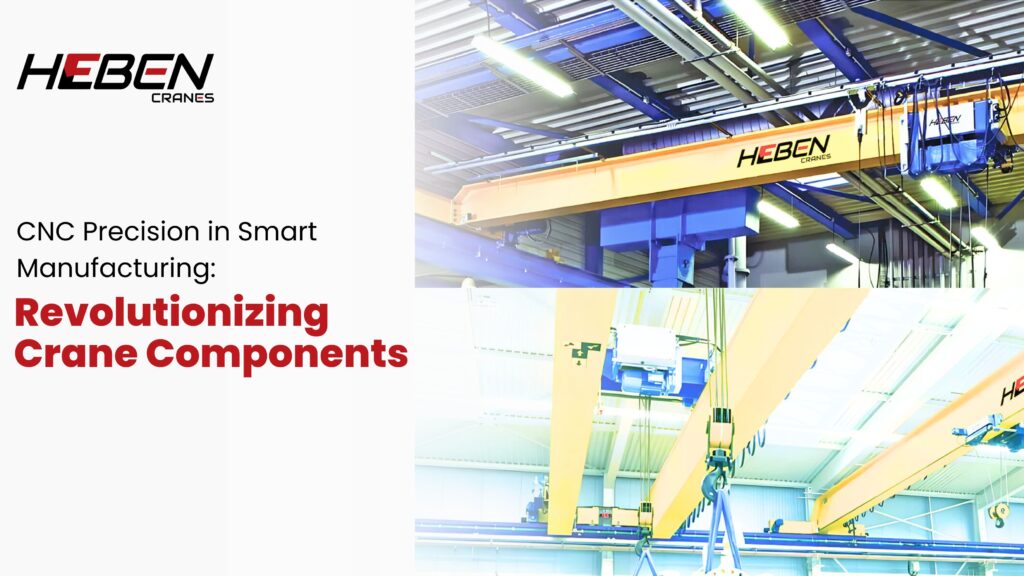
In the era of Industry 4.0, smart manufacturing has become a cornerstone for innovation across sectors. Among the industries profoundly impacted is crane manufacturing, where precision and reliability are paramount. CNC (Computer Numerical Control) machining stands at the forefront of this transformation, allowing manufacturers like Heben Technovation Pvt. Ltd. to create crane components with unprecedented accuracy, consistency, and efficiency. This blog explores how CNC precision machining is revolutionizing crane component quality, safety, and performance. What Is CNC Precision Machining? CNC precision machining is a sophisticated manufacturing process leveraging computer software to command machine tools like lathes, mills, and routers for cutting and shaping materials. This method guarantees extremely tight tolerances, often as precise as plus or minus 0.001 millimeters, ensuring every part fits and functions exactly as intended. Unlike traditional manual machining, CNC automation eliminates human errors, enabling repeatable production with high-quality outcomes. Importance of CNC Precision for Crane Components Crane systems, especially heavy-duty types like EOT and gantry cranes, rely heavily on the flawless performance of parts such as hoist drums, gearboxes, and shafts. Even minor dimensional inaccuracies can lead to misalignment, excessive wear, or catastrophic failure. CNC machining ensures structural integrity and smooth operation, significantly enhancing crane safety and lifespan. Heben Technovation integrates CNC-crafted components across all its cranes, ensuring uncompromising quality and resilience. Key Crane Components Benefiting from CNC Machining Several essential crane parts are extensively fabricated or finished using CNC technology: Gearboxes and Gear Wheels: Achieving perfectly symmetrical tooth profiles for efficient power transmission. Hoist Drums: Uniform dimensions to maintain flawless wire rope winding and load balance. End Carriages and Wheel Assemblies: Precision machining reduces vibration and ensures smooth trolley movement. Braking Systems: CNC manufacturing provides tight tolerances, reducing brake wear and enhancing safety. Shafts and Bearing Housings: Machined for perfect fit and long-term durability. Smart Manufacturing and CNC: The Perfect Partnership With the convergence of smart manufacturing and CNC technology, the crane industry is entering a new age. IoT sensors, real-time monitoring, and AI-driven analytics integrate seamlessly with CNC fabrication, enabling: Machines self-monitor their performance and send alerts for preventive maintenance. Sensors track component quality in real time, minimizing rework and waste. Digital twins simulate crane component performance before production, helping improve design efficiency. Heben Technovation leverages this synergy to predict maintenance needs, extend lifecycle, and reduce operational costs. Benefits of CNC Precision in Crane Manufacturing The advantages of integrating CNC machining into crane part production are profound: Enhanced Reliability: Precisely machined parts endure operational stresses better. Increased Lifespan: Reduced wear and tear prolong equipment usage. Faster Production: Automation accelerates manufacturing cycles without sacrificing quality. Customization: CNC allows tailored component designs for specific crane models. Cost Efficiency: Fewer defects, less scrap, and streamlined production lower overall expenses. Sustainability: CNC machining reduces waste and supports greener manufacturing practices. How CNC Machining Is Shaping the Future of Crane Components? Looking ahead, investments in fully automated, AI-integrated CNC machining promise to further elevate crane manufacturing. Future advancements will include: Self-adjusting machines optimizing cuts in real time. Enhanced sensor integration for zero-defect production. Increased use of advanced alloys and composites. Heben Technovation is at the cutting edge of deploying these technologies, ensuring customers receive cranes that are not only strong and reliable but also smart and sustainable. Conclusion: Embracing CNC for Safer, Smarter Cranes CNC precision machining is revolutionizing how crane components are manufactured, improving safety, performance, and cost-effectiveness. By integrating CNC technology with smart manufacturing principles, Heben Technovation Pvt. Ltd. exemplifies the future of crane engineering—delivering products that meet the rigorous demands of modern industry with unmatched quality and efficiency. Choosing CNC-precision cranes means choosing unparalleled reliability and innovation. Elevate your material handling operations with Heben’s advanced manufacturing and engineering excellence.
EOT Cranes for the Future: Unlocking Industrial Potential

As industries transform in response to digitalization, sustainability, and efficiency demands, Electric Overhead Traveling (EOT) cranes have evolved from simple material handlers into smart, data-driven pillars of productivity. Tomorrow’s factories, logistics hubs, and construction sites demand crane solutions that offer not just brute strength, but agility, intelligence, and seamless integration. Comprehensive Overview: How EOT Cranes Power Modern Industry EOT cranes are the nerve center of material movement in sectors ranging from automotive and aerospace to steel manufacturing and modular construction. They boost operational efficiency by reducing manual handling, improving logistics flow, and cutting downtime. The market for EOT cranes is expected to reach a value of $6.5 billion by 2033, underlining their central role in industrial growth and infrastructure development. Multi-Motion Precision with Advanced Variable Frequency Drives (VFDs) State-of-the-art EOT cranes from Heben employ VFD-powered motion for hoisting, traversing, and long travel, redefining smoothness and control. Benefits include: Ultra-fine speed variability—ideal for high-accuracy positioning. Minimized load swings through gradual acceleration and deceleration. Energy efficiency features like dynamic braking and energy regeneration. These advances don’t just enhance safety; they cut energy bills and extend equipment lifespan dramatically. Smart Sensor Networks: Data-Driven Safety and Productivity Integrated sensor arrays bring a new dimension of intelligence: Load Monitoring: Real-time overload prevention and adaptive control for safe handling. Anti-Collision Systems: Ultrasonic and lidar sensors automatically detect and mitigate potential crane interference or obstacles. Positioning and Zoning: Pinpoint placement and movement within set safe work zones. Predictive Diagnostics: Sensors monitor motor temperature, vibration, and wear, flagging maintenance before failures strike. Smart sensor infrastructure unlocks predictive analytics that cut downtime, improve safety, and provide the backbone for Industry 4.0 initiatives. Intelligent Control Systems: Precision, Synchronization, and Flexibility Digital transformation is at the heart of Heben’s EOT crane solutions: Programmable Logic Controllers (PLCs): Allow precise automated cycles, variable routines, and advanced safety interlocks. Human-Machine Interfaces (HMIs): Touchscreen controls for live performance data and instant troubleshooting. Multi-Hook Synchronization: Enabling simultaneous lifting for oversize or complex loads. Remote Connectivity: Real-time access for diagnostics, monitoring, and software updates, ensuring minimal downtime and top-tier operational control. The Leap Forward: IoT, Automation, and Industry 4.0 Future-ready EOT cranes are engineered with the digital factory in mind: IoT Integration: Continuous data streaming to the cloud, unlocking remote monitoring and predictive maintenance. Cloud Connectivity: Integration with ERP and warehouse management systems for seamless workflow alignment. Automated and Autonomous Operation: AI and robotics are beginning to empower cranes with capabilities such as path optimization, autonomous obstacle navigation, and robotic attachments for intricate materials handling. This digital evolution not only reduces operator error, but enables lights-out manufacturing and next-level efficiency. Energy-Efficient and Eco-Friendly Design Sustainability is guiding every engineering choice: Regenerative Braking: Converts mechanical energy back into usable electricity. Low Power Consumption Motors: Advanced motors reduce operational costs and carbon footprint. Lightweight and Recyclable Materials: Minimize dead weight and support green manufacturing objectives. Such designs are crucial as regulatory and environmental pressures intensify across manufacturing and logistics sectors. Advanced Safety Innovations: Protecting People and Assets Modern EOT cranes are fortified with multi-layered safety systems: Automated Emergency Stops: Instant halting of all motion upon hazardous event detection. Anti-Sway Control: Stabilizes heavy and awkward loads during movement. Geofencing: Ensures crane movement stays within safe designated zones. Redundant Braking Systems: Multi-level electrical and mechanical brakes for ultimate fail-safety. Operator Assistance: Real-time feedback and alarm systems to reduce risk of human error and collision incidents. Safety is further enhanced by regular compliance audits and adherence to global safety standards. Modularity and Customization for Every Need Industrial sites are unique—so are Heben EOT cranes: Modular construction enables rapid scaling, reconfiguration, and future upgrades. Customizable spans, hook approaches, lift speeds, and attachment interfaces fit every environment—from cleanrooms to extreme outdoor yards. Control flexibility: Choose from remote radio systems, cabin controls, and full automation with joystick or touchscreen panels. Whether your site demands compact solutions or heavy-duty, long-span giants, customization ensures perfect fit and long-term value. Real-World Impact: Case Studies and Industry Examples Automotive Lines: Heben cranes sync with automated lines for just-in-time delivery and multi-point lifting. Steel Industry: Handle coils, plates, and billets with precision, leveraging anti-sway and overload protection for safe, rapid throughput. Construction Sites: Robust, weather-resistant cranes with modular spans enhance infrastructure projects while reducing setup time and risk. Innovative EOT technologies have been shown to reduce maintenance costs by 20% and increase production speed by up to 30% in leading-edge facilities. Maintenance Made Effortless: Predictive and Proactive Service Thanks to smart diagnostics and data-rich sensor systems, modern EOT crane maintenance is shifting from reactive to predictive: AI-driven analytics flag component wear before a failure occurs, drastically reducing unscheduled downtime. Cloud-connected service logs streamline audits and ensure compliance with both regulatory and ISO standards. Manufacturers now offer digital twin modeling, helping teams simulate operations, identify inefficiencies, and plan upgrades safely and efficiently. Compatibility and Integration: Ready for Tomorrow’s Factory EOT cranes by Heben are designed for easy integration with AGVs, robotic arms, and digital warehouse management systems. Open-architecture control allows future upgrades for software, automation, and artificial intelligence features. Enhanced interoperability means cranes become a seamless part of wider digital transformation strategies, futureproofing capital investments. Table: Key Features in Next-Generation EOT Cranes Feature Benefit Technology Used VFD-Controlled Multi-Motion Precision, longevity, energy savings Variable Frequency Drives (VFDs) IoT-Enabled Sensors Safety, predictive maintenance Wireless sensor arrays PLC/HMI Automation Operational efficiency, workflow sync Digital control interfaces Remote Connectivity Reduced downtime, remote diagnostics IIoT, cloud platforms Regenerative Braking & Green Motors Lower energy consumption, sustainability Smart motor and brake systems Customization & Modular Design Perfect fit, easy upgrades Modular engineering Advanced Safety Systems Worker protection, compliance Lidar, anti-collision, alarms Why Heben Cranes Is Your Future-Ready Partner By fusing innovation, engineering excellence, and a relentless focus on safety, Heben Cranes stands as India’s premium provider of future-ready EOT crane solutions. Whether your enterprise aspires to harness full Industry 4.0 connectivity, reduce environmental impact, or achieve entirely new standards in reliability and performance, Heben’s expert team delivers tailored cranes and end-to-end support through every stage of
Best Type of Brakes Used in an EOT Crane Drive

While most crane operators obsess over load capacity and span, the real profit killer lurks in a component most overlook: the brake system. In 2024, brake-related failures accounted for 73% of unplanned crane downtime across Indian manufacturing facilities, with each incident costing operations an average of ₹2.3 lakhs per day. Yet here’s the kicker—95% of these failures were preventable with proper brake selection. Why Brakes Make or Break Safety & ROI? The Hidden Cost of Brake Failure When a brake fails, you’re not just dealing with replacement costs. The domino effect is brutal: production lines halt, skilled operators sit idle, and delivery schedules crumble. OSHA data reveals that brake-related crane accidents result in settlements averaging $4.2 million—enough to fund an entire fleet upgrade. ROI Through Precision Braking Smart brake selection delivers measurable returns. DCEM brakes offer smoother braking compared to drum brakes, reducing wear and tear on the crane components. This results in longer equipment life and lower maintenance costs. Operations switching to electromagnetic disc systems report 30% higher throughput due to reduced cycle times and 40% lower maintenance costs over five years. Deep Dive into Brake Types 3.1 Service Brakes Electromagnetic Disc Brakes These modern workhorses excel in high-frequency applications. Electromagnetic brakes operate using electromagnetic forces to engage the brake. They offer quick response times and are often preferred in applications requiring precise control over load movements. Their heat dissipation capabilities handle continuous duty cycles without fade, making them ideal for automated systems. Pros: Instantaneous engagement, superior heat handling, precise positioning Cons: Higher initial cost, requires stable power supply Thruster/Magnetic Drum Brakes The industry stalwart for heavy-duty applications. The braking force is applied to the brake shoes by a pre-stressed comprising spring. The shoes press on the rotating brake drum retarding motion with consistent torque curves across temperature ranges. Use Cases: Steel mills, foundries, heavy manufacturing where robustness trumps finesse 3.2 Holding Brakes Spring-Applied Disc vs Shoe Systems Spring-applied disc brakes deliver superior holding torque with minimal wear patterns, while shoe systems offer cost-effective solutions for lighter duties. Hybrid combination units merge service and holding functions, reducing installation complexity and maintenance points. 3.3 Emerging Technologies Regenerative Braking: Converting kinetic energy back to electrical power, reducing energy consumption by up to 35% IoT-Enabled Smart Brakes: Predictive maintenance alerts that prevent failures before they occur, with sensors monitoring temperature, wear, and performance metrics in real-time In-Depth Selection Guide: 8-Step Checklist Load Specs & Worst-Case Scenarios: Calculate maximum dynamic loads, not just static ratings Duty Cycle Analysis: 40% ED: The motor can run for 4 minutes, followed by 6 minutes of cooling – match brake thermal capacity to actual operating patterns Speed & Stopping Accuracy: Define positioning tolerances and emergency stopping distances Environmental Conditions: Factor in temperature extremes, dust ingress, humidity levels Power Supply Stability: Voltage fluctuations can compromise electromagnetic brake performance Certifications & Standards: FEM 1.001 provides general design principles and safety requirements for cranes – ensure compliance with ISO 12482 and local regulations Control System Integration: Verify PLC compatibility and response time requirements Total Cost of Ownership: Factor in energy consumption, maintenance intervals, and downtime costs Comparison Matrix: Service Brake Types Feature Electromagnetic Disc Thruster Drum Magnetic Drum Response Time <50ms 200-500ms 100-300ms Heat Dissipation Excellent Good Moderate Maintenance Frequency Low Moderate High Initial Cost High Moderate Low Positioning Accuracy ±2mm ±10mm ±5mm Industry-Specific Decision Matrix Steel Mills vs Foundries: High-temperature applications demand ceramic-lined disc brakes with forced air cooling. Thruster systems with heat-resistant seals handle extreme conditions. Ports & Shipping Yards: Marine environments require stainless steel components and IP67 ratings. Sealed electromagnetic units prevent salt corrosion. Cleanrooms & Pharma: Low-dust electromagnetic disc brakes with enclosed designs meet stringent contamination requirements while delivering precision control. Regulatory & Compliance Checklist Fail-safe means a provision designed to automatically stop or safely control any motion in which a malfunction occurs. Global standards mandate redundant brake systems for critical applications. Key compliance areas include: ISO 10245: Limiting and indicating devices for cranes FEM 1.001: European design principles and safety requirements OSHA 1910.179: US workplace safety standards IS 4137: Indian crane safety standards Liability Red Flags: Inadequate brake torque calculations, missing fail-safe mechanisms, poor maintenance documentation Maintenance & Lifecycle Management Preventive vs Predictive Strategies: Traditional schedules miss 60% of impending failures. IoT sensors enable condition-based maintenance, reducing unplanned downtime by 45%. Inspection Intervals: Electromagnetic systems require quarterly checks; thruster assemblies need monthly inspections. Wear tolerance specs typically allow 80% lining consumption before replacement. Rebuild vs Replace Decision: When rebuild costs exceed 60% of new unit price, replacement delivers better ROI. Troubleshooting Corner Top 7 Brake Failures & Solutions: Brake Slip: Adjust spring tension; check lining wear Brake Drag: Verify electrical connections; inspect air gap Overheating: Upgrade cooling system; reduce duty cycle Chatter: Check mounting alignment; replace worn components Excessive Noise: Lubricate pivot points; inspect brake surfaces Misalignment: Realign brake assembly; check coupling integrity Control Failure: Test solenoid operation; verify power supply Red-Flag Symptoms: Grinding noises, smoke emission, inconsistent stopping distances, or voltage fluctuations require immediate attention. Case Studies + Success Stories Steel Plant Transformation: A Mumbai-based steel manufacturer switched from drum to electromagnetic disc brakes, achieving 30% less downtime and ₹15 lakh annual savings through reduced maintenance. Port Authority Upgrade: “Hybrid disc-holding systems eliminated our salt corrosion issues completely. Our crane availability improved from 87% to 96%,” reports the Chief Engineer at JNPT. Pharma Facility: Cleanroom-compliant electromagnetic brakes enabled a pharmaceutical company to meet FDA requirements while improving positioning accuracy by 75%. Cost-Benefit Showcase Budget vs Premium Comparison: Budget Systems: ₹50,000 initial cost, ₹80,000 annual maintenance Premium Systems: ₹150,000 initial cost, ₹25,000 annual maintenance 3-Year ROI: Premium systems deliver 40% lower total ownership costs through reduced downtime and maintenance. Future Trends & Innovations Predictive Analytics: Machine learning algorithms analyze vibration patterns, temperature profiles, and electrical signatures to predict failures 30 days in advance. Electric/Hydraulic Backup: Redundant actuation systems ensure fail-safe operation even during power failures. Eco-Friendly Materials: New friction compounds reduce environmental impact while improving performance in extreme conditions. Vendor Sourcing & Final Recommendations