Goliath cranes handle some of the heaviest industrial loads on earth—yet over 40% of facilities choose the wrong type based on capacity alone, ignoring factors like span requirements, duty classification, and site conditions. The result: operational limitations, excessive maintenance costs, or expensive modifications within five years. Heavy industrial operations need gantry solutions that match load demands, environmental challenges, and workflow patterns precisely. This guide examines the best Goliath crane types for different applications, their structural advantages, capacity ranges, selection criteria, and the technical factors determining which configuration delivers optimal performance and long-term value for shipyards, steel mills, container terminals, and heavy fabrication facilities.
What Are Goliath Cranes?
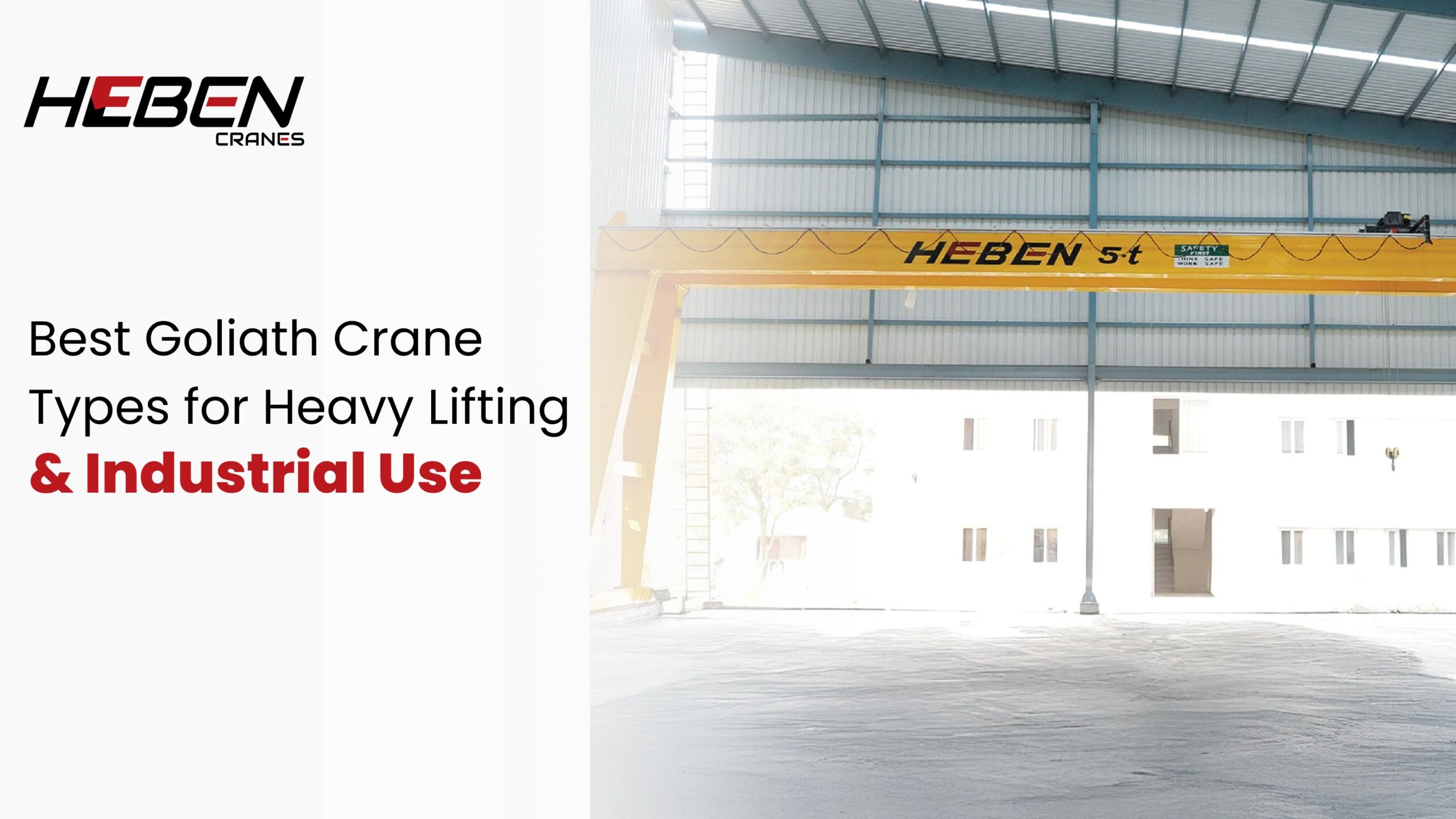
Goliath cranes—also called gantry cranes—feature a bridge supported by two or more legs running on ground-level rails rather than elevated runway beams. This ground-based design eliminates building structure requirements, making them ideal for outdoor yards, construction sites, and facilities where overhead installation proves impractical.
The legs ride on rails installed at ground level, with the bridge spanning between them carrying hoist and trolley systems. Capacities range from 5 tons for light-duty models to over 1,000 tons for specialized heavy-lifting applications in shipbuilding and offshore construction.
Unlike overhead cranes requiring building columns and runway beams, Goliath cranes provide self-supporting structures movable along rail tracks. This mobility and independence from building constraints make them essential for operations handling oversized loads, outdoor material storage, or facilities lacking adequate ceiling structure.

Single Girder Goliath Cranes
Single girder designs handle 5-50 ton capacities economically for medium-duty applications. The simplified structure reduces material costs, installation complexity, and maintenance requirements compared to heavier configurations.
Construction sites, assembly lines, and workshops benefit from single girder flexibility and lower initial investment. The lightweight design suits facilities needing reliable lifting without extreme capacity demands or intensive duty cycles.
Typical applications include material handling in fabrication shops, construction equipment positioning, and moderate-capacity outdoor storage yards. Duty classifications A3-A5 handle light to moderate operational intensities effectively.
Double Girder Goliath Cranes
Double girder configurations dominate heavy industrial applications requiring 50-500+ ton capacities with superior structural stability. Two main girders support the trolley system, distributing loads more effectively and enabling wider spans exceeding 100 feet.
Steel plants, shipyards, and heavy equipment manufacturing rely on double girder strength for intensive operations. The robust construction accommodates duty classes A6-A8 designed for continuous multi-shift operations with high cycle rates.
Maximum lifting heights and precise positioning capabilities make double girder designs essential when handling massive components like ship sections, turbine assemblies, or large structural steel elements. The premium construction cost delivers decades of reliable service under demanding conditions.
Key Advantages
- Load capacity scaling to 500+ tons for specialized applications
- Wider spans without excessive deflection or structural concerns
- Higher lifting heights from hoist positioning atop bridge girders
- Accommodation of tandem hoist systems for ultra-heavy loads
Truss Type Goliath Cranes
Truss structures use triangulated framework reducing weight while maintaining strength across long spans. This design cuts material costs 20-30% compared to solid girder construction and improves wind resistance for outdoor installations.
Precast concrete operations, stone processing yards, and large outdoor material handling areas benefit from truss advantages. The open structure allows wind to pass through rather than creating solid surface resistance that destabilizes conventional designs.
Long spans exceeding 100 feet become economically viable with truss construction. The reduced deadweight minimizes foundation requirements and rail system costs while delivering adequate capacity for most industrial applications under 100 tons.

Container Handling Goliath Cranes
Rail Mounted Gantry (RMG) cranes specialize in container terminal operations, featuring automated positioning systems, spreader attachments, and high stacking capabilities. These cranes stack containers 6-8 high with precision positioning enabling maximum storage density.
Container terminals and intermodal yards require RMG efficiency handling 40-65 moves per hour in intensive operations. Modern designs integrate automation, collision avoidance, and inventory management systems streamlining terminal operations.
Capacities typically range 40-65 tons accommodating multiple stacked containers, with spans matching container storage block widths. The specialized design optimizes container handling efficiency rather than general-purpose lifting flexibility.
Shipbuilding Goliath Cranes
Shipyards demand extreme capacities, precise positioning, and lifting heights exceeding 150 feet for large vessel construction. Specialized Goliath cranes handle ship sections weighing hundreds of tons, positioning them with millimeter accuracy during assembly.
Tandem hoist systems combine multiple hoists for ultra-heavy lifts exceeding single-hoist capacity limits. This redundancy provides safety margins and enables 800-1,000+ ton lifting capability essential for modern shipbuilding and offshore platform construction.
Custom hook blocks, specialized rigging systems, and coordinated multi-crane operations distinguish shipbuilding gantries from standard industrial models. The engineering complexity and capacity requirements make these among the most expensive and sophisticated crane installations globally.
Selection Criteria and Key Features
Load capacity matching actual requirements with 20-30% buffer accommodates dynamic forces, growth needs, and specialized rigging without premature replacement. Span length must cover the working area width plus clearances for leg structures and safety margins.
Duty classification determines structural design, component quality, and service life expectations. A5-A6 classifications suit moderate industrial use, while A7-A8 heavy-duty ratings handle intensive continuous operations in steel mills and shipyards.
Critical Specifications
- Capacity: Current maximum load plus 20-30% buffer for dynamics and growth
- Span: Coverage area width plus structural clearances and safety margins
- Lifting Height: Highest pickup point plus rigging allowance and load dimensions
- Duty Class: A5-A8 based on operational intensity and cycle frequency
- Control Systems: Pendant, wireless remote, or cabin based on operational needs
Environmental considerations include wind exposure for outdoor installations, temperature extremes affecting components and lubrication, and corrosive atmospheres requiring protective coatings and sealed electrical systems.

Applications Across Industries
Steel mills use heavy-duty double girder Goliath cranes moving raw materials, handling work-in-progress, and positioning finished products. Capacities reach 300-500 tons for large structural components and coil handling.
Power plants rely on Goliath cranes for turbine installation, maintenance access, and heavy component handling during construction and major overhauls. Lifting heights exceeding 100 feet accommodate tall equipment assemblies.
Construction sites benefit from portable Goliath crane flexibility positioning precast concrete, structural steel, and heavy equipment without permanent installations. Adjustable height and span configurations adapt to changing project requirements.
Container terminals process thousands of containers daily using automated RMG systems optimizing storage density and throughput. Integration with terminal management systems enables efficient cargo handling and inventory control.
Frequently Asked Questions
Q: What’s the maximum practical span for Goliath cranes?
A: Goliath cranes economically span up to 150 feet with standard girder construction, while truss designs extend practical spans to 200+ feet. Beyond these limits, excessive deflection, wind resistance, and structural weight make alternative lifting solutions more practical. Span selection should match actual coverage needs rather than maximizing theoretical capability.
Q: How do Goliath cranes compare to mobile cranes for heavy lifting?
A: Goliath cranes provide superior positioning precision, higher duty cycle capability, and better long-term economics for repetitive lifting operations. Mobile cranes offer flexibility for varied locations but lack the cycle speed, precision, and operational cost advantages of fixed gantry installations. Facilities with consistent heavy lifting needs benefit from Goliath crane investments despite higher initial costs.
Q: Can Goliath cranes operate in high wind conditions?
A: Standard Goliath cranes operate safely in winds up to 20-25 mph with automatic shutdown systems protecting equipment in higher velocities. Specialized designs with enhanced anchoring, reduced wind profile, and rail clamps extend operational wind limits to 35-40 mph. Outdoor installations require wind monitoring systems and operational protocols ensuring safe shutdown before conditions exceed design limits.
Q: What maintenance requirements do Goliath cranes have?
A: Daily pre-shift inspections verify control function, wire rope condition, and rail cleanliness. Monthly maintenance includes detailed mechanical and electrical system examination, lubrication, and adjustment verification. Annual comprehensive inspections by certified personnel cover structural integrity, load testing, and regulatory compliance documentation. Heavy-duty operations require quarterly professional assessments due to accelerated component wear.
Q: Are used Goliath cranes economical alternatives to new installations?
A: Used Goliath cranes carry risks including unknown maintenance history, component wear assessment challenges, potential obsolete parts, and structural condition uncertainties. Refurbished units from reputable dealers with inspection documentation, critical component replacement, and warranty coverage can provide value with 25-35% savings versus new equipment. However, customization limitations and reduced service life often favor new installations for long-term operations.

Conclusion
Selecting the best Goliath crane type requires matching structural capacity, duty classification, and operational features to specific industrial applications. Double girder configurations dominate heavy-duty operations, truss designs optimize long spans economically, and specialized types serve container terminals and shipyards effectively. The right choice balances immediate capacity needs against long-term operational requirements, environmental challenges, and total ownership costs rather than defaulting to lowest initial price.
Heben Cranes engineers Goliath crane solutions customized for heavy industrial lifting across steel mills, shipyards, container terminals, construction sites, and fabrication facilities. Our technical team evaluates load requirements, site conditions, duty cycle intensity, and workflow patterns to recommend optimal configurations from single girder economy models through ultra-heavy-duty double girder systems exceeding 500-ton capacity. Whether specifying standard gantry cranes, specialized RMG container handlers, or custom shipbuilding installations, we deliver complete solutions including foundation engineering, installation supervision, operator training, and comprehensive after-sales support. Contact Heben Cranes for a detailed site assessment and expert recommendation ensuring your Goliath crane selection matches both immediate lifting demands and long-term operational requirements efficiently and safely.