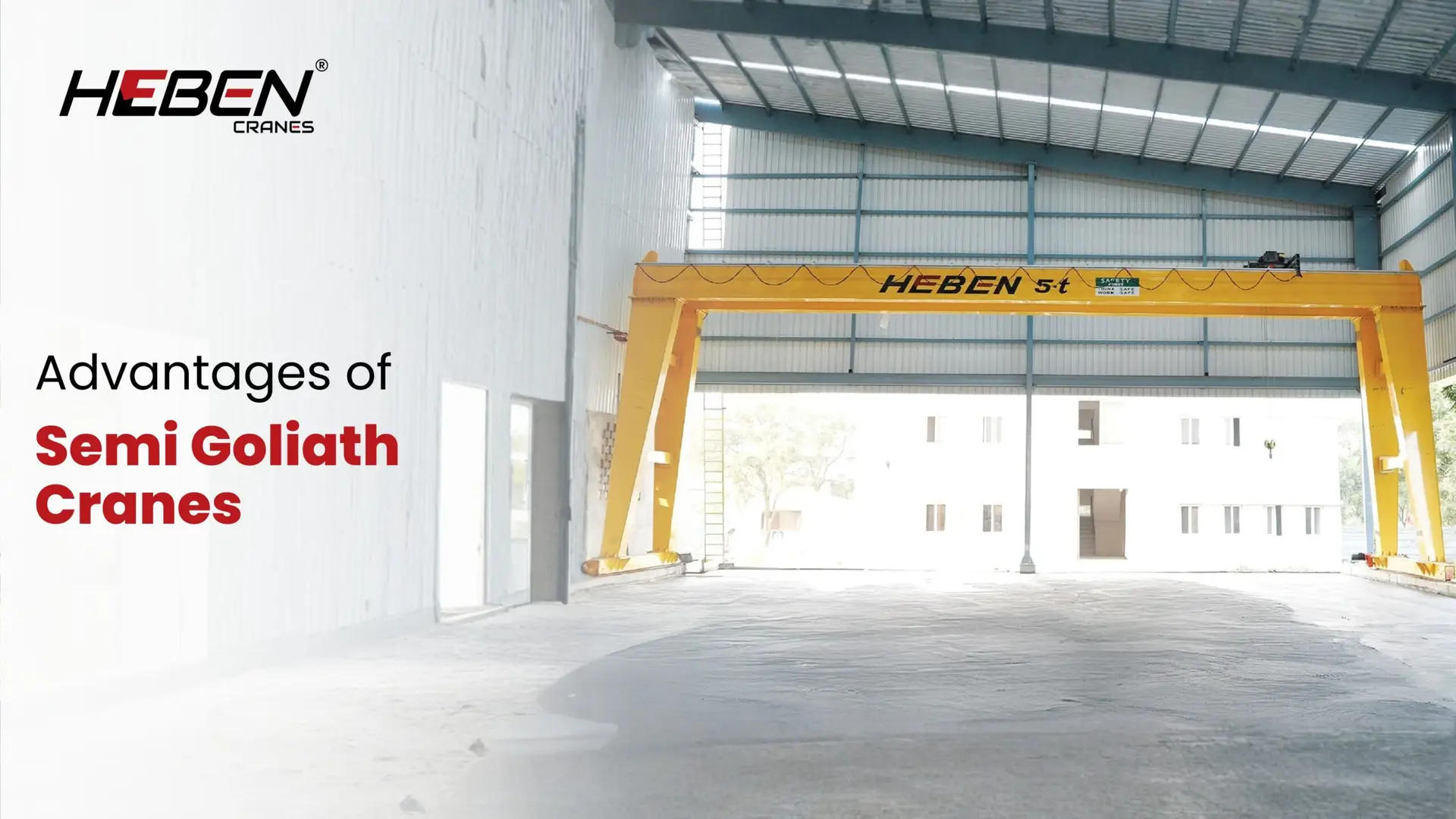
Semi Goliath cranes (also called semi-gantry cranes) combine the strength of full gantry systems with the flexibility of overhead cranes, making them a smart choice for many industrial and construction environments. In this article we explore the key advantages of semi Goliath cranes, explain where they deliver the most value, and offer practical tips for choosing the right configuration for your facility.
What is a Semi Goliath Crane?
A semi Goliath crane is a type of gantry crane where one side rides on a runway or overhead rail while the other side is supported by a mobile leg that runs on the floor. This hybrid design eliminates the need for two elevated runways (required by full gantry cranes) while retaining large lifting capacities and long spans. Semi Goliath cranes are commonly used in warehouses, fabrication shops, shipyards, and outdoor yards where structural or budget constraints prevent installing dual elevated runways.
Primary Advantages
- Lower installation cost. Semi Goliath cranes require only one runway or support structure instead of two, cutting structural steel and civil-work costs. Reduced installation labor and simpler foundations shorten project timelines and lower upfront expenses.
- Space efficiency. Because one side runs on floor rails, semi Goliath cranes work well in facilities without continuous elevated runways. They maximize available vertical clearance and free up overhead space for lighting, ductwork, and other utilities.
- High lifting capacity. These cranes can be engineered for heavy-duty applications, handling large loads typical in steel fabrication, precast concrete handling, and maintenance yards. They offer nearly the same capacity as full gantry systems at a lower installation cost.
- Flexible span and travel. Semi Goliath cranes can cover long spans and travel distances, either along fixed floor rails or combined with runway systems. This flexibility suits linear workflows like loading/unloading, material transfer between production cells, and outdoor stacking.
- Easier retrofit and relocation. Compared with full overhead cranes, semi Goliath cranes are simpler to install in existing buildings and can be relocated more readily if your operation changes. This makes them a cost-effective choice for growing businesses.
- Reduced structural modifications. Facilities that lack the structural depth or bearing capacity to support a second runway benefit from the semi Goliath design, which minimizes building modifications and preserves architectural integrity.
- Improved safety and ergonomics. Modern semi Goliath cranes include electronic controls, anti-collision systems, and variable-frequency drives that enable smooth lifts and precise positioning, reducing the risk of material damage and operator fatigue.
Where Semi Goliath Cranes Deliver Most Value
- Warehouses and distribution centers: For handling pallets, heavy machinery, or long materials, semi Goliath cranes offer scalable capacity without major overhead infrastructure.
- Fabrication and steel shops: They provide the heavy lift capacity and span control needed for welding bays, assembly lines, and load-out areas.
- Outdoor yards and storage yards: Semi Goliath cranes perform well in open yards where installing continuous runway rails is impractical.
- Maintenance and repair shops: The ability to position a crane close to equipment and then relocate it makes semi Goliath cranes ideal for vehicle or equipment maintenance bays.
Design and Configuration Considerations
- Load capacity and span. Specify maximum rated load and required span early. Over-engineering increases cost; underestimating load risks safety and downtime.
- Rail and foundation type. Choose between embedded steel rails with reinforced concrete foundations or portable track systems depending on permanence and ground conditions.
- Travel and speed requirements. Consider variable-frequency drives for smooth acceleration and deceleration, which improve precision and reduce structural stress.
- Environmental protection. For outdoor or corrosive environments, select weatherproofing, corrosion-resistant materials, and suitable coatings to extend service life.
- Automation and controls. Options range from pendant control to wireless remote and cab-operated systems. Integrate safety controls like overload protection and anti-sway for precision lifting.