
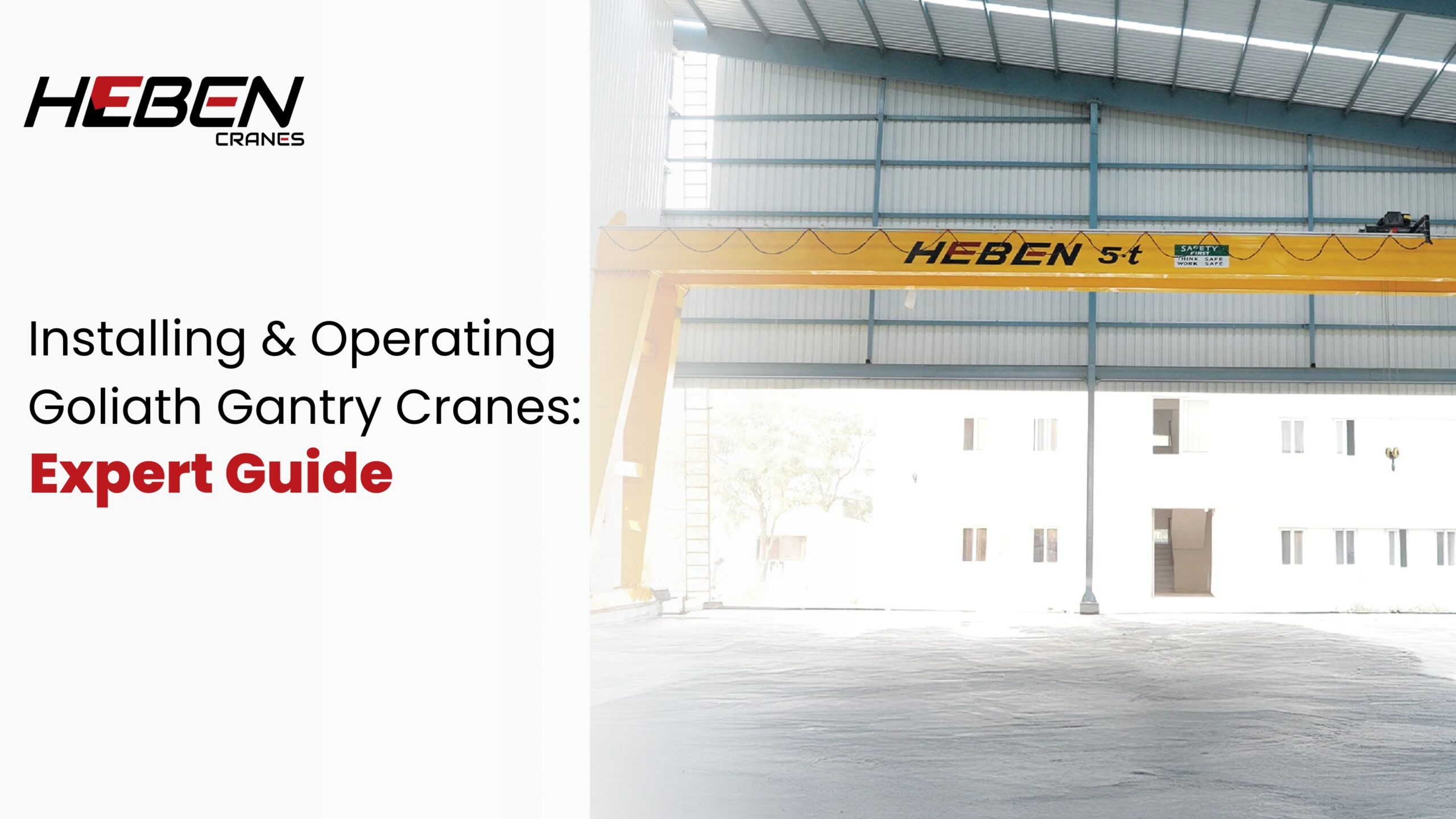
Most industrial operations lose hours and money during crane installation because they skip the groundwork. A misaligned track or poorly tested hoist can turn a productivity tool into a liability. Goliath gantry cranes handle heavy loads across outdoor yards, but they demand precise setup and disciplined operation. This guide walks you through site prep, installation steps, commissioning tests, daily operation protocols, and maintenance routines that keep your crane running for decades. Follow these practices and you’ll cut downtime, extend equipment life, and protect your crew.
Pre-Installation Planning
Start with a site evaluation before the crane arrives. Check ground stability and load-bearing capacity where the rails will sit. Soft or uneven soil leads to track misalignment and premature wear.
Map out the delivery route. Goliath cranes arrive in large components that need clear access paths. Remove obstacles, measure gate widths, and confirm turning radii for transport vehicles.
Review local regulations and safety codes. Many regions require permits for crane installation and operation. Secure approvals early to avoid project delays.

Foundation and Track Installation
Lay the foundation using reinforced concrete pads designed to support the crane’s weight plus maximum load capacity. The foundation must cure fully before you install rails.
Install the tracks with attention to three critical factors:
- Straightness: Use laser alignment tools to keep rails perfectly straight over the entire run length
- Parallelism: Measure rail-to-rail distance at multiple points; variation causes wheel binding and uneven wear
- Leveling: Check elevation differences with precision instruments; even small deviations create stress on the structure
Secure rails with anchor bolts and verify torque specifications. Loose fasteners lead to track movement under load.
Main Structure Assembly
Assemble the base frame and outriggers first. These support legs anchor the entire structure and must be square and plumb before you proceed.
Lift the main beams into position using mobile cranes or mast lifting equipment. Double girder models require synchronized lifts to prevent torsional stress during placement.
Connect cross beams and brace points according to the manufacturer’s bolt patterns. Tighten all connections progressively in a cross pattern to distribute stress evenly.
Conduct alignment checks after each major assembly step. Misalignment at this stage compounds into bigger problems later.
Hoisting Mechanism and Electrical Installation
Mount the trolley and hoist assembly on the main beam. Confirm that trolley wheels run smoothly along the beam without binding or excessive play.
Install wire rope according to proper reeving diagrams. Inspect each rope for kinks, broken strands, or manufacturing defects before threading. A single damaged rope compromises the entire lifting system.
Wire the electrical system starting from the power supply connection. Run cables through designated pathways and secure them away from moving parts. Install control panels in weather-protected locations with clear operator sightlines.
Ground all electrical components properly. Poor grounding creates shock hazards and damages sensitive control electronics. Test insulation resistance before energizing the system.

Testing and Commissioning
Run functional tests on all movements: trolley travel, bridge travel, and hoisting. Listen for unusual noises that indicate misalignment or loose components.
Perform load testing at 125% of the rated capacity. This reveals structural weaknesses before the crane enters regular service. Check all safety switches, limit switches, and emergency stop functions during this test.
Inspect transmission mechanisms under load. Gears should mesh smoothly without excessive heat or vibration.
Document all test results. This baseline data helps you spot deterioration during future inspections.
Daily Operation Protocols
Complete a pre-operation inspection every shift. Walk the track length and look for obstructions, check wire rope condition, test all controls at no-load, and verify that safety devices respond correctly.
Position loads carefully over the center of gravity. Off-center picks create side loads that stress the structure and reduce stability. Use tag lines to control load swing during movement.
Move loads smoothly without sudden starts or stops. Abrupt movements amplify dynamic forces beyond the crane’s design limits.
Never exceed the rated capacity. Even short-duration overloads cause permanent damage to structural members and hoisting components.
Routine Maintenance Schedule
Lubricate all moving parts weekly using manufacturer-specified greases and oils. Pay special attention to wheel bearings, gears, and wire rope connections.
Inspect wire ropes monthly for wear, corrosion, and broken wires. Replace ropes when they show 10% wire breakage in one lay length or visible diameter reduction.
Check electrical connections quarterly. Look for loose terminals, worn insulation, and signs of overheating. Clean contact surfaces and retighten connections as needed.
Schedule annual mechanical inspections by qualified technicians. They catch problems that daily operators might miss.
Troubleshooting Common Issues
Uneven trolley movement usually stems from misaligned rails or worn wheels. Check track straightness and measure wheel diameter at multiple points around the circumference.
Excessive rope wear indicates incorrect reeving, misaligned sheaves, or contamination. Inspect the entire rope path and correct any contact points where the rope rubs against structures.
Control system glitches often trace back to loose connections or moisture infiltration. Seal all electrical enclosures and use dielectric grease on exposed terminals.

FAQs
Q: How long does Goliath crane installation typically take?
A: Most installations require 5 to 10 days depending on crane size and site conditions. Foundation curing adds another 7 to 14 days before you can begin assembly. Complex sites with difficult access or custom features may extend the timeline.
Q: What’s the difference between Goliath and semi-Goliath cranes?
A: Goliath cranes run on two ground-level rails with legs on both sides. Semi-Goliath models have one elevated rail and one ground rail, useful when you need to conserve floor space on one side. Operating principles remain similar but the asymmetric design changes load distribution.
Q: How often should I replace wire ropes?
A: Replace wire ropes based on inspection findings, not time intervals. Look for broken wires, kinking, corrosion, or diameter reduction. Heavy-duty operations may need replacement every 6 to 18 months, while lighter use can extend rope life beyond two years.
Q: Can I operate a Goliath crane in high winds?
A: Most Goliath cranes have wind speed limits between 20 and 30 mph. Operating beyond these limits creates dangerous load swings and structural stress. Install wind speed monitors and establish shutdown protocols for your site.
Q: What operator certifications are required?
A: Requirements vary by location, but most jurisdictions mandate formal training and certification for crane operators. Training covers load calculations, safety procedures, emergency responses, and equipment-specific controls. Recertification is typically required every three to five years.
Take the Next Step
Proper installation and operation turn a Goliath crane into a long-term asset rather than a maintenance burden. Review your current practices against this guide and identify gaps in your procedures. Start with track alignment and daily inspection routines—these two areas drive most performance issues.
Heben Cranes delivers Goliath gantry solutions built for demanding industrial environments. Our cranes combine robust engineering with operator-friendly controls that simplify daily use. We support you from site planning through installation and provide ongoing technical guidance that keeps your operation running. Visit hebencranes.com to explore our Goliath crane range and connect with our engineering team about your specific lifting requirements.