
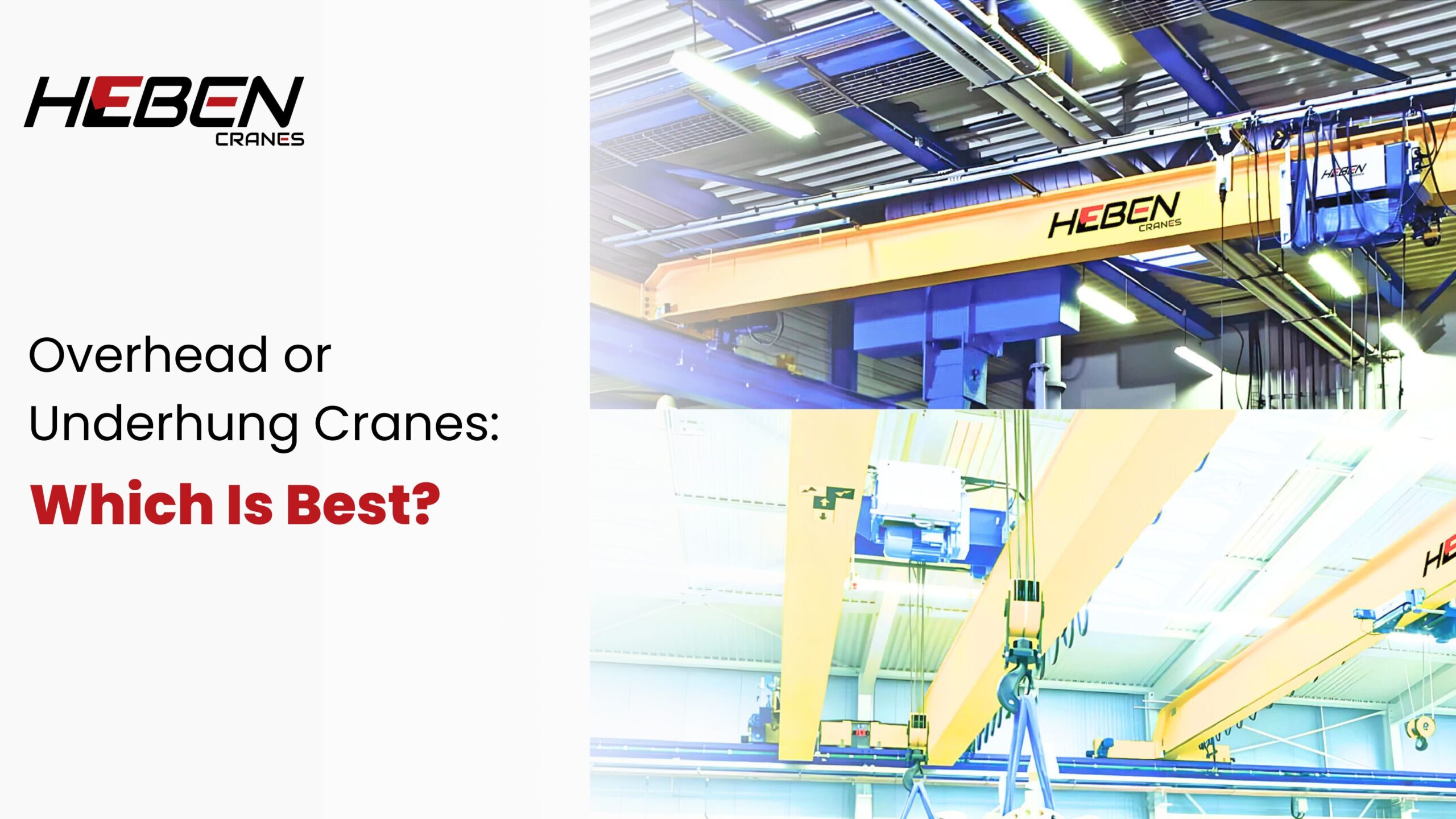
Choosing between overhead (top-running) and underhung (under-running) cranes confuses many facility managers because both systems appear to accomplish the same task—lifting and moving loads. Yet picking the wrong configuration costs thousands in unnecessary structural modifications, limits operational capacity, or creates maintenance headaches lasting decades. Here’s the surprising reality: most facilities choose based on upfront price alone, ignoring factors like headroom optimization, floor space utilization, and long-term service requirements that determine total ownership value.
This guide examines how each crane type operates, their capacity and structural differences, key advantages and limitations, and the critical decision factors ensuring you select the optimal configuration for your facility’s specific needs.
Basic Design and Operating Differences
Overhead cranes ride on rails mounted atop runway beams, with end trucks carrying the bridge along the top of the support structure. The hoist and trolley can run beneath the bridge on single girder designs or on top of the bridge on double girder configurations, maximizing hook height.
Underhung cranes suspend from the bottom flange of runway beams, traveling underneath the support structure. The entire crane system hangs from the runway, with wheels moving along the lower beam flange rather than riding on top-mounted rails.
This fundamental structural difference affects everything from building requirements to maintenance procedures. Overhead systems require stronger runway beams capable of supporting rail systems and crane loads from above. Underhung systems distribute weight differently, often allowing integration with existing ceiling structures without major reinforcement.
Capacity and Lifting Height Comparison
Load capacity represents the clearest distinction between configurations. Overhead cranes handle anywhere from 1/4-ton to over 400 tons with no practical upper limit. They scale from light-duty applications through the heaviest industrial lifting requirements.
Underhung cranes typically max out at 10-15 tons capacity, though some specialized designs push slightly higher. The suspended design and lighter structural components limit practical capacity for most applications to the light-to-medium duty range.
Capacity Guidelines
- Overhead Single Girder: 1/4-ton to 20 tons, spans under 65 feet, light to medium duty
- Overhead Double Girder: 20-400+ tons, spans over 65 feet, medium to heavy duty
- Underhung Systems: 1/4-ton to 15 tons, spans under 65 feet, light to medium duty
Hook height differences matter more than most buyers expect. Overhead cranes—particularly double girder configurations—provide 3-6 feet additional lifting height because the hoist runs atop the bridge girders. This extra height proves critical in facilities with limited headroom or requiring maximum vertical reach.
Underhung systems sacrifice lifting height because the bridge and hoist hang beneath the runway beams. Facilities with abundant ceiling clearance handle this limitation easily, but space-constrained operations face real constraints.
Structural and Installation Requirements
Building structure capacity determines which configuration works without expensive reinforcement. Overhead cranes demand robust runway beam support capable of handling concentrated loads from rail-mounted crane travel. Older facilities or lighter construction often require structural upgrades adding significant cost.
Underhung cranes frequently integrate with existing ceiling trusses or roof structures because the suspended design distributes loads differently. This compatibility reduces or eliminates structural modification expenses in many installations.
Freestanding support becomes necessary when building structures can’t accommodate crane loads. Overhead cranes use columns supporting runway beams and rails. Underhung systems similarly require columns when ceiling attachment proves impractical. Both freestanding configurations consume valuable floor space that might otherwise support production or storage.
Here’s the insight most specifications miss: if your building can’t support a 10-ton overhead crane, two 5-ton underhung cranes might provide equivalent lifting capacity without structural reinforcement. This creative approach avoids construction costs while maintaining operational capability.
Advantages of Overhead Cranes
No capacity limitations represent the primary advantage—overhead configurations handle any lifting requirement from fractional tons through hundreds of tons. This scalability accommodates current needs and future growth without replacement.
Easier maintenance and service access stems from the top-mounted design. Wheels, rails, and drive components sit accessible on top of runway beams rather than requiring suspension from below. Service and alignment procedures complete faster with less downtime.
Maximum hook height and lifting reach suit facilities needing every available inch of vertical clearance. Double girder designs particularly excel when headroom optimization determines operational capability.
Higher speeds for trolley and bridge movement accelerate cycle times in high-volume operations. The robust construction supports faster travel without structural concerns limiting performance.
Advantages of Underhung Cranes
Floor space maximization happens when underhung cranes mount to existing ceiling structures, eliminating columns that would otherwise consume production area. Facilities where every square foot counts gain significant value from this space efficiency.
Better side approach and coverage across building width results from the suspended design. Underhung configurations can position loads closer to walls and edges than overhead systems where runway structure creates clearance requirements.
Fewer tracking problems occur because underhung cranes bolt directly to I-beams secured to building structure. This attachment limits movement and reduces rail misalignment issues that top-running systems experience more frequently.
Lower initial costs in facilities with suitable ceiling structure make underhung systems attractive for budget-conscious operations. Eliminating runway support columns and using lighter components reduces material and installation expenses.
Service and Maintenance Considerations
Overhead crane rail alignment requires more frequent checking but proves easier to perform. Technicians access rails and wheels directly without complex rigging. Service completes quickly with minimal downtime.
Underhung crane alignment happens less frequently due to the stable I-beam attachment. However, when service becomes necessary, suspension and rigging requirements extend downtime significantly compared to overhead systems. The complexity of accessing suspended components increases both time and cost.
Parts availability favors overhead configurations, particularly for common capacities and spans. Standardization and market dominance mean replacement components ship faster and cost less than specialized underhung parts.
Decision Factors for Selection
Load capacity requirements drive the fundamental choice. Operations regularly handling over 15 tons need overhead configurations. Lighter-duty applications gain flexibility choosing based on other factors.
Existing building structure and ceiling height determine practical options. Limited headroom favors overhead cranes maximizing hook height. Facilities with robust ceiling structures but restricted floor space benefit from underhung designs.
Budget constraints including installation costs matter, but smart buyers evaluate total ownership expenses rather than initial price alone. Overhead systems may cost more upfront but deliver lower maintenance expenses and greater capacity growth potential.
Operational workflow and space requirements complete the analysis. Facilities needing maximum floor space for production, optimal side approach, or coverage to building edges should seriously consider underhung configurations.
Frequently Asked Questions
Q: Can underhung cranes handle heavy-duty cycle operations?
A: Underhung cranes suit light to medium duty applications but struggle with intensive heavy-duty cycles. The lighter structural design and capacity limitations (typically under 15 tons) restrict use in continuous high-volume operations. Facilities requiring heavy-duty or severe-duty classifications should select overhead configurations offering superior structural capacity and durability.
Q: Which configuration costs less to install and operate long-term?
A: Underhung cranes typically have lower initial costs when ceiling structure supports the load, eliminating expensive runway columns. However, overhead cranes often deliver better long-term value through easier maintenance, wider parts availability, and capacity for operational growth. Total cost of ownership depends on specific facility conditions, usage intensity, and lifecycle requirements beyond initial installation expenses.
Q: How much additional hook height does an overhead crane provide?
A: Overhead double girder cranes typically provide 3-6 feet additional hook height compared to underhung systems because the hoist runs atop the bridge girders rather than hanging beneath runway beams. This difference proves critical in facilities with limited headroom or applications requiring maximum vertical reach. Single girder overhead cranes offer less advantage since the hoist hangs beneath the bridge.
Q: Do underhung cranes really have fewer alignment problems?
A: Yes, underhung cranes experience fewer tracking and alignment issues because they bolt directly to I-beams secured to building structure, limiting movement and preventing rail misalignment. However, when alignment service becomes necessary, the required downtime exceeds overhead crane service due to suspension and rigging complexity. Overhead systems need more frequent alignment checks but complete service faster and easier.
Q: Can you convert between overhead and underhung configurations later?
A: Converting between configurations requires substantial structural modifications essentially equivalent to new installation. The fundamental difference in how loads attach to building structure—rails on top versus suspension from bottom flanges—makes conversion impractical in most cases. Select the appropriate configuration initially based on comprehensive evaluation of capacity needs, facility constraints, and operational requirements.
Conclusion
Overhead and underhung cranes serve different operational profiles determined by capacity requirements, facility structure, headroom constraints, and space utilization priorities. Overhead configurations excel in heavy-duty applications requiring maximum capacity, lifting height, and scalability. Underhung systems optimize floor space, reduce structural costs, and suit lighter-duty operations where capacity under 15 tons meets requirements. The right choice balances technical requirements against facility realities and long-term operational needs rather than defaulting to lowest initial price.
Heben Cranes engineers both overhead and underhung crane systems customized to specific facility requirements and operational demands. Our technical team evaluates building structure, capacity needs, headroom constraints, workflow requirements, and budget parameters to recommend the optimal configuration. Whether you need heavy-duty overhead cranes handling hundreds of tons or space-efficient underhung systems maximizing floor utilization, we deliver solutions engineered for reliability, performance, and long-term value. Contact Heben Cranes for a comprehensive facility assessment and expert recommendation ensuring you select the crane configuration that best serves your material handling needs.