
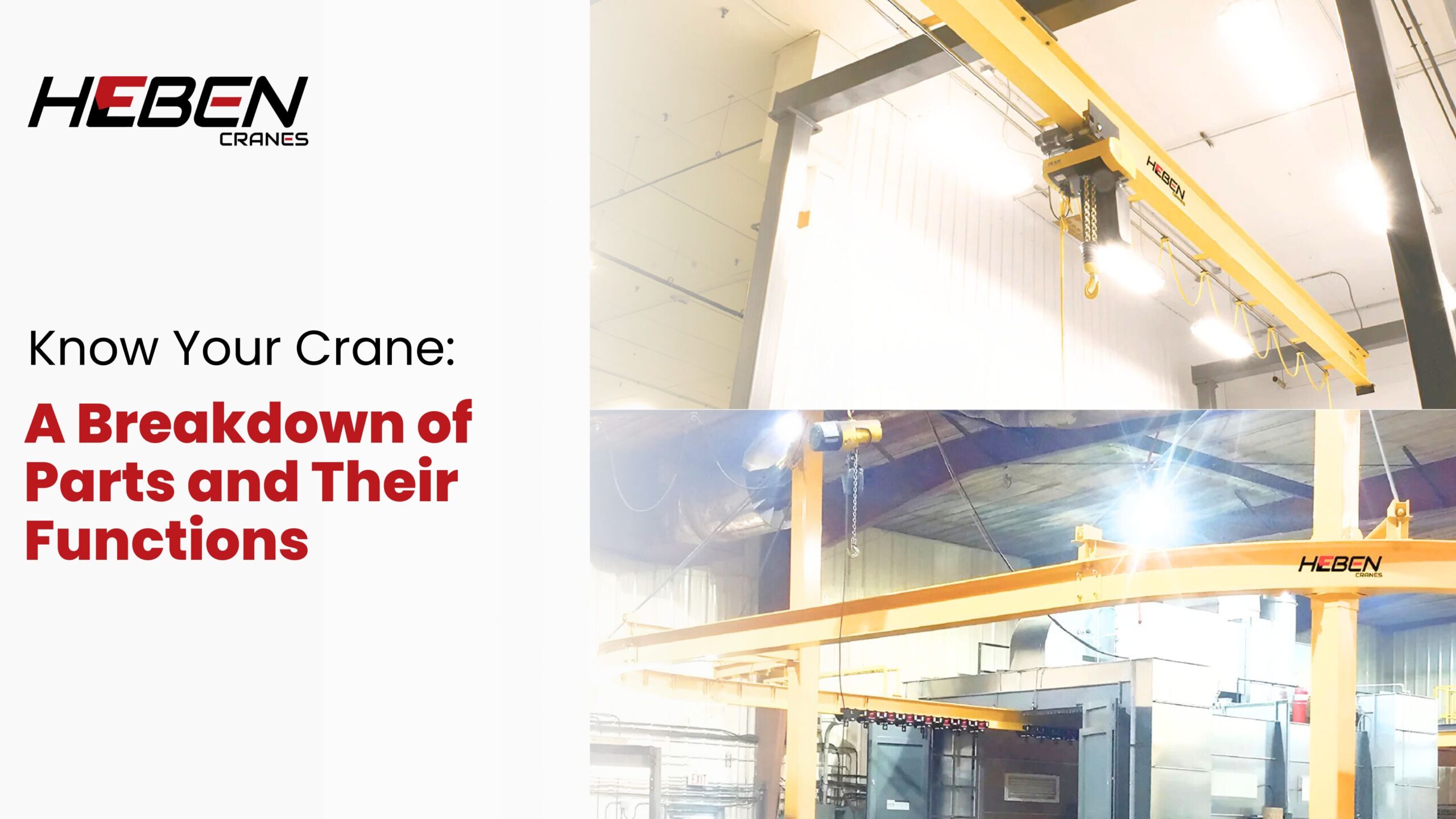
Understanding your crane’s anatomy is not just an exercise in curiosity—it’s a fundamental step toward operational excellence, safety, and cost efficiency. When you know the role each component plays, you’re empowered to make smarter purchasing decisions, perfect maintenance strategies, and troubleshoot issues before they escalate.
Heben Crane, a global innovator in EOT crane manufacturing, embraces this philosophy. Their cranes are engineered with precision in every component—delivering reliability and serviceability that set industry standards. This guide breaks down the critical parts of a gantry crane, highlighting their functions and why mastering these details empowers your entire operation.
The Structural Backbone: Bridge, Girders, and End Trucks
At the heart of every gantry crane lies its structural framework—the bridge, girders, and end trucks—that bear and transfer loads with unwavering stability.
- Bridge/Main Girder: Serves as the primary horizontal beam spanning the crane’s width. Robustly engineered, it supports the trolley and heavy lifting forces with precision. In double girder cranes, this component doubles in strength and operational capacity, serving environments with heavier demands.
- Girders: These longitudinal elements distribute weight evenly across the crane’s span, ensuring no section bears excessive stress. They’re key in maintaining structural integrity under continuous heavy lifting.
- End Trucks: Located at the ends of the girders, these wheel assemblies traverse crane runways or rails. Their design ensures smooth, reliable horizontal travel while supporting the enormous weight of raised loads.
The Lifting Engine: Hoist and Trolley Assembly
A crane’s lifting prowess centers on its hoist and trolley mechanisms:
- Hoist: This is the powerhouse lifting the load vertically. Equipped with an electric motor, gearbox, drum, wire rope or chain, and brakes, the hoist directly influences lift capacity and precision. Wire rope hoists dominate heavy-duty needs due to strength and durability, while chain hoists cater to lighter, more repetitive tasks.
- Trolley: The hoist’s horizontal mover, the trolley travels along the bridge girders. Precise positioning here translates to efficiency and safety during load handling, with trolleys designed as single or double units depending on operational demands.
Movement and Power Transmission: Drive Systems and Wheels
Crane mobility is enabled by intricate drive and wheel systems:
- Drive Motors and Gearboxes: Power the horizontal movements over the runway and vertical lift. More advanced cranes now use variable frequency drives (VFD) for smoother, energy-efficient motion control.
- Wheels and Bearings: Designed to withstand intense loads, these components ensure stable crane travel. Anti-friction bearings and wheel guards minimize wear and operational noise.
- Power Supply: Busbar systems or festoon cable reels supply uninterrupted power, vital for safe, continuous crane operation.
Control Systems and Operator Interfaces
Safety and precision hinge on robust control systems:
- Control Panels and Pendants: Lightweight, ergonomic controls grant operators fluid command over all crane movements.
- Radio Remotes: Offer distance operation enhancing operator visibility and safety.
- Limit Switches and Safety Interlocks: Automatically restrict crane movement within safe zones, preventing collisions and overloading.
- Smart Monitoring: Emerging digital interfaces enable real-time equipment status feedback and predictive alerts.
Safety and Stability Components: Brakes, Bumpers, Counterweights
Ensuring steady, reliable operation requires sophisticated safety elements:
- Brakes: Multi-tiered braking systems guarantee immediate/stable stops, even under heavy loads, critical in emergencies.
- Bumpers/End Stops: Installed along crane runways, these prevent the gantry or trolley from overshooting track limits, averting structural damage.
- Counterweights and Outriggers: Balance heavy loads and counteract tipping forces, enhancing stability during crane operation.
Specialized Crane Parts: Hooks, Wire Ropes, Sheaves, and Load Blocks
These components directly engage the loads you lift—their quality and maintenance are non-negotiable:
- Hooks: The fail-safe connector between crane and cargo. Crafted from high-strength alloys with safety latches, hooks must be regularly inspected for deformation or wear.
- Wire Ropes: Wire ropes transmit lifting forces; their specifications—strand configuration, diameter, tensile strength—must align perfectly with load demands. Daily inspections for fraying, kinking, or corrosion prevent catastrophic failure.
- Sheaves and Load Blocks: Sheaves guide the wire ropes over drums and hoists, reducing friction. Load blocks contain the hook and sheave assemblies that carry the load, essential for smooth lifting dynamics.
Maintenance and Inspection Components: Access Points, Lubrication Systems
Operational uptime depends on design that eases inspection and care:
- Access Ladders and Platforms: Facilitate safe, routine maintenance across all crane zones.
- Lubrication Points: Strategically placed grease fittings enable targeted care of bearings, gears, and wire ropes, minimizing wear and extending lifespan.
- Inspection Windows and Indicator Gauges: Allow quick visual checks for oil levels, component integrity, and alignment.
Heben Crane’s inspection-friendly designs incorporate these features, reducing downtime and enhancing the speed and accuracy of maintenance activities.
Conclusion: Mastering Your Crane Components for Smarter Operations
The sum of a crane’s parts defines the performance, safety, and longevity of your lifting operations. Deep knowledge of each component empowers smarter decision-making—from procurement through maintenance to troubleshooting.
With decades at the innovation forefront, Heben Crane crafts every component to the highest standards of reliability, precision, and serviceability. Their cranes are more than machines; they’re investments engineered to deliver sustained operational excellence.
Understanding your crane isn’t just knowing parts—it’s owning the control that keeps your operation lifting safely, efficiently, and profitably.
Ready to elevate your operation? Discover how Heben Crane’s expertly designed cranes and service support can transform your lifting capabilities.