
What is a Goliath and Gantry Crane? Definition and Usage
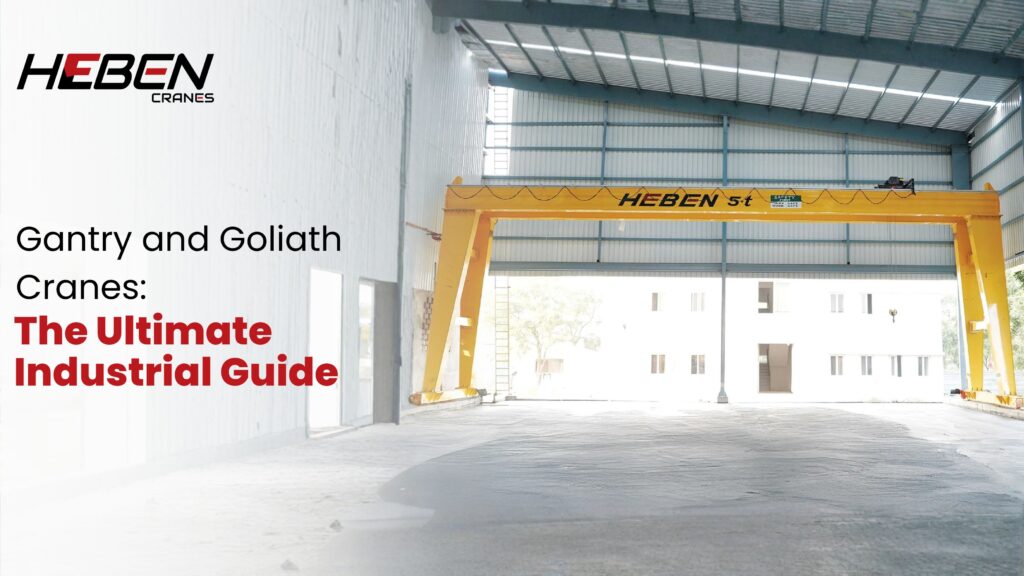
Introduction Most buyers use “gantry crane” and “Goliath crane” as if they mean the same thing. They don’t, and the confusion leads to misspecified equipment, undersized capacity, or structural overkill for the actual job. Every Goliath crane is a gantry crane, but not every gantry crane is a Goliath. The distinction lies in scale, duty, and deployment context. This guide defines both types clearly, covers structural design, load ranges, typical applications, and the selection criteria that determine which configuration fits your lifting requirement—whether you’re outfitting a fabrication shop or a shipyard. What is a Gantry Crane? A gantry crane is an overhead lifting system that carries its own support structure. Two freestanding legs support a horizontal bridge beam. The hoist and trolley travel along the beam, and the entire assembly moves on ground-level rails or wheels. The defining feature is structural independence. Gantry cranes don’t attach to building roofs or walls. They operate where building-mounted overhead cranes cannot—outdoors, in open yards, or inside facilities without adequate roof structure. Capacities range widely. Small portable gantries handle 0.5-5 tons in workshops and maintenance areas. Large industrial models lift 50-100 tons across spans of 10-35 meters. What is a Goliath Crane? A Goliath crane is a heavy-duty, large-scale gantry crane designed for the most demanding outdoor applications. The term describes scale and capability, not a fundamentally different mechanism. Goliath cranes run on fixed ground-level rails. Their legs are robust box-section or truss structures, engineered for spans reaching 50+ meters and capacities extending to 1,000 tons or more. The scale creates operational realities that standard gantry cranes don’t face. Wind loading, foundation depth, rail gauge, and electrical infrastructure all require specialist engineering at Goliath scale. Here is the counterintuitive reality: Goliath cranes often cost less per ton of capacity than smaller gantry cranes because of economies of scale in structure and drive systems. Key Design Features Both crane types share core structural logic but differ in execution: Leg configurations: A-frame legs: standard for balanced, symmetrical loads Box-section legs: heavy-duty, used on Goliath designs for rigidity Adjustable-height legs: portable gantry variants for uneven terrain Beam types: Single girder: standard for gantry cranes up to 20 tons Double girder: required for Goliath cranes and heavy-duty gantry above 20 tons Truss girder: lightweight option for lower capacities and longer spans Travel systems: Rail-mounted: fixed path, high capacity, precise positioning Rubber-tired: mobile, suited to yards and sites without fixed rails Portal design: fixed foundations for permanent heavy installations Types and Classifications Full Gantry Cranes Both legs travel on parallel rails or wheels. Complete structural independence from any building. Semi-Gantry Cranes One side runs on a building runway beam. The other travels on a ground rail. Suits facilities with partial overhead support. Portable Gantry Cranes Wheeled or caster-mounted units for 0.5-5 ton applications. Repositionable without infrastructure. Suited to maintenance bays, fabrication shops, and temporary sites. Rail-Mounted Goliath Cranes Permanent ground-rail installations handling 50 tons upward. Standard in shipyards, steel mills, and container terminals. Technical Specifications Capacity ranges differ substantially between types: Portable gantry: 0.5-5 tons Industrial gantry: 5-100 tons Goliath cranes: 50-1,000+ tons Span lengths follow the same pattern. Portable units span 3-8 meters. Industrial gantry systems cover 10-35 meters. Goliath cranes reach 50+ meters in shipyard and port configurations. Lifting heights range from 3 meters on workshop portables to 30+ meters on heavy Goliath installations. Travel speeds typically run 5-30 meters per minute for gantry cranes, with Goliath cranes operating at controlled lower speeds due to mass. Applications and Industry Usage Gantry cranes serve a broad application range: Construction sites: steel erection, precast concrete placement Warehouses: loading dock operations, storage retrieval Manufacturing: equipment maintenance, component assembly Power plants: turbine installation and maintenance Goliath cranes concentrate in high-capacity permanent installations: Shipyards: hull assembly, outfitting, launching operations Steel mills: slab handling, coil movement across large yards Container terminals: inter-yard transfer and stack operations Rail yards: heavy rolling stock maintenance and assembly The 50-ton threshold is a practical dividing line. Below it, standard gantry design handles most requirements. Above it, Goliath engineering becomes structurally and economically rational. Advantages and Limitations Advantages of both types: No building structure required Wide coverage area without fixed overhead infrastructure Scalable from light workshop use to heavy industrial deployment Suitable for indoor and outdoor environments Limitations to plan for: Ground preparation for rails adds cost and time Wind loading in outdoor installations requires anchoring systems Longer spans reduce effective capacity due to structural deflection Goliath cranes require specialist foundation engineering and electrical infrastructure Selection Guide Four factors determine the right choice: Load requirement: Under 20 tons—standard gantry. Above 50 tons—Goliath design. Between 20-50 tons, span and duty cycle decide. Mobility need: Frequent repositioning favors portable or wheeled gantry. Fixed heavy-duty operations favor rail-mounted Goliath. Span coverage: Under 25 meters, standard gantry handles it. Beyond 30 meters, Goliath structural engineering becomes necessary. Environment: Indoor workshops suit portable and semi-gantry designs. Outdoor yards and ports suit rail-mounted Goliath configurations. FAQs Are all Goliath cranes gantry cranes? Yes. Goliath is a classification of gantry crane, not a separate crane family. The term describes high-capacity, large-span, heavy-duty gantry systems used in demanding outdoor and industrial environments. What foundation does a Goliath crane need? Rail-mounted Goliath cranes require reinforced concrete rail beams embedded to depths of 1-3 meters depending on soil conditions and load. Foundation engineering is a significant portion of total project cost. Can gantry cranes operate in wind? Operating limits typically run 20-28 km/h. Non-operating storm anchoring systems resist winds up to 150 km/h. Exposed outdoor installations need wind monitoring systems and automatic rail clamps. What’s the typical service life for these cranes? Standard industrial gantry cranes deliver 15-20 years with proper maintenance. Goliath cranes, built to heavier duty standards with more robust components, commonly reach 25-35 year service lives. Can I convert a standard gantry to a Goliath configuration later? Not practically. The leg structures, rail systems, foundations, and drive systems differ substantially. Capacity upgrades beyond the original design envelope require full replacement. Conclusion Gantry cranes provide
Gantry and Goliath Cranes: The Ultimate Industrial Guide
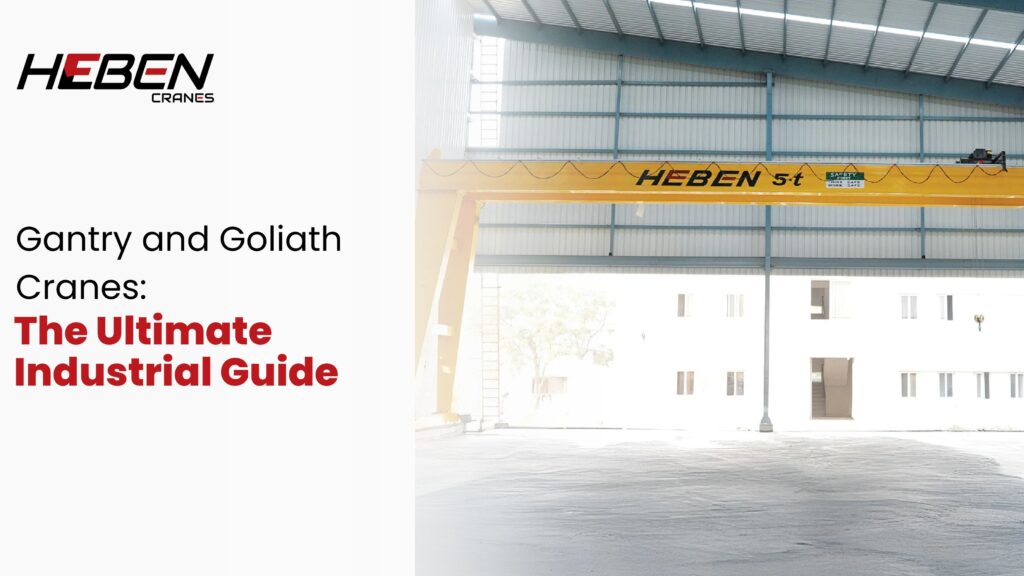
Introduction Your facility needs overhead lifting but lacks the building structure to support bridge cranes. Outdoor yards, storage areas, and bay extensions face this challenge when columns can’t handle runway loads or don’t exist at all. Gantry and Goliath cranes solve this by running on ground-level rails with independent leg support. These systems deliver heavy-duty lifting capability without building-mounted infrastructure. This guide covers operational mechanics, crane types, component specifications, capacity ranges, industrial applications, selection criteria, and maintenance requirements to match the right gantry configuration to your material handling patterns and site constraints. How Gantry and Goliath Cranes Work Gantry cranes use legs that travel on ground rails instead of building-mounted runways. The bridge structure spans between these legs, with a hoist trolley moving along the girder. This creates three-dimensional positioning: vertical lift through the hoist, lateral movement via trolley travel, and longitudinal coverage through gantry travel along the rails. The load path runs from ground foundations through legs to the bridge girder, then down to the hoist and hook. This ground-based support eliminates dependence on building columns and roof structure. The crane stands independently, making it suitable for outdoor yards and facilities without adequate overhead support. Goliath cranes are large-capacity gantry systems, typically double girder designs handling 50-800 tons. The terminology overlaps—what one facility calls a Goliath crane, another terms a heavy-duty gantry. Function and configuration matter more than naming conventions. Types of Gantry and Goliath Cranes Full gantry cranes have legs on both sides traveling on parallel ground rails. This design works best for outdoor yards, storage areas, and facilities where complete independence from building structure makes sense. Semi-gantry cranes run one leg on ground rail while the other side travels on an elevated building-mounted runway. This hybrid reduces cost and floor obstruction when partial building support exists. The configuration suits facilities with adequate structure on one side but not the other. Single girder gantry cranes use one main beam for loads up to 20 tons. Double girder configurations provide the structural capacity for 20-800 ton lifts across longer spans. The choice depends on load requirements and span distance, not preference. Portable gantry cranes are lightweight aluminum or steel frames on wheels or casters. Capacities range from 500kg to 10 tons with adjustable heights. These units relocate easily between work areas for flexible coverage. Key Components The gantry structure consists of vertical legs, horizontal cross beams connecting leg tops, and main girder(s) spanning between. Legs contain drive motors, wheels, and braking systems for travel along rails. Structural design must withstand vertical loads and horizontal forces from acceleration and braking. Hoisting mechanisms include wire rope hoists for heavy-duty applications and chain hoists for lighter loads. The trolley system mounts to the girder and provides cross-travel motion. Drive systems range from manual chain operation to electric motors with variable frequency drives. End trucks house the wheel assemblies, bearings, and drive components. These units transfer crane weight and operational loads to the rails. Wheel design affects tracking performance and maintenance requirements. Control systems vary from pendant push buttons to radio remotes to full operator cabins. Safety devices include travel limit switches, overload protection, emergency stops, and anti-collision systems for multi-crane environments. Technical Specifications Capacity brackets segment into light (1-10 tons), medium (10-50 tons), and heavy (50-800 tons) ranges. Each bracket implies different structural engineering, foundation requirements, and component specifications. Load capacity alone doesn’t define proper selection—duty cycle and lift frequency matter equally. Span lengths range from 5 meters for portable units to 50+ meters for large Goliath installations. Lifting height varies from 3 meters in compact applications to 30+ meters in shipyards and heavy industry. Operating speeds include gantry travel at 20-50 m/min, trolley travel at 15-40 m/min, and hoist speeds from 3-15 m/min. Higher speeds improve productivity but increase structural loads and power requirements. Duty classes from A3 to A8 indicate operating intensity. Outdoor installations need weatherproofing, corrosion-resistant coatings, and wind stability calculations. Power supply typically uses three-phase systems with appropriate electrical protection. Applications Across Industries Manufacturing facilities use gantry cranes in assembly areas, machine shops, and loading docks where building modifications aren’t feasible. The ground-based design adapts to existing layouts without structural intervention. Steel yards, shipbuilding facilities, and ports rely on heavy Goliath cranes for outdoor material handling. Container terminals use massive gantry systems for ship-to-shore operations and yard stacking. These environments need all-weather operation and spans that building structures can’t support. Precast concrete plants, infrastructure projects, and heavy machinery manufacturers choose gantry systems when loads and spans exceed practical limits for forklifts or mobile cranes. Warehouses and logistics operations use them for high-bay storage and loading dock coverage. Advantages and Limitations Independence from building structure is the primary advantage. Gantry cranes work where overhead cranes can’t—outdoor yards, temporary sites, and facilities with inadequate roof support. They relocate more easily than building-mounted systems, though large rail-mounted units still require significant infrastructure. Heavy load capacity and wide coverage area suit applications with substantial material movement. Double girder Goliath cranes handle hundreds of tons across spans that would require prohibitively expensive building structure. Here’s the uncomfortable truth: gantry cranes cost 20-35% more than equivalent overhead cranes when adequate building structure already exists. The legs, wheels, and ground rail system add expense. Choose gantry configurations because site conditions demand them, not for operational preference alone. Foundation and rail requirements create permanent infrastructure. Poor rail alignment causes premature wear and tracking problems. Ground conditions affect foundation design and project cost significantly. Selection Guide Step 1: Document Load Requirements Map maximum weight, typical load range, and lift frequency across shifts. Include safety margins and growth projections. Specify outdoor exposure and environmental conditions that affect design. Step 2: Assess Site Constraints Measure available span, required lifting height, and ground conditions. Check soil bearing capacity for foundation design. Identify space for rail installation and future extensions. Step 3: Choose Configuration Type Select full gantry when both sides need ground support. Pick semi-gantry when one side has building structure. Decide single versus double girder based on capacity
Best Goliath Cranes Supplier in Ahmedabad
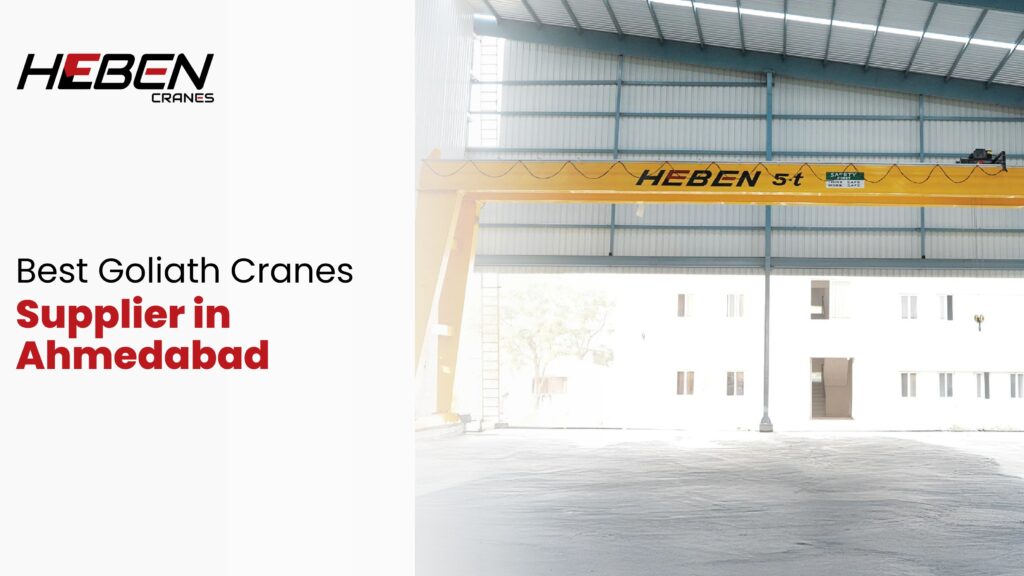
Introduction Your fabrication yard in Ahmedabad needs a Goliath crane, and six suppliers quote similar pricing. Tonnage matches, delivery timelines align, and everyone promises quality. The real challenge is this: most buyers optimize for price per ton and overlook the factors that determine whether your crane operates reliably for 20 years or requires constant repairs within three. This guide covers Goliath crane fundamentals, technical specifications, Ahmedabad’s industrial requirements, supplier evaluation criteria, and a systematic process to identify providers who match your actual yard conditions—not just your purchase specifications. Understanding Goliath Crane Basics A Goliath crane is a gantry crane with legs running on ground rails instead of building-mounted runways. The bridge structure spans between two legs, with the hoist trolley traveling along the girder. This design suits outdoor yards, areas without overhead support, and bay extensions where building structure can’t accommodate overhead cranes. Single girder Goliath cranes handle loads up to 20 tons with simpler construction and lower headroom. Double girder configurations support 20-100+ ton capacities across longer spans with higher lifting heights. The choice depends on your load spectrum and span requirements, not just maximum tonnage. Typical installations span 10-35 meters with lifting heights from 6-18 meters. Outdoor operation demands weatherproofing, corrosion protection, and wind-rated stability that indoor cranes don’t require. Why Ahmedabad Industries Use Goliath Cranes Ahmedabad’s engineering clusters, fabrication yards, precast plants, and logistics hubs rely on Goliath cranes for material handling in open areas. The city’s strong manufacturing base includes steel fabrication, infrastructure projects, and heavy equipment assembly that operates in yards rather than enclosed bays. Common applications include steel plate and structural handling in fabrication shops, precast concrete element movement in infrastructure projects, and container and heavy cargo handling in logistics yards. These operations need equipment that functions reliably in Gujarat’s hot climate and dust conditions. Here’s the pattern most yards miss: they specify capacity based on heaviest anticipated load but ignore duty cycle and lift frequency. A yard moving 15 tons fifty times per shift needs different structural design than one moving 25 tons five times per shift, even if they order the same rated capacity. Technical Specifications That Matter Load capacity segments into practical brackets: 1-10 tons for light fabrication yards, 10-40 tons for general engineering and precast work, and 40-100+ tons for heavy steel fabrication and specialized projects. Each bracket requires different girder sections, wheel configurations, and foundation design. Span and hook height determine if the crane fits your yard layout. Measure clear distance between rail centers and required lifting height from ground to load bottom position. Account for load height and rigging clearances. Wheel loads affect foundation requirements and rail specifications. Heavier cranes need engineered concrete foundations and heavy-duty rails. Lighter systems work on compacted surfaces with appropriate rail mounting. Travel and hoisting speeds influence productivity. Standard speeds of 20-30 m/min for travel and 8-10 m/min for hoisting suit general work. Higher speeds cost more but reduce cycle time in high-frequency operations. Outdoor protection matters in Ahmedabad conditions. IP65 electrical enclosures, corrosion-resistant coatings, and wind stability calculations prevent premature degradation and safety issues. What “Best Supplier” Actually Means Engineering capability separates suppliers who fabricate standard designs from those who engineer for specific yard conditions. In-house design teams calculate wheel loads, specify appropriate foundations, and optimize crane geometry for your space and load patterns. Manufacturing depth includes fabrication quality, welding standards, and load testing infrastructure. Structured quality processes catch issues before installation, not during commissioning. Service reach determines how quickly you get support when the crane stops. A supplier with technicians in Ahmedabad and spare parts inventory in Gujarat responds faster than one operating from distant states. Check actual service infrastructure, not just claimed coverage. Installation experience matters for outdoor cranes. Rail alignment, foundation integration, and electrical systems require different expertise than indoor bridge crane installation. Ask about Goliath-specific project history in Gujarat. Ahmedabad-Specific Buying Factors Yard conditions vary significantly across Ahmedabad’s industrial areas. Soil bearing capacity, drainage patterns, and space for rail extensions affect crane design and foundation requirements. Provide accurate site details during specification. Many Ahmedabad operations mix permanent installations with project-based work. If you handle temporary projects or anticipate yard expansion, design for relocation or runway extension from the start. Retrofitting costs more than initial planning. Power availability and distribution affect electrical design. Confirm available voltage and capacity before finalizing motor specifications. Integration with existing equipment requires coordination during installation. The uncomfortable truth most local buyers avoid: choosing suppliers solely for Ahmedabad proximity often means accepting limited engineering depth or service capability. Geographic location matters less than technical strength and responsive support infrastructure. Common Supplier Selection Mistakes Most buyers compare quotes on price per ton. They ignore girder section differences, motor quality, protection ratings, and structural duty class. A cheaper crane built to lighter specifications costs more over its lifetime through repairs and downtime. Foundation and rail design happens too late. The crane supplier provides wheel loads and rail specifications, but your civil team must verify soil capacity and design proper foundations. This integration should happen during crane specification, not after ordering. Future expansion gets overlooked. Yards that need additional capacity or span within five years should design rails and foundations for extension initially. Retrofitting costs significantly more than proper initial planning. Service evaluation occurs after purchase instead of during supplier selection. Maintenance capability, spare parts availability, and breakdown response should carry equal weight with technical specifications. Step-by-Step Supplier Evaluation Step 1: Document Your Requirements Map load weights across all lifts, not just maximum. Count lifts per shift at various load levels. Specify outdoor exposure, environmental conditions, and duty intensity. Step 2: Shortlist Goliath-Focused Suppliers Filter by capacity range and demonstrated Goliath crane experience. General crane manufacturers often lack specific outdoor gantry expertise. Prioritize suppliers with multiple Goliath installations. Step 3: Compare Technical Proposals Request detailed drawings showing girder specifications, wheel loads, and foundation requirements. Compare protection ratings, duty classifications, and component quality. Verify wind load calculations for Ahmedabad conditions. Step 4: Audit Service Infrastructure Ask for technician
Installing & Operating Goliath Gantry Cranes: Expert Guide
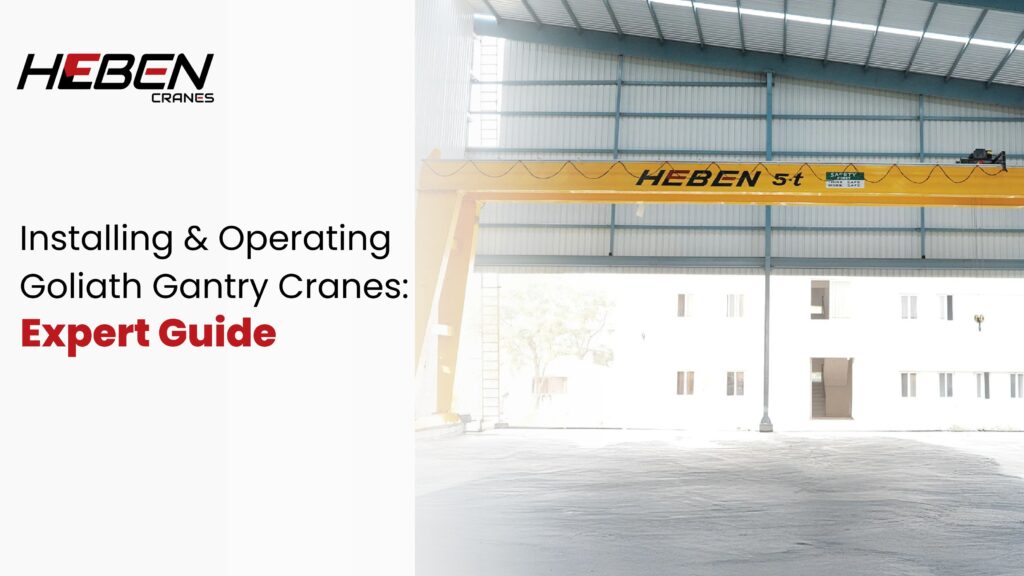
Most industrial operations lose hours and money during crane installation because they skip the groundwork. A misaligned track or poorly tested hoist can turn a productivity tool into a liability. Goliath gantry cranes handle heavy loads across outdoor yards, but they demand precise setup and disciplined operation. This guide walks you through site prep, installation steps, commissioning tests, daily operation protocols, and maintenance routines that keep your crane running for decades. Follow these practices and you’ll cut downtime, extend equipment life, and protect your crew. Pre-Installation Planning Start with a site evaluation before the crane arrives. Check ground stability and load-bearing capacity where the rails will sit. Soft or uneven soil leads to track misalignment and premature wear. Map out the delivery route. Goliath cranes arrive in large components that need clear access paths. Remove obstacles, measure gate widths, and confirm turning radii for transport vehicles. Review local regulations and safety codes. Many regions require permits for crane installation and operation. Secure approvals early to avoid project delays. Foundation and Track Installation Lay the foundation using reinforced concrete pads designed to support the crane’s weight plus maximum load capacity. The foundation must cure fully before you install rails. Install the tracks with attention to three critical factors: Straightness: Use laser alignment tools to keep rails perfectly straight over the entire run length Parallelism: Measure rail-to-rail distance at multiple points; variation causes wheel binding and uneven wear Leveling: Check elevation differences with precision instruments; even small deviations create stress on the structure Secure rails with anchor bolts and verify torque specifications. Loose fasteners lead to track movement under load. Main Structure Assembly Assemble the base frame and outriggers first. These support legs anchor the entire structure and must be square and plumb before you proceed. Lift the main beams into position using mobile cranes or mast lifting equipment. Double girder models require synchronized lifts to prevent torsional stress during placement. Connect cross beams and brace points according to the manufacturer’s bolt patterns. Tighten all connections progressively in a cross pattern to distribute stress evenly. Conduct alignment checks after each major assembly step. Misalignment at this stage compounds into bigger problems later. Hoisting Mechanism and Electrical Installation Mount the trolley and hoist assembly on the main beam. Confirm that trolley wheels run smoothly along the beam without binding or excessive play. Install wire rope according to proper reeving diagrams. Inspect each rope for kinks, broken strands, or manufacturing defects before threading. A single damaged rope compromises the entire lifting system. Wire the electrical system starting from the power supply connection. Run cables through designated pathways and secure them away from moving parts. Install control panels in weather-protected locations with clear operator sightlines. Ground all electrical components properly. Poor grounding creates shock hazards and damages sensitive control electronics. Test insulation resistance before energizing the system. Testing and Commissioning Run functional tests on all movements: trolley travel, bridge travel, and hoisting. Listen for unusual noises that indicate misalignment or loose components. Perform load testing at 125% of the rated capacity. This reveals structural weaknesses before the crane enters regular service. Check all safety switches, limit switches, and emergency stop functions during this test. Inspect transmission mechanisms under load. Gears should mesh smoothly without excessive heat or vibration. Document all test results. This baseline data helps you spot deterioration during future inspections. Daily Operation Protocols Complete a pre-operation inspection every shift. Walk the track length and look for obstructions, check wire rope condition, test all controls at no-load, and verify that safety devices respond correctly. Position loads carefully over the center of gravity. Off-center picks create side loads that stress the structure and reduce stability. Use tag lines to control load swing during movement. Move loads smoothly without sudden starts or stops. Abrupt movements amplify dynamic forces beyond the crane’s design limits. Never exceed the rated capacity. Even short-duration overloads cause permanent damage to structural members and hoisting components. Routine Maintenance Schedule Lubricate all moving parts weekly using manufacturer-specified greases and oils. Pay special attention to wheel bearings, gears, and wire rope connections. Inspect wire ropes monthly for wear, corrosion, and broken wires. Replace ropes when they show 10% wire breakage in one lay length or visible diameter reduction. Check electrical connections quarterly. Look for loose terminals, worn insulation, and signs of overheating. Clean contact surfaces and retighten connections as needed. Schedule annual mechanical inspections by qualified technicians. They catch problems that daily operators might miss. Troubleshooting Common Issues Uneven trolley movement usually stems from misaligned rails or worn wheels. Check track straightness and measure wheel diameter at multiple points around the circumference. Excessive rope wear indicates incorrect reeving, misaligned sheaves, or contamination. Inspect the entire rope path and correct any contact points where the rope rubs against structures. Control system glitches often trace back to loose connections or moisture infiltration. Seal all electrical enclosures and use dielectric grease on exposed terminals. FAQs Q: How long does Goliath crane installation typically take? A: Most installations require 5 to 10 days depending on crane size and site conditions. Foundation curing adds another 7 to 14 days before you can begin assembly. Complex sites with difficult access or custom features may extend the timeline. Q: What’s the difference between Goliath and semi-Goliath cranes? A: Goliath cranes run on two ground-level rails with legs on both sides. Semi-Goliath models have one elevated rail and one ground rail, useful when you need to conserve floor space on one side. Operating principles remain similar but the asymmetric design changes load distribution. Q: How often should I replace wire ropes? A: Replace wire ropes based on inspection findings, not time intervals. Look for broken wires, kinking, corrosion, or diameter reduction. Heavy-duty operations may need replacement every 6 to 18 months, while lighter use can extend rope life beyond two years. Q: Can I operate a Goliath crane in high winds? A: Most Goliath cranes have wind speed limits between 20 and 30 mph. Operating beyond these limits creates dangerous load
Best Goliath Crane Types for Heavy Lifting & Industrial Use
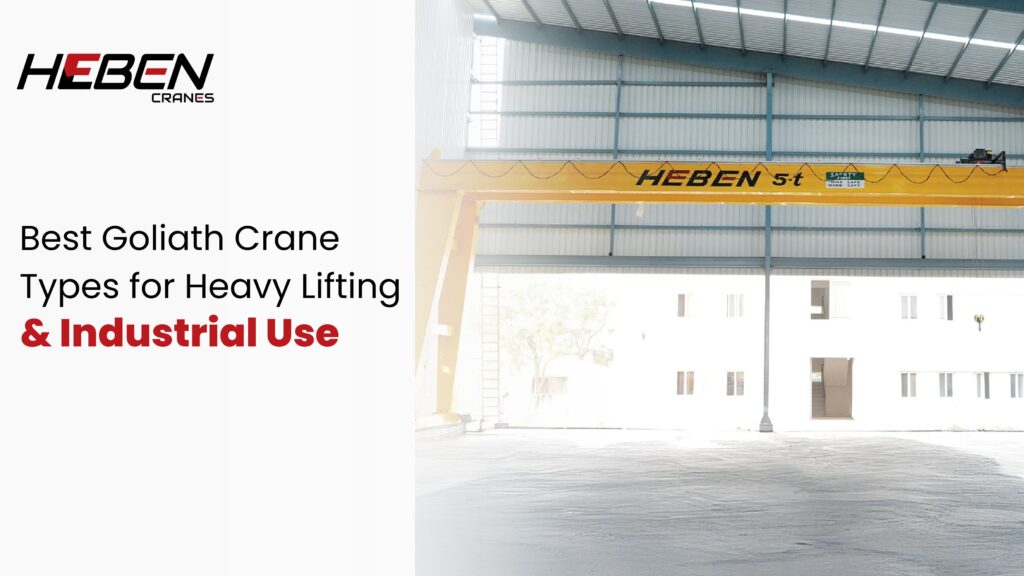
Goliath cranes handle some of the heaviest industrial loads on earth—yet over 40% of facilities choose the wrong type based on capacity alone, ignoring factors like span requirements, duty classification, and site conditions. The result: operational limitations, excessive maintenance costs, or expensive modifications within five years. Heavy industrial operations need gantry solutions that match load demands, environmental challenges, and workflow patterns precisely. This guide examines the best Goliath crane types for different applications, their structural advantages, capacity ranges, selection criteria, and the technical factors determining which configuration delivers optimal performance and long-term value for shipyards, steel mills, container terminals, and heavy fabrication facilities. What Are Goliath Cranes? Goliath cranes—also called gantry cranes—feature a bridge supported by two or more legs running on ground-level rails rather than elevated runway beams. This ground-based design eliminates building structure requirements, making them ideal for outdoor yards, construction sites, and facilities where overhead installation proves impractical. The legs ride on rails installed at ground level, with the bridge spanning between them carrying hoist and trolley systems. Capacities range from 5 tons for light-duty models to over 1,000 tons for specialized heavy-lifting applications in shipbuilding and offshore construction. Unlike overhead cranes requiring building columns and runway beams, Goliath cranes provide self-supporting structures movable along rail tracks. This mobility and independence from building constraints make them essential for operations handling oversized loads, outdoor material storage, or facilities lacking adequate ceiling structure. Single Girder Goliath Cranes Single girder designs handle 5-50 ton capacities economically for medium-duty applications. The simplified structure reduces material costs, installation complexity, and maintenance requirements compared to heavier configurations. Construction sites, assembly lines, and workshops benefit from single girder flexibility and lower initial investment. The lightweight design suits facilities needing reliable lifting without extreme capacity demands or intensive duty cycles. Typical applications include material handling in fabrication shops, construction equipment positioning, and moderate-capacity outdoor storage yards. Duty classifications A3-A5 handle light to moderate operational intensities effectively. Double Girder Goliath Cranes Double girder configurations dominate heavy industrial applications requiring 50-500+ ton capacities with superior structural stability. Two main girders support the trolley system, distributing loads more effectively and enabling wider spans exceeding 100 feet. Steel plants, shipyards, and heavy equipment manufacturing rely on double girder strength for intensive operations. The robust construction accommodates duty classes A6-A8 designed for continuous multi-shift operations with high cycle rates. Maximum lifting heights and precise positioning capabilities make double girder designs essential when handling massive components like ship sections, turbine assemblies, or large structural steel elements. The premium construction cost delivers decades of reliable service under demanding conditions. Key Advantages Load capacity scaling to 500+ tons for specialized applications Wider spans without excessive deflection or structural concerns Higher lifting heights from hoist positioning atop bridge girders Accommodation of tandem hoist systems for ultra-heavy loads Truss Type Goliath Cranes Truss structures use triangulated framework reducing weight while maintaining strength across long spans. This design cuts material costs 20-30% compared to solid girder construction and improves wind resistance for outdoor installations. Precast concrete operations, stone processing yards, and large outdoor material handling areas benefit from truss advantages. The open structure allows wind to pass through rather than creating solid surface resistance that destabilizes conventional designs. Long spans exceeding 100 feet become economically viable with truss construction. The reduced deadweight minimizes foundation requirements and rail system costs while delivering adequate capacity for most industrial applications under 100 tons. Container Handling Goliath Cranes Rail Mounted Gantry (RMG) cranes specialize in container terminal operations, featuring automated positioning systems, spreader attachments, and high stacking capabilities. These cranes stack containers 6-8 high with precision positioning enabling maximum storage density. Container terminals and intermodal yards require RMG efficiency handling 40-65 moves per hour in intensive operations. Modern designs integrate automation, collision avoidance, and inventory management systems streamlining terminal operations. Capacities typically range 40-65 tons accommodating multiple stacked containers, with spans matching container storage block widths. The specialized design optimizes container handling efficiency rather than general-purpose lifting flexibility. Shipbuilding Goliath Cranes Shipyards demand extreme capacities, precise positioning, and lifting heights exceeding 150 feet for large vessel construction. Specialized Goliath cranes handle ship sections weighing hundreds of tons, positioning them with millimeter accuracy during assembly. Tandem hoist systems combine multiple hoists for ultra-heavy lifts exceeding single-hoist capacity limits. This redundancy provides safety margins and enables 800-1,000+ ton lifting capability essential for modern shipbuilding and offshore platform construction. Custom hook blocks, specialized rigging systems, and coordinated multi-crane operations distinguish shipbuilding gantries from standard industrial models. The engineering complexity and capacity requirements make these among the most expensive and sophisticated crane installations globally. Selection Criteria and Key Features Load capacity matching actual requirements with 20-30% buffer accommodates dynamic forces, growth needs, and specialized rigging without premature replacement. Span length must cover the working area width plus clearances for leg structures and safety margins. Duty classification determines structural design, component quality, and service life expectations. A5-A6 classifications suit moderate industrial use, while A7-A8 heavy-duty ratings handle intensive continuous operations in steel mills and shipyards. Critical Specifications Capacity: Current maximum load plus 20-30% buffer for dynamics and growth Span: Coverage area width plus structural clearances and safety margins Lifting Height: Highest pickup point plus rigging allowance and load dimensions Duty Class: A5-A8 based on operational intensity and cycle frequency Control Systems: Pendant, wireless remote, or cabin based on operational needs Environmental considerations include wind exposure for outdoor installations, temperature extremes affecting components and lubrication, and corrosive atmospheres requiring protective coatings and sealed electrical systems. Applications Across Industries Steel mills use heavy-duty double girder Goliath cranes moving raw materials, handling work-in-progress, and positioning finished products. Capacities reach 300-500 tons for large structural components and coil handling. Power plants rely on Goliath cranes for turbine installation, maintenance access, and heavy component handling during construction and major overhauls. Lifting heights exceeding 100 feet accommodate tall equipment assemblies. Construction sites benefit from portable Goliath crane flexibility positioning precast concrete, structural steel, and heavy equipment without permanent installations. Adjustable height and span configurations adapt to changing project requirements. Container
Gantry & Goliath Cranes Explained: Selection Guide
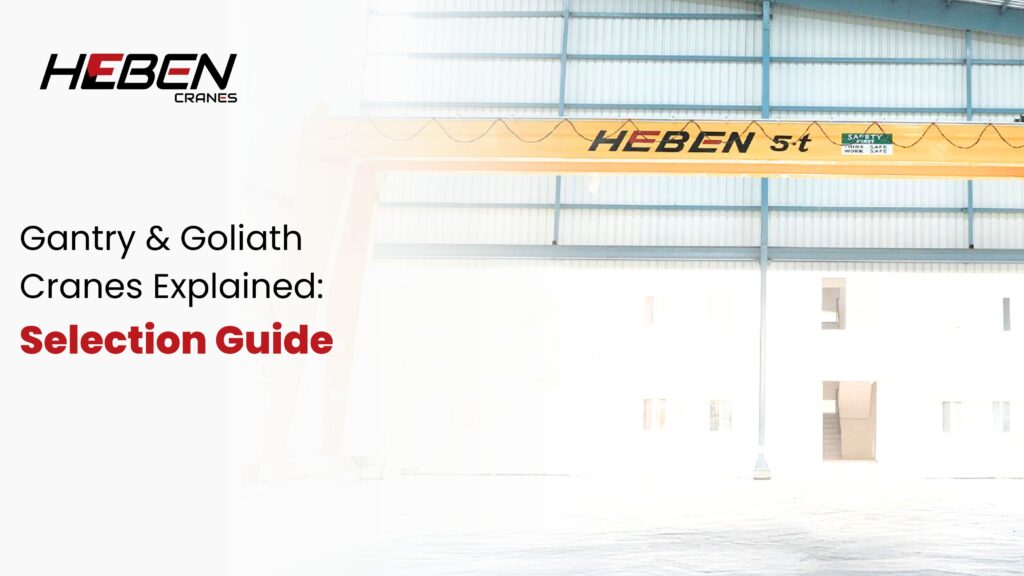
Introduction You need to move heavy loads without overhead runway beams or building support. That’s the core challenge when existing facilities lack the structure for bridge cranes or you’re working in open yards. Gantry and Goliath cranes solve this by running on ground-level rails with their own support legs. This guide breaks down the differences between gantry and Goliath configurations, walks through selection criteria, and explains maintenance requirements that prevent costly downtime. You’ll learn when each type makes sense and how to match specifications to your material handling patterns. What Makes Gantry and Goliath Cranes Different? A gantry crane is any overhead crane supported by legs that travel on ground rails instead of building-mounted runways. The hoist and trolley move along the bridge beam just like bridge cranes, but the entire structure stands independently. Goliath cranes are simply large-capacity gantry cranes, typically double girder designs used outdoors for heavy industrial work. The terms overlap significantly—what one facility calls a Goliath crane, another might call a heavy-duty gantry crane. The key distinction is scale and application context. Smaller portable units under 5 tons are called gantry cranes. Large rail-mounted systems handling 50-500 tons in shipyards or steel mills earn the Goliath label. Types You’ll Encounter Full gantry cranes have legs on both sides that travel on parallel ground rails. They work best in outdoor yards or facilities where floor-level operation makes sense. Semi-gantry cranes have one leg running on ground rail while the other side travels on an elevated runway mounted to building columns. This hybrid design saves space and cost when you have partial building support. Portable gantry cranes are lightweight aluminum or steel frames on wheels or casters. Capacities range from 500kg to 5 tons with adjustable heights and spans. Single girder Goliath cranes use one main beam for lighter loads up to 20 tons. Double girder Goliath cranes provide the strength for 20-500+ ton capacities and longer spans. Core Components and Design The gantry structure consists of vertical legs, horizontal cross beams, and the main girder(s) spanning between them. Legs contain drive motors, wheels, and brakes for travel along ground rails. The trolley and hoist mount to the girder and provide cross-travel motion. Power delivery uses cable reels, festoon systems, or conductor bars depending on travel distance and duty cycle. Control options range from simple pendant push buttons to radio remotes or full operator cabins mounted on the bridge. Safety systems include travel limit switches, overload protection, emergency stops, and anti-collision devices for multi-crane environments. Technical Specifications That Drive Selection Load capacity determines structural requirements and cost. Light-duty gantry cranes handle 1-10 tons, medium-duty covers 10-50 tons, and heavy-duty Goliath systems range from 50-500+ tons. Span affects girder size and deflection characteristics. Gantry cranes typically span 5-35 meters while large Goliath cranes reach 50+ meters. Lifting height includes the distance from ground to hook in highest position. Don’t forget to account for load height and rigging clearances. Indoor versus outdoor ratings matter significantly. Outdoor cranes need weatherproofing, corrosion-resistant coatings, and wind-rated stability. Ground conditions determine wheel loads and whether you need concrete runways or can work with compacted surfaces. When Gantry and Goliath Cranes Make Sense? Here’s what suppliers rarely lead with: gantry cranes cost 20-35% more than equivalent bridge cranes when you already have suitable building structure. The legs, wheels, and ground rail system add expense. But gantry systems win when building columns can’t support overhead loads or don’t exist at all. Outdoor yards, storage areas, and temporary facilities favor gantry configurations. Goliath cranes dominate in ports, shipyards, steel mills, and precast concrete plants where massive outdoor spans are required. These environments need weather-resistant designs and don’t have building structures to support bridge cranes. Manufacturing facilities use gantry cranes for assembly areas, machine shops, and loading docks where building modifications aren’t feasible. Storage yards handling steel, granite slabs, pipes, or lumber rely on outdoor Goliath cranes that operate in all weather. The ground-based design works perfectly for inventory that sits outdoors. Ports and container yards use massive Goliath gantry cranes for ship-to-shore operations and yard stacking. Shipbuilding facilities need the enormous spans and lifting heights that only Goliath configurations provide. Rail maintenance depots, mining operations, and heavy equipment manufacturers choose gantry systems when building-mounted cranes aren’t practical or cost-effective. Step-by-Step Selection Process Step 1: Calculate Load Requirements Determine maximum load weight including rigging, spreader beams, and safety margins. Add 20-25% buffer capacity for unusual lifts and future needs. Step 2: Map Your Work Area Measure required span between crane legs. Calculate lifting height from ground to hook in lowest position. Account for load height and overhead clearances. Step 3: Choose Gantry vs Goliath Configuration Pick full gantry when both sides have ground clearance. Select semi-gantry when one side has existing building support. Choose Goliath designation for heavy outdoor applications. Step 4: Select Design Features Decide on single versus double girder based on capacity and span. Choose control method based on operator visibility needs. Specify indoor or outdoor rating and environmental protection level. Step 5: Plan Infrastructure and Costs Design runway foundations and ground rails. Calculate wheel loads and soil bearing capacity. Factor in installation timeline, operator training, and maintenance access. Installation Fundamentals Ground rail installation demands precision alignment within 3-5mm tolerances across the entire travel path. Poor rail alignment causes premature wheel wear and structural stress. Foundation design depends on soil conditions and wheel loads. Large Goliath cranes need engineered concrete runways while smaller portable units work on level floors. Commissioning includes load testing to 125% of rated capacity and verification of all safety systems before production use. Maintenance That Prevents Problems Daily operator checks should cover rail condition, wheel wear, brake function, and hoist operation. Outdoor cranes need daily inspection for corrosion and weather damage. Monthly servicing includes lubrication of all moving parts, electrical connection checks, and structural inspection for cracks or deformation. Annual certifications require load testing, non-destructive examination of structural members, and complete safety system verification. Keep detailed records for compliance and insurance.
Top Goliath Cranes Supplier India 2025

India’s industrial growth in 2025 is defined by scale, speed, and the relentless pursuit of efficiency. At the heart of this transformation are Goliath cranes—engineering marvels that make the impossible, possible. For businesses seeking the ultimate in heavy-duty material handling, Heben Cranes stands out as the top Goliath crane supplier in India, delivering innovation, reliability, and unmatched support to industries nationwide. What Are Goliath Cranes? Goliath cranes, also known as gantry cranes, are freestanding structures designed to move massive loads across open spaces. Unlike traditional overhead cranes that require building support, Goliath cranes travel on rails or wheels at ground level, making them ideal for outdoor yards, shipyards, construction sites, and large manufacturing facilities. Their robust design, high load capacity, and flexibility make them indispensable for India’s infrastructure and industrial sectors. Key Features Freestanding Structure: No need for building support, perfect for outdoor and open environments. High Load Capacity: Capable of lifting from 5 tons to over 250 tons, depending on the model and configuration. Wide Span and Coverage: Can cover large operational areas, with spans up to 116 meters and heights exceeding 50 meters. Mobility: Move smoothly along ground-level rails or, in some models, on rubber tires for added flexibility. Customizable: Tailored to specific operational needs, including single or double girder designs, cantilever options, and advanced control systems. The Indian Market for Goliath Cranes in 2025 India’s demand for Goliath cranes is surging, driven by rapid expansion in shipbuilding, steel fabrication, construction, and logistics. The market is characterized by a shift toward automation, digitalization, and sustainability. Major infrastructure projects, smart city initiatives, and the growth of manufacturing hubs are fueling the need for advanced, high-capacity cranes that can operate efficiently in challenging environments. Industry Applications Shipbuilding: Lifting and positioning massive ship components with precision. Steel and Metal Fabrication: Handling heavy plates, coils, and structural elements. Construction: Moving prefabricated components, machinery, and building materials. Logistics and Container Yards: Loading and unloading shipping containers and oversized cargo. Railway and Metro Projects: Transporting precast concrete sections and station materials. Why Heben Cranes Leads the Market? Engineering Excellence Heben Cranes is renowned for its commitment to quality, innovation, and engineering precision. Every Goliath crane is designed with high-grade materials and advanced manufacturing techniques, ensuring durability and long service life even in the harshest industrial environments. Robust Construction: Built to withstand heavy loads and tough conditions. Precision Engineering: Ensures smooth operation, minimal maintenance, and maximum uptime. Advanced Drive Systems: Variable frequency drives (VFDs) for smooth acceleration, deceleration, and precise positioning. Customization and Flexibility No two projects are the same, and Heben Cranes understands the importance of tailored solutions. Their Goliath cranes are available in a wide range of capacities (up to 250 tons), spans (up to 116 meters), and lift heights (over 50 meters). Whether you need a compact crane for a fabrication yard or a colossal system for a shipyard, Heben offers configurations to match your exact requirements. Advanced Features Anti-Collision Systems: Integrated technology to prevent accidents and ensure safe operation, even in multi-crane environments. Smart Controls: Centralized control panels, remote operation, and intelligent diagnostics for real-time monitoring and maintenance. Energy Efficiency: Modern electrical components and power management systems reduce energy consumption and operational costs. Safety Systems: Overload protection, emergency braking, and limit switches are standard, ensuring compliance with international safety standards. Space and Workflow Optimization Heben’s Goliath cranes are designed to maximize operational efficiency. Their freestanding design frees up valuable floor space, while their wide span and high lift capabilities enable seamless movement of heavy loads across large areas. This is especially valuable in shipyards, steel plants, and construction sites where space and time are at a premium. Types of Goliath Cranes Offered by Heben Type Capacity Range Key Applications Notable Features Single Girder Goliath Up to 10 tons Warehousing, small fabrication Lightweight, easy installation Double Girder Goliath Up to 250 tons Shipbuilding, steel, construction High load, long span, robust design Semi Goliath Up to 40 tons Manufacturing, assembly lines Operates beneath overhead systems Mobile Goliath (RTG) Up to 50 tons Container yards, logistics Rubber-tired, highly mobile Customized Solutions As required Specialized projects Tailored to unique operational needs Safety and Compliance: Non-Negotiable Priorities Safety is at the core of Heben’s engineering philosophy. Their Goliath cranes are equipped with: Overload Protection: Prevents lifting beyond rated capacity. Emergency Braking: Ensures immediate stopping in case of anomalies. Limit Switches: Prevents over-travel and collisions. Operator Training: Comprehensive programs to ensure safe and efficient crane operation. Routine Maintenance and Inspections: Regular checks and advanced diagnostics to ensure long-term reliability and compliance with global standards. Customer-Centric Approach Heben Cranes is more than a supplier—it’s a partner in your success. Their customer-centric philosophy is reflected in: 48-Hour Resolution Commitment: Rapid response to service requests and technical issues, minimizing downtime. 24/7 Support: Around-the-clock assistance from a team of specialists, ensuring your operations run smoothly. Comprehensive After-Sales Service: From installation and commissioning to maintenance and spare parts, Heben provides end-to-end support throughout the crane’s lifecycle. Innovation and Future-Readiness Heben Cranes is at the forefront of technological advancement, continually investing in research and development to deliver future-ready solutions. Their Goliath cranes incorporate the latest in automation, IoT integration, and energy-efficient design, ensuring your investment remains competitive as industry standards evolve. Smart Diagnostics: Real-time monitoring and predictive maintenance to prevent breakdowns. Remote Operation: Wireless controls for enhanced safety and flexibility. Sustainable Design: Energy-saving drives and eco-friendly materials to reduce environmental impact. Proven Track Record Heben Cranes has earned the trust of clients across India, supplying Goliath cranes to major projects in shipbuilding, steel, construction, and logistics. Their reputation for reliability, quality, and customer service is unmatched, making them the preferred choice for businesses seeking to elevate their material handling capabilities. Why Choose Heben Cranes in 2025? Unmatched Engineering Quality: Precision design, robust construction, and rigorous testing. Tailored Solutions: Customization for every industry and application. Advanced Safety and Efficiency: Cutting-edge features for safe, reliable, and cost-effective operation. Exceptional Support: 48-hour resolution, 24/7 assistance, and comprehensive after-sales service. Future-Ready Technology: Automation, IoT, and energy-efficient