
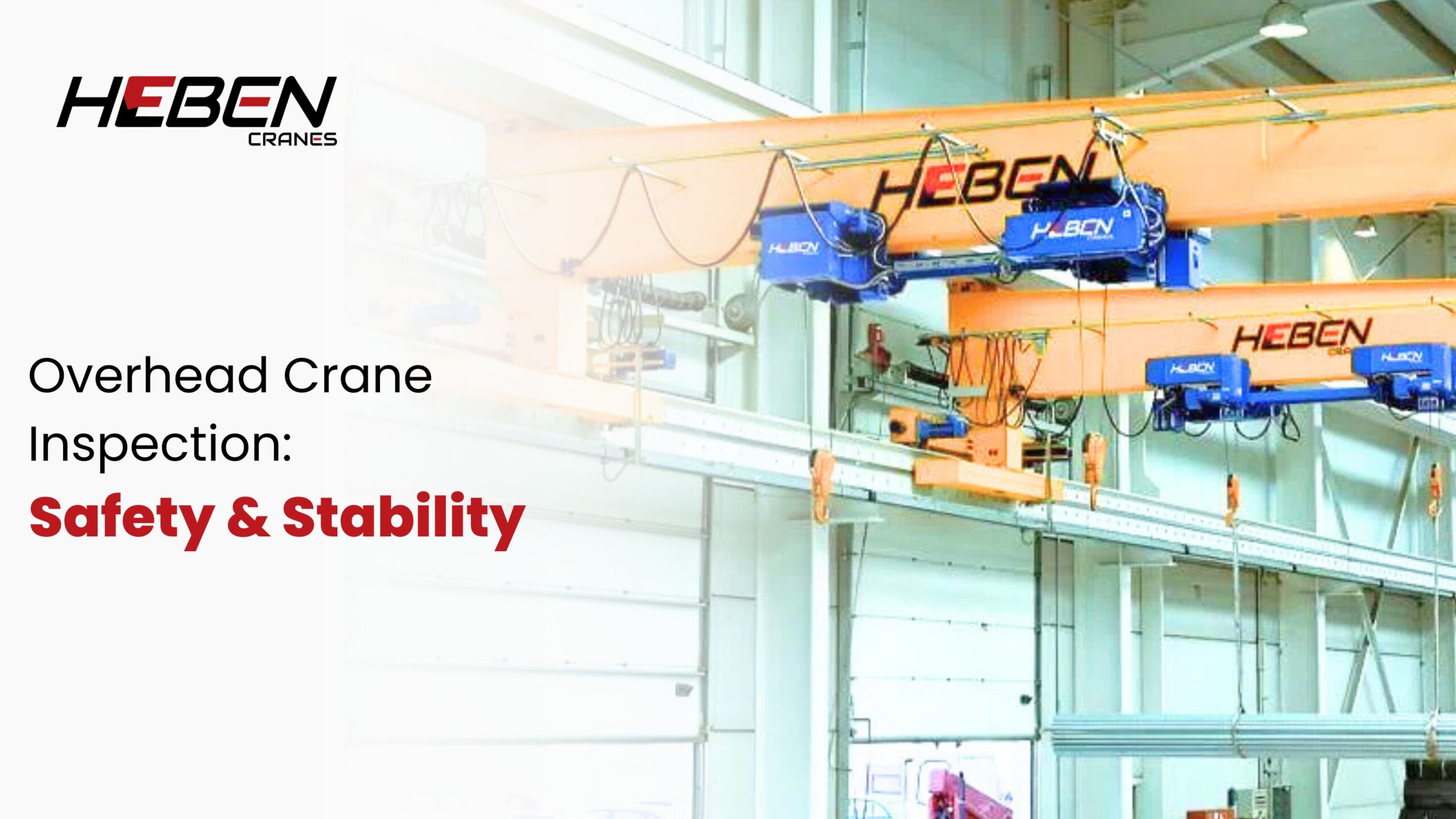
An analysis of 249 overhead crane incidents revealed 838 OSHA violations resulting in 133 injuries and 133 fatalities. Most of these failures trace back to inadequate inspection practices rather than equipment defects. Wire rope corrosion hides beneath grease layers, brake wear progresses unnoticed, and structural cracks develop gradually until catastrophic failure occurs. Systematic inspection programs eliminate these risks by catching deterioration at early, fixable stages.
This guide covers inspection types, critical components to examine, stability assessment procedures, documentation requirements, and the technical processes that keep overhead cranes operating safely for decades.
Why Inspection Determines Crane Safety?
Overhead cranes don’t fail suddenly without warning signs. Components deteriorate progressively through normal use, environmental exposure, and operational stress. The question is whether inspections detect problems before they cause accidents or production shutdowns.
Research shows approximately 90% of crane accidents result from human error—primarily failure to identify and address developing issues during inspection. Equipment failures that do occur typically stem from maintenance gaps where inspections missed or ignored deterioration indicators.
Regular inspection creates the documentation trail that proves regulatory compliance and demonstrates due diligence if incidents occur. Beyond legal requirements, inspection data guides maintenance planning by revealing wear patterns, component lifespans, and optimal replacement timing before failures happen.
Inspection Types and Frequency Requirements
OSHA 1910.179 establishes two distinct inspection categories for overhead cranes: frequent inspections and periodic inspections. The terminology matters because frequency requirements differ significantly based on crane usage intensity and duty classification.
Frequent inspections occur at daily to monthly intervals depending on operational intensity. Cranes running multiple shifts daily require more frequent checks than equipment used occasionally. These inspections focus on operational components most likely to wear or fail: controls, wire ropes, hooks, brakes, and limit switches.
Periodic inspections happen at 1 to 12-month intervals and involve more comprehensive examination of structural elements, mechanical systems, and electrical components. Class C cranes (moderate duty) typically need periodic inspection every 500 operating hours, while heavy-duty Class D and E cranes require quarterly or semi-annual comprehensive assessment.
Inspection Frequency Guidelines
- Daily Pre-Use Checks: Visual inspection of all control functions, safety devices, wire ropes, and hooks before each shift
- Monthly Inspections: Documented examination of mechanical components, electrical systems, and structural elements
- Annual Comprehensive: Detailed assessment by qualified inspectors covering all crane systems with load testing
- Heavy Duty Operations: Quarterly inspections for Class E and F cranes running continuous multiple-shift operations
Critical Components Requiring Inspection
Wire rope inspection tops the priority list because rope failure causes immediate load drops and severe accidents. Visual examination checks for broken wires, kinks, corrosion, wear, and proper lubrication. The critical insight most operators miss: significant internal corrosion develops beneath grease layers, invisible during standard visual checks.
Analysis of wire rope failures reveals uniform corrosion of internal surfaces progresses undetected until individual wires fail under load, overloading remaining strands and causing complete rope failure. Removing grease to examine wire condition catches this deterioration before it reaches critical stages.
Brake systems demand careful assessment because worn brakes reduce stopping reliability and create swing hazards when loads don’t stop precisely. Check friction material thickness, adjustment, responsiveness during test cycles, and any signs of overheating or contamination.
Structural components including bridge beams, end trucks, trolley frames, and runway supports require inspection for cracks, corrosion, deformation, and loose connections. Weld integrity particularly matters because crack propagation in welds can progress to structural failure.
Essential Inspection Points
- Wire Ropes: Broken wires (6 randomly in one lay or 3 in one strand), reduction in diameter exceeding manufacturer limits, kinks, bird-caging, corrosion
- Hooks: Cracks, deformation, throat opening increase beyond 15%, latch operation, wear in saddle area
- Brakes: Lining wear, adjustment, responsiveness, unusual noise, fluid leaks on hydraulic systems
- Electrical Systems: Insulation condition, connection tightness, control responsiveness, limit switch function
- Structural Elements: Beam deflection, crack development, corrosion, bolt tightness, weld
Stability Assessment Procedures
Crane stability depends on multiple interrelated factors that standard operational checks don’t always evaluate thoroughly. Runway alignment affects how loads distribute across wheels and whether the crane travels straight without binding. Misaligned rails create uneven loading, accelerated wheel wear, and potential for crane skew during travel.
Foundation integrity supports the entire system. Settlement, cracking, or deterioration in runway support structures compromises stability under load. Annual inspections should verify foundation condition, column alignment, and structural adequacy for crane loads.
Load testing confirms the crane can safely handle rated capacity without excessive deflection, control problems, or structural distress. Testing typically involves lifting 110% of rated load to a height sufficient to verify all systems, holding briefly, and checking for any abnormal behavior or permanent deformation.
Wheel condition directly impacts stability. Worn wheels, flat spots, or diameter differences between wheels cause rocking motion and uneven load distribution. Measure wheel diameter at multiple points and replace wheels before wear exceeds manufacturer specifications.
Documentation and Record-Keeping Requirements
Inspection records serve multiple critical functions beyond regulatory compliance. They create the historical record demonstrating when components were last examined, what conditions existed, and what actions were taken. This documentation proves essential during accident investigations and insurance claims.
OSHA requires dated and signed records for all periodic inspections with deficiencies noted and resolution documented. Records must remain available for review throughout the crane’s service life. Digital systems simplify record-keeping and make historical data accessible for trend analysis.
Effective documentation includes detailed descriptions of component condition, measurements where applicable, photographs of concerning issues, and clear identification of items requiring follow-up. Generic pass/fail checklists provide less value than specific condition assessments with quantitative data.
Deficiency tagging removes unsafe cranes from service until repairs are completed and verified. Clear visual tags attached to crane controls prevent inadvertent use of equipment with unresolved safety issues. Removal from service requires supervisor approval in writing with specific authorization to return equipment to operation after repair verification.
Common Inspection Failures and Oversights
Visual inspection alone misses internal deterioration in critical components. Wire rope corrosion beneath lubrication, crack initiation in structural welds, and early bearing failure don’t present obvious external indicators until damage is severe.
Inspection intervals based on calendar time rather than operating hours result in under-inspection of heavily used equipment and over-inspection of idle cranes. Operating hours provide better correlation with wear rates and deterioration patterns.
Unqualified inspectors conducting periodic assessments miss technical issues requiring specialized knowledge to identify. OSHA specifies periodic inspections must be performed by qualified persons with training and experience to recognize deficiencies and determine whether they constitute safety hazards.
Documentation gaps create liability exposure and make trend analysis impossible. Inconsistent inspection practices, missing records, and generic checklists that don’t capture actual equipment condition undermine the entire inspection program.
Advanced Inspection Technologies
Electromagnetic testing detects internal wire rope deterioration including broken wires and cross-sectional area loss not visible externally. These devices pass through the rope during operation, providing real-time condition monitoring that catches degradation before visual indicators appear.
Load monitoring systems track actual lifted weights, cycle counts, and overload events. This operational data reveals usage patterns that inform maintenance scheduling and identify abuse requiring operator retraining.
Vibration analysis identifies bearing wear, alignment problems, and mechanical imbalances before they cause component failure. Regular vibration monitoring detects subtle changes that predict impending problems weeks or months before breakdown occurs.
Thermal imaging locates electrical connection problems, motor overheating, and brake issues through temperature pattern analysis. Hot spots invisible during visual inspection indicate developing failures requiring immediate attention.
Frequently Asked Questions
Q: How often do overhead cranes actually need inspection?
A: OSHA requires frequent inspections at daily to monthly intervals depending on usage intensity, plus periodic comprehensive inspections every 1-12 months based on crane class and duty cycle. Heavy-duty cranes running multiple shifts need daily pre-use checks and quarterly comprehensive inspections, while light-duty equipment may require only monthly frequent inspections and annual periodic assessment.
Q: What qualifications do crane inspectors need?
A: Frequent inspections can be performed by trained operators familiar with the equipment, while periodic inspections must be conducted by qualified persons with specialized training, technical knowledge, and experience to recognize deficiencies and assess their safety implications. Third-party certified inspectors typically conduct annual comprehensive assessments to provide independent verification of crane condition.
Q: Can visual inspection alone ensure crane safety?
A: Visual inspection misses critical internal deterioration including wire rope corrosion beneath grease, crack initiation in structural elements, and early bearing failure. Comprehensive inspection programs combine visual examination with functional testing, measurements of wear parameters, non-destructive testing methods, and load testing to verify overall system integrity.
Q: What happens when inspections identify deficiencies?
A: Cranes with identified safety deficiencies must be removed from service immediately using clear visual tags at operator controls. Repairs must be completed and verified by qualified personnel before returning equipment to operation, with all actions documented in inspection records. Minor issues not affecting safety may be scheduled for correction during planned maintenance windows with continued operation and monitoring.
Q: How do inspection requirements differ for heavy-duty cranes?
A: Heavy-duty Class D, E, and F cranes require more frequent comprehensive inspections—often quarterly rather than annually—due to accelerated component wear from intensive use. These cranes also need more detailed examination of high-stress components including structural elements, drive systems, and brakes that experience greater operational demands.
Conclusion
Systematic overhead crane inspection programs prevent the accidents, production disruptions, and equipment failures that result from undetected component deterioration. The difference between safe, reliable operations and catastrophic failure often comes down to inspection thoroughness, qualified personnel conducting assessments, proper documentation, and timely response to identified deficiencies. Inspection isn’t a regulatory burden—it’s the practical process that keeps cranes operating safely and productively for decades.
Heben Cranes provides comprehensive inspection services conducted by certified technicians using advanced diagnostic equipment and systematic protocols. From daily pre-use checklists through annual load testing and certification, the inspection program identifies issues at early stages when correction is straightforward and inexpensive. Detailed documentation, deficiency tracking, and maintenance coordination ensure cranes meet safety standards and operate reliably. Schedule a professional crane inspection assessment to establish a systematic program tailored to equipment type, usage intensity, and regulatory requirements.